
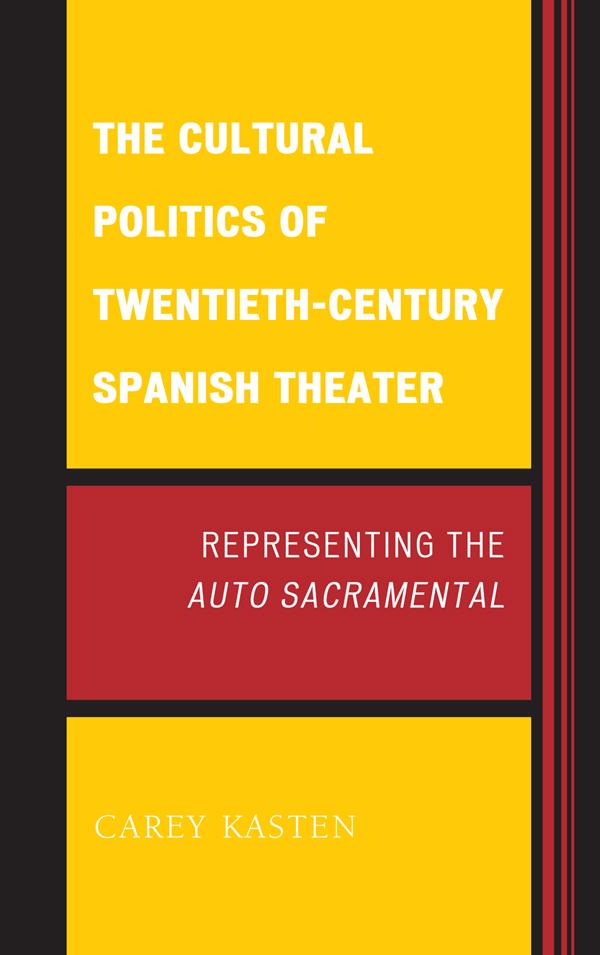
The Cultural Politics of Twentieth-Century Spanish Theater argues that twentieth-century artists used the Golden Age Eucharist plays called autos sacramentales to reassess the way politics and the arts interact in the Spanish nation’s past and present, and to posit new ideas for future relations between the state and the national culture industry. The book traces the phenomenon of the twentieth-century auto to show how theater practitioners revisited this national genre to manifest different, oftentimes opposing, ideological and aesthetic agendas. It follows the auto from the avant-garde stagings and rewritings of the form in the early twentieth century, to the Francoist productions by the Teatro Nacional de la Falange, to postmodern parodies of the form in the era following Franco’s death to demonstrate how twentieth-century Spanish dramatists use the auto in their reassessment of the nation’s political and artistic past, and as a way of envisioning its future.
Pay easily by card, Klarna, Apple Pay or Google Pay. Not happy? You always have a 14-day money-back guarantee. Read more in our terms. If you have any questions, email us at hello@memmo.org.
Memmo makes studying easier – wherever you are in the world. We bring your course books and smart study tools together in one place: summaries, quizzes, podcasts and flashcards. Plus Ted, your study buddy who answers anything you wonder. Over 75,000 students already study here – built to help you learn faster and stress less.