
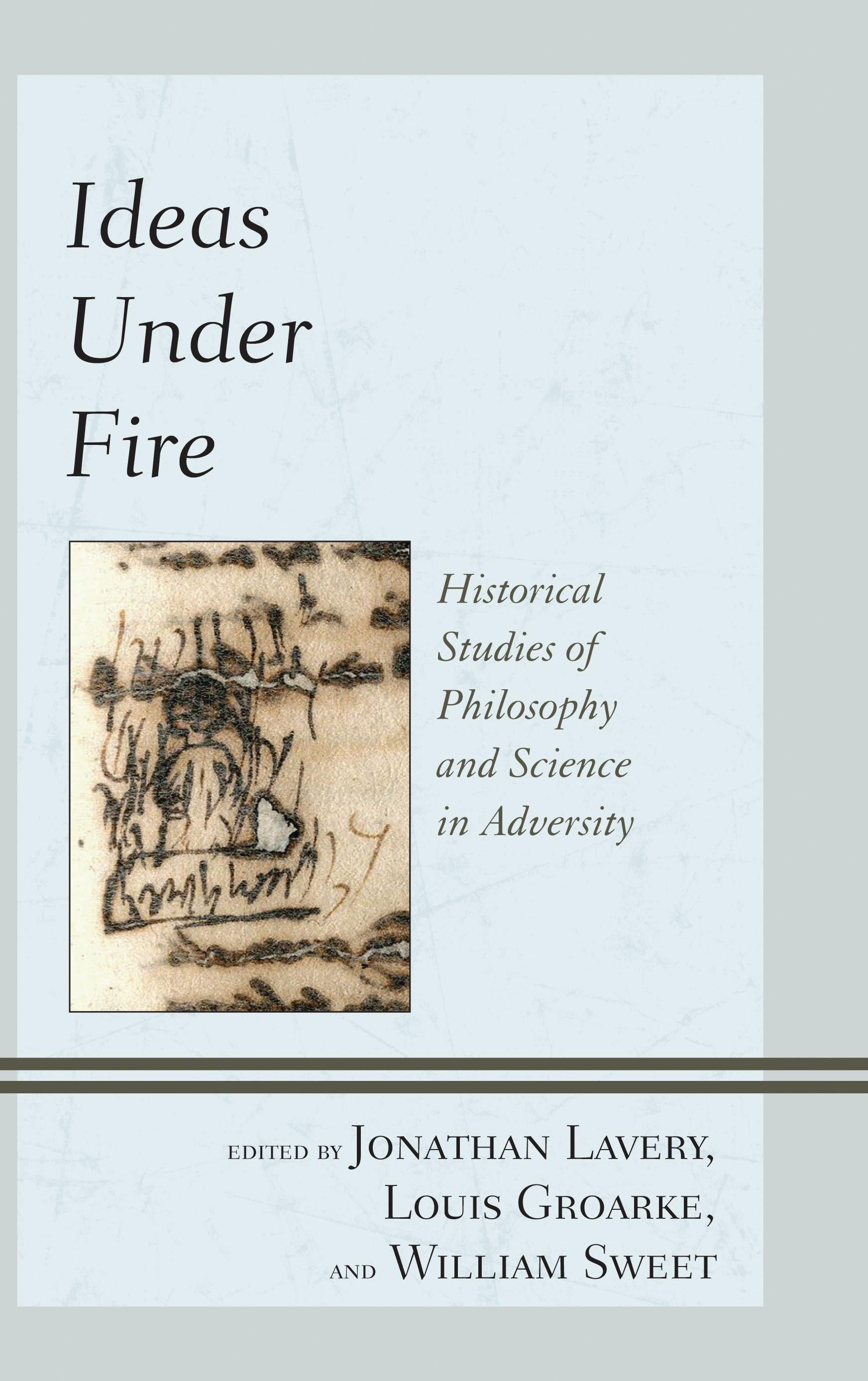
Since Aristotle’s famous declaration that the speculative sciences originated with the emergence of a leisure class, it has been accepted as a truism that intellectual activity requires political stability and leisure in order to flourish. Paradoxically, however, some of the most powerful and influential contributions to Western intellectual culture have been produced in conditions that were adverse–indeed hostile–to intellectual activity. Examples include Socrates' stirring defense of the examined life before a hostile Athenian jury, Boethius writing The Consolation of Philosophy under the specter of impending torture and execution, Galileo devising key notions for modern mechanics while under house arrest, and Jean-Paul Sartre drafting portions of Being and Nothingness in his war diaries, to name only a few of the most famous incidents–all extraordinary achievements spawned, developed or completed in adversity. In cases such as these, a philosopher or scientist must manage somehow to remain intellectually creative and focused despite living in conditions that are adverse or hostile to thought. In brief, they are working on ideas under fire.
This book is a survey of several momentous cases of philosophers and scientists working under fire. Each chapter of Ideas Under Fire explores a particular case or set of related cases. For each case contributors consider two questions: How did the individual at the center of a particular moment of discovery overcome such formidable obstacles to leisure and conceptually abstract thought? And how did adversity shape their thinking under fire?
Each chapter has been written by a specialist on its respective subject, and the book covers every period of Western history. All the chapters are written in an accessible style that is intended to appeal to both specialists and generalists.
This book is a survey of several momentous cases of philosophers and scientists working under fire. Each chapter of Ideas Under Fire explores a particular case or set of related cases. For each case contributors consider two questions: How did the individual at the center of a particular moment of discovery overcome such formidable obstacles to leisure and conceptually abstract thought? And how did adversity shape their thinking under fire?
Each chapter has been written by a specialist on its respective subject, and the book covers every period of Western history. All the chapters are written in an accessible style that is intended to appeal to both specialists and generalists.
Pay easily by card, Klarna, Apple Pay or Google Pay. Not happy? You always have a 14-day money-back guarantee. Read more in our terms. If you have any questions, email us at hello@memmo.org.
Memmo makes studying easier – wherever you are in the world. We bring your course books and smart study tools together in one place: summaries, quizzes, podcasts and flashcards. Plus Ted, your study buddy who answers anything you wonder. Over 50,000 students already study here – built to help you learn faster and stress less.