
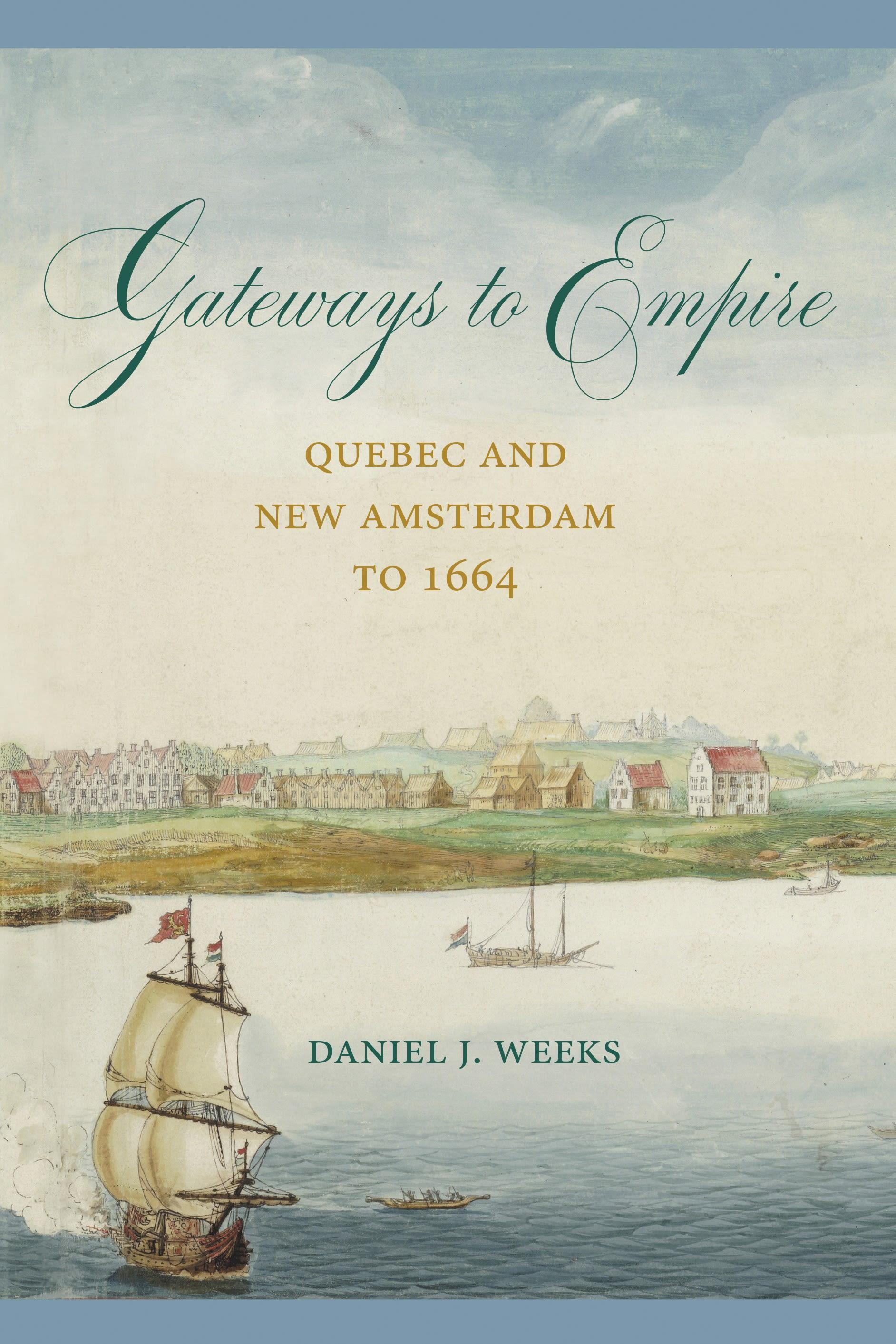
In Gateways to Empire: Quebec and New Amsterdam to 1664, historian Daniel Weeks has provided the first comprehensive comparative study of the North-American fur-trading colonies New France and New Netherland. While neither colony profited very much, if at all, from the fur trade (though many individuals fortunes were undoubtedly made), Weeks finds that New France, which far outpaced New Netherland in this trade, grew more slowly and had greater difficulty sustaining itself. As he demonstrates in Gateways to Empire, other factors, including New Netherland’s openness to religious and ethnic diversity and wider connections to the Atlantic World, allowed it to become more economically secure than its rival north of the St. Lawrence. And yet, in both cases, the principal towns of these European colonies—Quebec and New Amsterdam—moved beyond their initial purposes as hubs for trade with the indigenous peoples to become gateways to European settlement. In this, New Amsterdam, by the late 1640s, was singularly successful, so that it rapidly fostered the production of new European towns in its hinterlands, organizing the landscape for settlement and also for trade within the European-dominated Atlantic-World system.
Pay easily by card, Klarna, Apple Pay or Google Pay. Not happy? You always have a 14-day money-back guarantee. Read more in our terms. If you have any questions, email us at hello@memmo.org.
Memmo makes studying easier – wherever you are in the world. We bring your course books and smart study tools together in one place: summaries, quizzes, podcasts and flashcards. Plus Ted, your study buddy who answers anything you wonder. Over 50,000 students already study here – built to help you learn faster and stress less.