
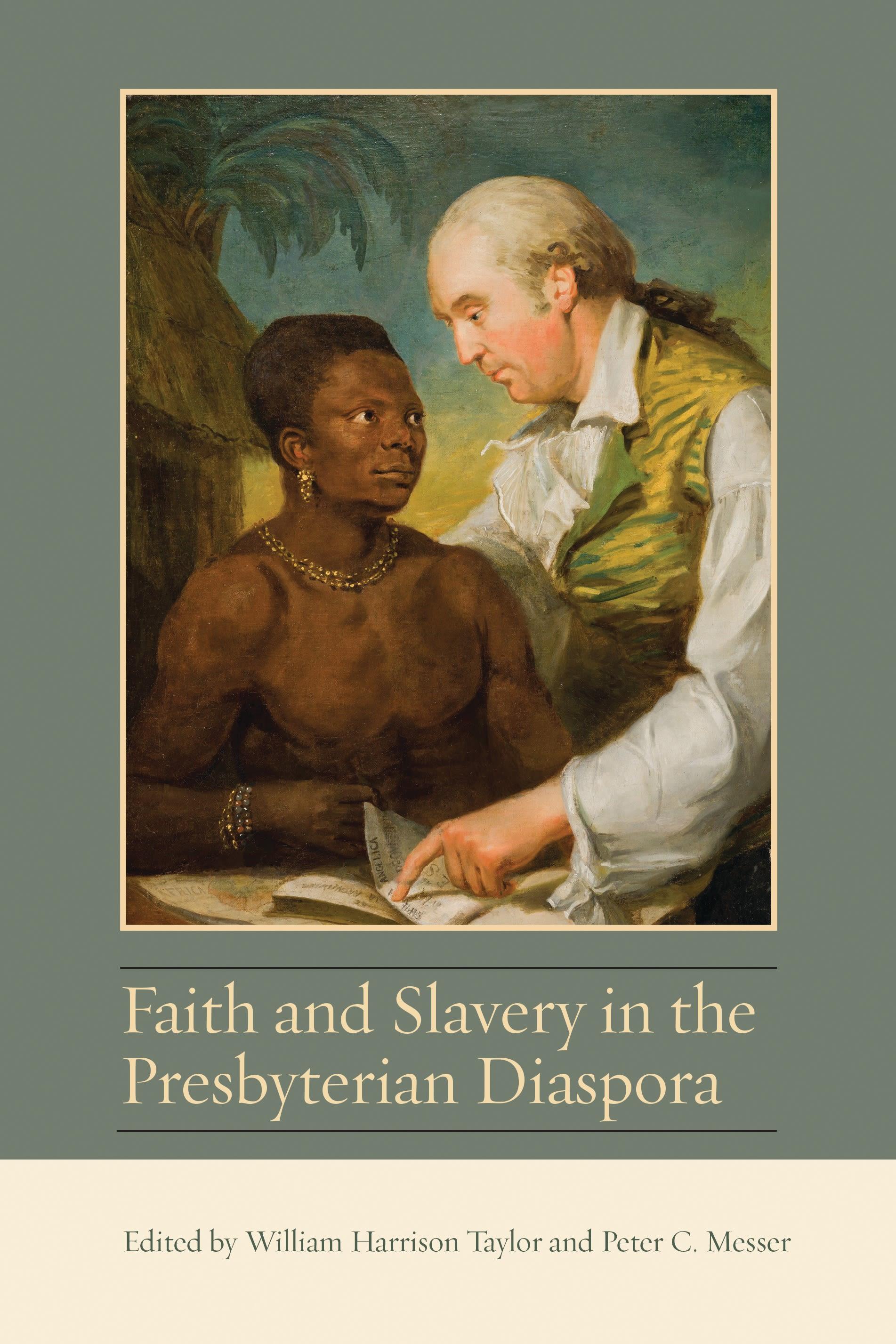
Faith and Slavery in the Presbyterian Diaspora considers how, in areas as diverse as the New Hebrides, Scotland, the United States, and East Central Africa, men’s and women’s shared Presbyterian faith conditioned their interpretations of and interactions with the institution of chattel slavery. The chapters highlight how Presbyterians’ reactions to slavery –which ranged from abolitionism, to indifference, to support—reflected their considered application of the principles of the Reformed Tradition to the institution. Consequently, this collection reveals how the particular ways in which Presbyterians framed the Reformed Tradition made slavery an especially problematic and fraught issue for adherents to the faith.
Faith and Slavery, by situating slavery at the nexus of Presbyterian theology and practice, offers a fresh perspective on the relationship between religion and slavery. It reverses the all too common assumption that religion primarily served to buttress existing views on slavery, by illustrating how groups’ and individuals reactions to slavery emerged from their understanding of the Presbyterian faith. The collection’s geographic reach—encompassing the experiences of people from Europe, Africa, America, and the Pacific—filtered through the lens of Presbyterianism also highlights the global dimensions of slavery and the debates surrounding it. The institution and the challenges it presented, Faith and Slavery stresses, reflected less the peculiar conditions of a particular place and time, than the broader human condition as people attempt to understand and shape their world.
Faith and Slavery, by situating slavery at the nexus of Presbyterian theology and practice, offers a fresh perspective on the relationship between religion and slavery. It reverses the all too common assumption that religion primarily served to buttress existing views on slavery, by illustrating how groups’ and individuals reactions to slavery emerged from their understanding of the Presbyterian faith. The collection’s geographic reach—encompassing the experiences of people from Europe, Africa, America, and the Pacific—filtered through the lens of Presbyterianism also highlights the global dimensions of slavery and the debates surrounding it. The institution and the challenges it presented, Faith and Slavery stresses, reflected less the peculiar conditions of a particular place and time, than the broader human condition as people attempt to understand and shape their world.
Pay easily by card, Klarna, Apple Pay or Google Pay. Not happy? You always have a 14-day money-back guarantee. Read more in our terms. If you have any questions, email us at hello@memmo.org.
Memmo makes studying easier – wherever you are in the world. We bring your course books and smart study tools together in one place: summaries, quizzes, podcasts and flashcards. Plus Ted, your study buddy who answers anything you wonder. Over 50,000 students already study here – built to help you learn faster and stress less.