
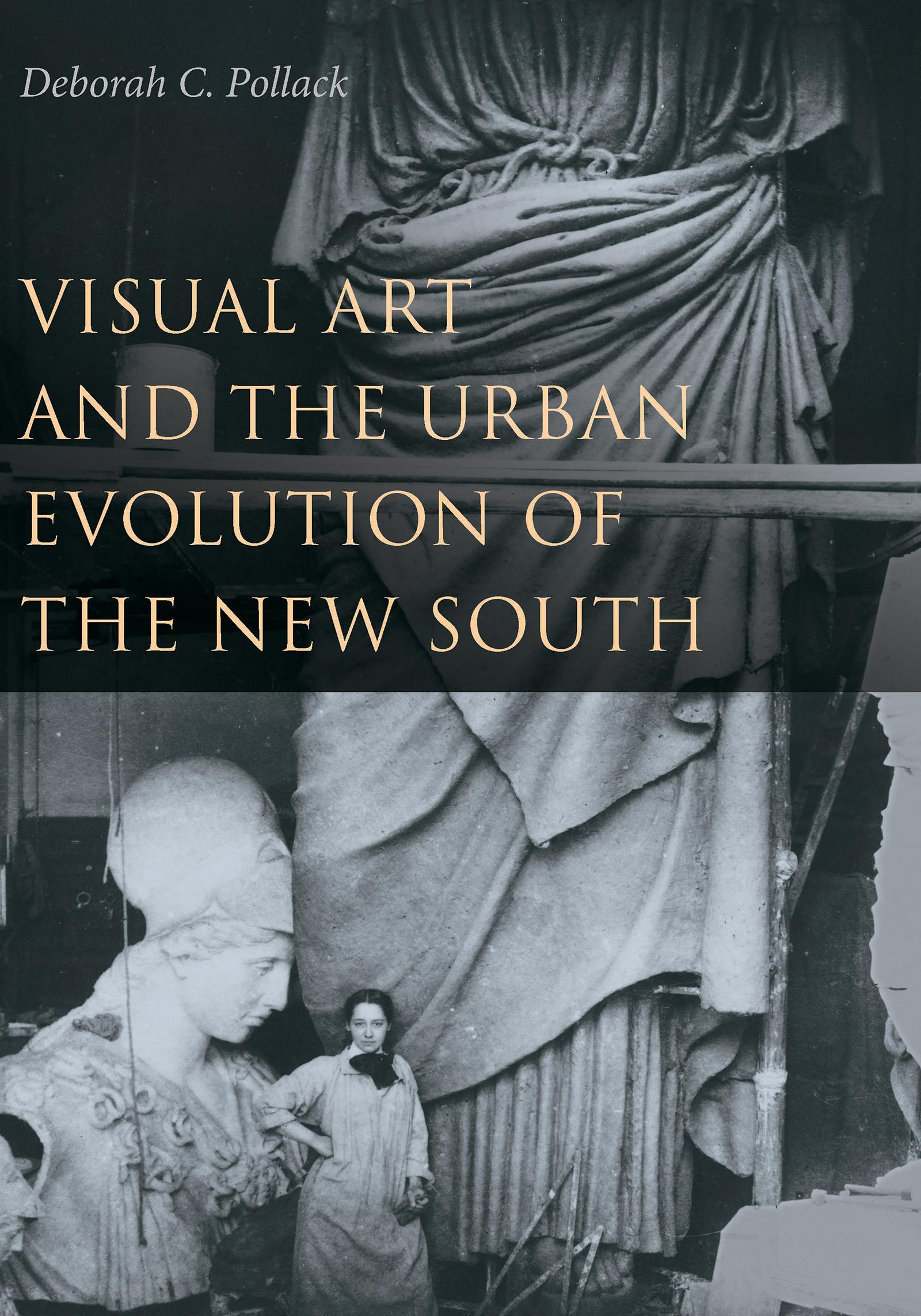
A lavishly illustrated study of the influence of artists on the development of six New South cities
Visual Art and the Urban Evolution of the New South recounts the enormous influence of artists in the evolution of six southern cities—Atlanta, Charleston, New Orleans, Louisville, Austin, and Miami—from 1865 to 1950. In the decades following the Civil War, painters, sculptors, photographers, and illustrators in these municipalities employed their talents to articulate concepts of the New South, aestheticism, and Gilded Age opulence and to construct a visual culture far beyond providing pretty pictures in public buildings and statues in city squares.
As Deborah C. Pollack investigates New South proponents such as Henry W. Grady of Atlanta and other regional leaders, she identifies "cultural strivers"—philanthropists, women's organizations, entrepreneurs, writers, architects, politicians, and dreamers—who united with visual artists to champion the arts both as a means of cultural preservation and as mechanisms of civic progress. Aestheticism, made popular by Oscar Wilde's southern tours during the Gilded Age, was another driving force in art creation and urban improvement. Specific art works occasionally precipitated controversy and incited public anger, yet for the most part artists of all kinds were recognized as providing inspirational incentives for self-improvement, civic enhancement and tourism, art appreciation, and personal fulfillment through the love of beauty.
Each of the six New South cities entered the late nineteenth century with fractured artistic heritages. Charleston and Atlanta had to recover from wartime devastation. The infrastructures of New Orleans and Louisville were barely damaged by war, but their social underpinnings were shattered by the end of slavery and postwar economic depression. Austin was not vitalized until after the Civil War and Miami was a post-Civil War creation. Pollack surveys these New South cities with an eye to understanding how each locale shaped its artistic and aesthetic self-perception across a spectrum of economic, political, gender, and race issues. She also discusses Lost Cause imagery, present in all the studied municipalities.
While many art history volumes concerning the South focus on sultry landscapes outside the urban grid, Visual Art and the Urban Evolution of the New South explores the art belonging to its cities, whether exhibited in its museums, expositions, and galleries, or reflective of its parks, plazas, marketplaces, industrial areas, gardens, and universities. It also identifies and celebrates the creative urban humanity who helped build the cultural and social framework for the modern southern city.
Pay easily by card, Klarna, Apple Pay or Google Pay. Not happy? You always have a 14-day money-back guarantee. Read more in our terms. If you have any questions, email us at hello@memmo.org.
Memmo makes studying easier – wherever you are in the world. We bring your course books and smart study tools together in one place: summaries, quizzes, podcasts and flashcards. Plus Ted, your study buddy who answers anything you wonder. Over 50,000 students already study here – built to help you learn faster and stress less.