
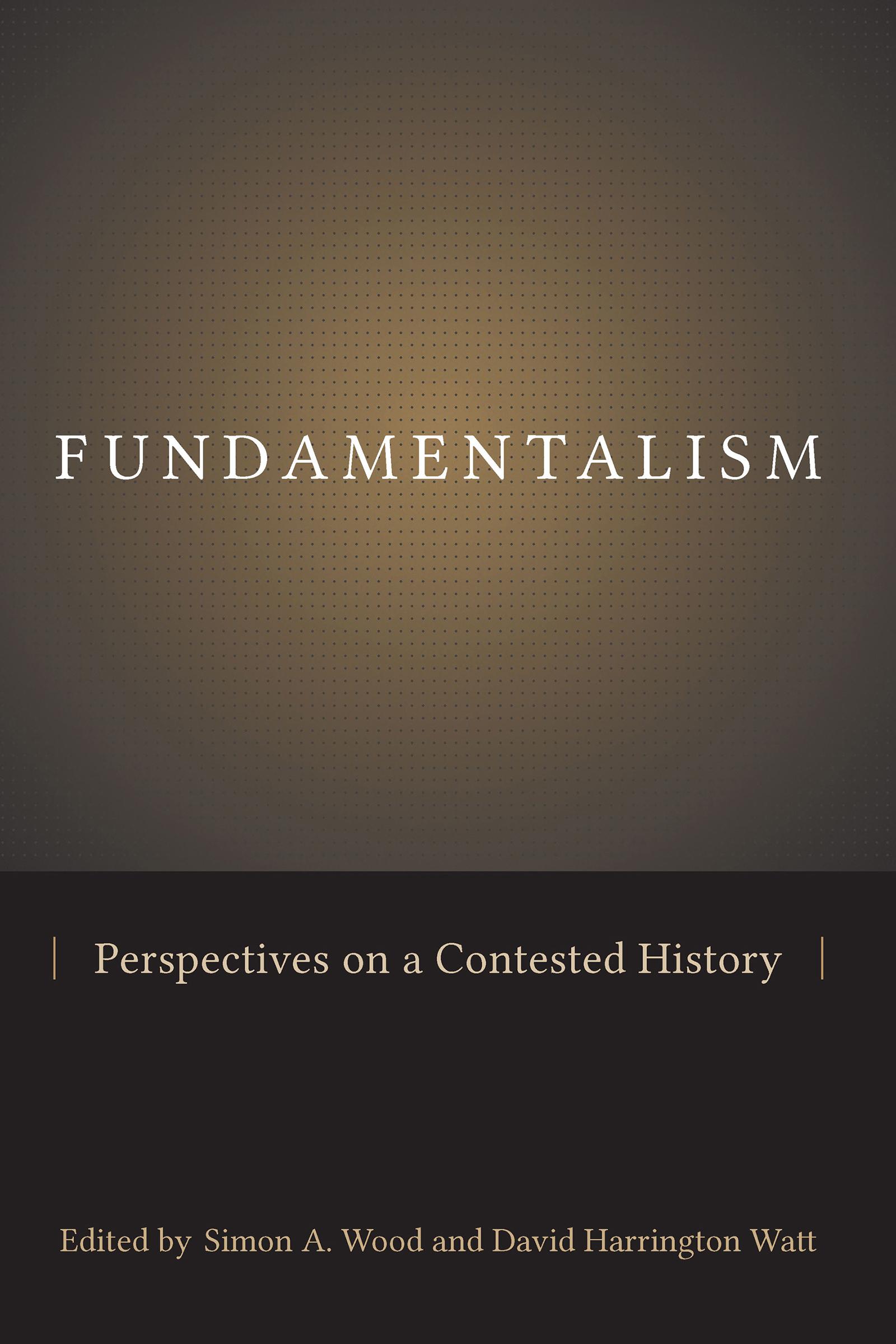
Essays considering how global fundamentalism influences our understanding of modern Christianity, Judaism, and Islam
Thirty years after the Iranian Revolution and more than a decade since the events of 2001, the time is right to examine what the discourse on fundamentalism has achieved and where it might head from here. In this volume editors Simon A. Wood and David Harrington Watt offer eleven interdisciplinary perspectives framed by the debate between advocates and critics of the concept of fundamentalism that investigate it with regard to Christianity, Islam, and Judaism. The essays are integrated through engagement with a common selection of texts on fundamentalism and a common set of questions about the utility and disadvantages of the term, its varied application by scholars of particular groups, and the extent to which the term can encompass a cross-cultural set of religious responses to modernity.
Although the notion of fundamentalism as a global phenomenon dates from around 1980, the term itself originated in North American Protestantism approximately six decades earlier and acquired pejorative connotations within five years of its invention. Since the early 1990s, however, many scholars have endorsed the view that the notion of fundamentalism—as relying on literalist interpretations of the scriptures, firm commitment to patriarchy, or refusal to confine religious matters to the private sphere—facilitates our understanding of modern religion by enabling us to identify and label structurally analogous developments in different religions. Critics of the term have identified problems with it, above all that the idea of global fundamentalism confuses more than it clarifies and unjustifiably overlooks, downplays, or homogenizes difference more than it identifies a genuine homogeny.
The editor's rigorous exploration of both the usefulness and the limitations of the concept make it an excellent counterpoint to the many books that have a great deal to say about the former and very little to say about the latter. It will also serve as an ideal text for religious studies, history, and anthropology courses that explore the complex interface between religion and modernity as well as courses on theory and method in religious studies.
Pay easily by card, Klarna, Apple Pay or Google Pay. Not happy? You always have a 14-day money-back guarantee. Read more in our terms. If you have any questions, email us at hello@memmo.org.
Memmo makes studying easier – wherever you are in the world. We bring your course books and smart study tools together in one place: summaries, quizzes, podcasts and flashcards. Plus Ted, your study buddy who answers anything you wonder. Over 50,000 students already study here – built to help you learn faster and stress less.