
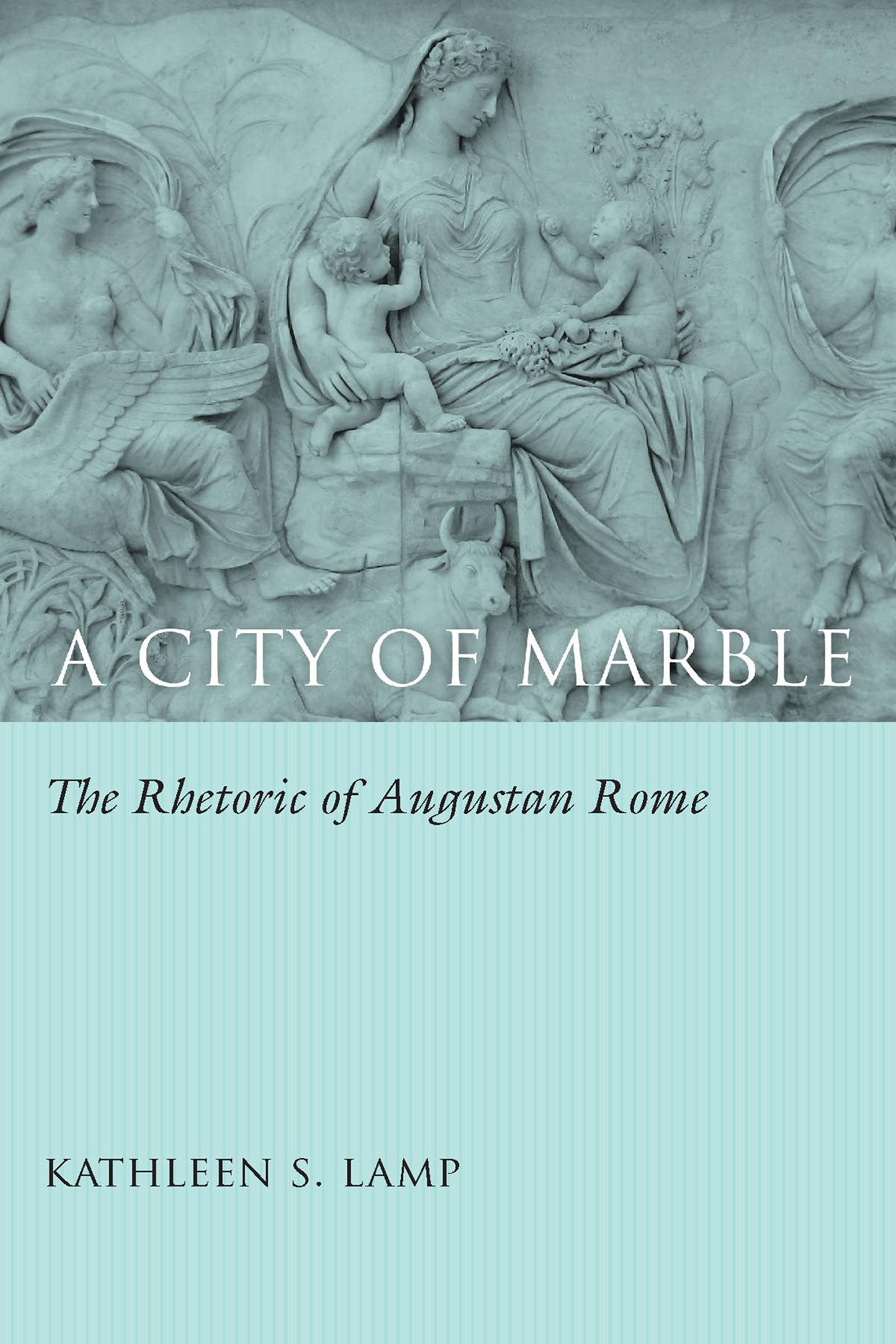
A transdisciplinary approach to the relationship between classical rhetoric and Augustan culture
In A City of Marble, Kathleen Lamp argues that classical rhetorical theory shaped the Augustan cultural campaigns and that in turn the Augustan cultural campaigns functioned rhetorically to help Augustus gain and maintain power and to influence civic identity and participation in the Roman Principate (27 b. c. e.—14 c. e.).
Lamp begins by studying rhetorical treatises, those texts most familiar to scholars of rhetoric, and moves on to those most obviously using rhetorical techniques in visual form. She then arrives at those objects least recognizable as rhetorical artifacts, but perhaps most significant to the daily lives of the Roman people—coins, altars, wall painting. This progression also captures the development of the Augustan political myth that Augustus was destined to rule and lead Rome to greatness as a descendant of the hero Aeneas.
A City of Marble examines the establishment of this myth in state rhetoric, traces its circulation, and finally samples its popular receptions and adaptations. In doing so, Lamp inserts a long-excluded though significant audience—the common people of Rome—into contemporary understandings of rhetorical history and considers Augustan culture as significant in shaping civic identity, encouraging civic participation, and promoting social advancement.
Lamp approaches the relationship between classical rhetoric and Augustan culture through a transdisciplinary methodology drawn from archaeology, art and architectural history, numismatics, classics, and rhetorical studies. By doing so, she grounds Dionysius of Halicarnassus's claims that the Principate represented a renaissance of rhetoric rooted in culture and a return to an Isocratean philosophical model of rhetoric, thus offering a counterstatement to the "decline narrative" that rhetorical practice withered in the early Roman Empire. Thus Lamp's work provides a step toward filling the disciplinary gap between Cicero and the Second Sophistic.
Pay easily by card, Klarna, Apple Pay or Google Pay. Not happy? You always have a 14-day money-back guarantee. Read more in our terms. If you have any questions, email us at hello@memmo.org.
Memmo makes studying easier – wherever you are in the world. We bring your course books and smart study tools together in one place: summaries, quizzes, podcasts and flashcards. Plus Ted, your study buddy who answers anything you wonder. Over 75,000 students already study here – built to help you learn faster and stress less.