
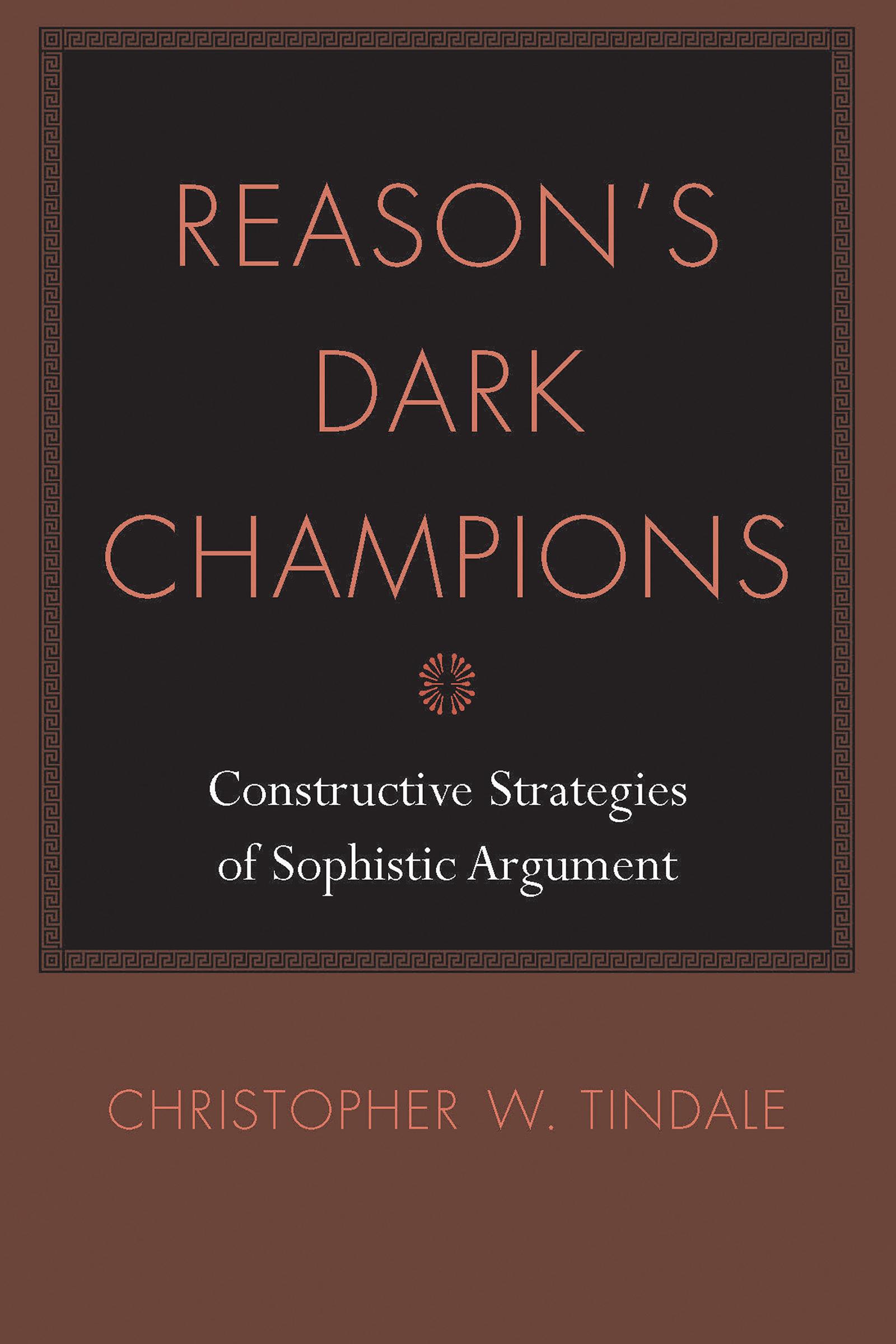
A complex and complete picture of the theory, practice, and reception of Sophistic argument
Recent decades have witnessed a major restoration of the Sophists' reputation, revising the Platonic and Aristotelian "orthodoxies" that have dominated the tradition. Still lacking is a full appraisal of the Sophists' strategies of argumentation. Christopher W. Tindale corrects that omission in Reason's Dark Champions. Viewing the Sophists as a group linked by shared strategies rather than by common epistemological beliefs, Tindale illustrates that the Sophists engaged in a range of argumentative practices in manners wholly different from the principal ways in which Plato and Aristotle employed reason. By examining extant fifth-century texts and the ways in which Sophistic reasoning is mirrored by historians, playwrights, and philosophers of the classical world, Tindale builds a robust understanding of Sophistic argument with relevance to contemporary studies of rhetoric and communication.
Beginning with the reception of the Sophists in their own culture, Tindale explores depictions of the Sophists in Plato's dialogues and the argumentative strategies attributed to them as a means of understanding the threat Sophism posed to Platonic philosophical ambitions of truth seeking. He also considers the nature of the "sophistical refutation" and its place in the tradition of fallacy. Tindale then turns to textual examples of specific argumentative practices, mapping how Sophists employed the argument from likelihood, reversal arguments, arguments on each side of a position, and commonplace reasoning. What emerges is a complex reappraisal of Sophism that reorients criticism of this mode of argumentation, expands understanding of Sophistic contributions to classical rhetoric, and opens avenues for further scholarship.
Pay easily by card, Klarna, Apple Pay or Google Pay. Not happy? You always have a 14-day money-back guarantee. Read more in our terms. If you have any questions, email us at hello@memmo.org.
Memmo makes studying easier – wherever you are in the world. We bring your course books and smart study tools together in one place: summaries, quizzes, podcasts and flashcards. Plus Ted, your study buddy who answers anything you wonder. Over 50,000 students already study here – built to help you learn faster and stress less.