
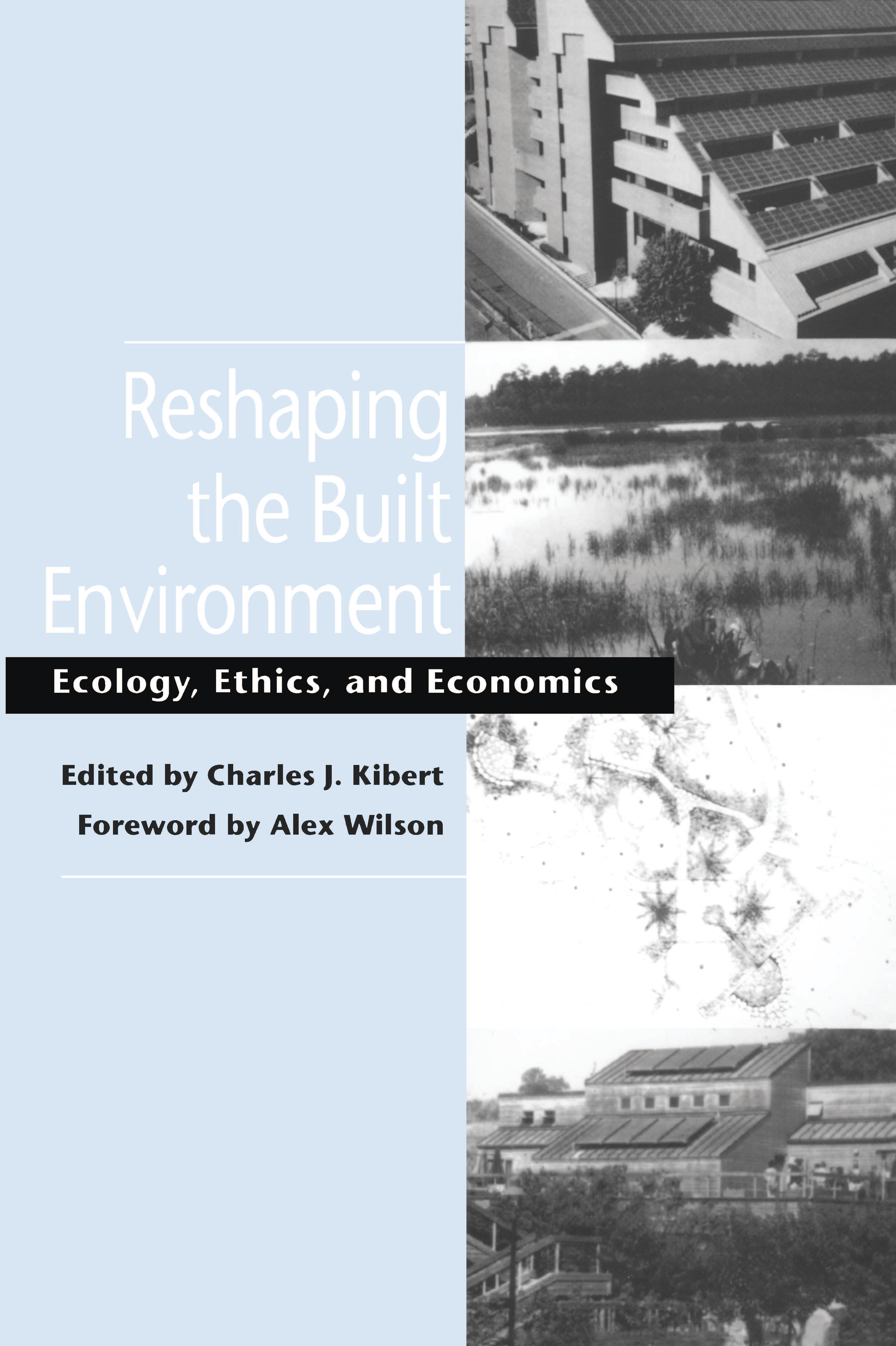
Because of the profound effects of the built environment on the availability of natural resources for future generations, those involved with designing, creating, operating, renovating, and demolishing human structures have a vital role to play in working to put society on a path toward sustainability.
This volume presents the thinking of leading academics and professionals in planning, civil engineering, economics, ecology, architecture, landscape architecture, construction, and related fields who are seeking to discover ways of creating a more sustainable built environment. Contributors address the broad range of issues involved, offering both insights and practical examples. In the book:
- Stephen Kellert describes the scope of the looming ecological crisis
- Herman Daly explains the unsustainability of the world's economic system and the dangers inherent in the current movement toward globalization
- John Todd describes the evolution of wastewater processing systems inspired by natural systems
- John Tillman Lyle discusses the importance of landscape in the creation of the human environment
- Randall Arendt argues for a fundamental shift in land development patterns that would not only provide for more green space in new developments, but would also increase the profitability of developers and the quality of life for new home owners
- Thomas E. Graedel proposes the application of lessons learned from the emerging science of industrial ecology to the creation of "green" building.
Pay easily by card, Klarna, Apple Pay or Google Pay. Not happy? You always have a 14-day money-back guarantee. Read more in our terms. If you have any questions, email us at hello@memmo.org.
Memmo makes studying easier – wherever you are in the world. We bring your course books and smart study tools together in one place: summaries, quizzes, podcasts and flashcards. Plus Ted, your study buddy who answers anything you wonder. Over 75,000 students already study here – built to help you learn faster and stress less.