
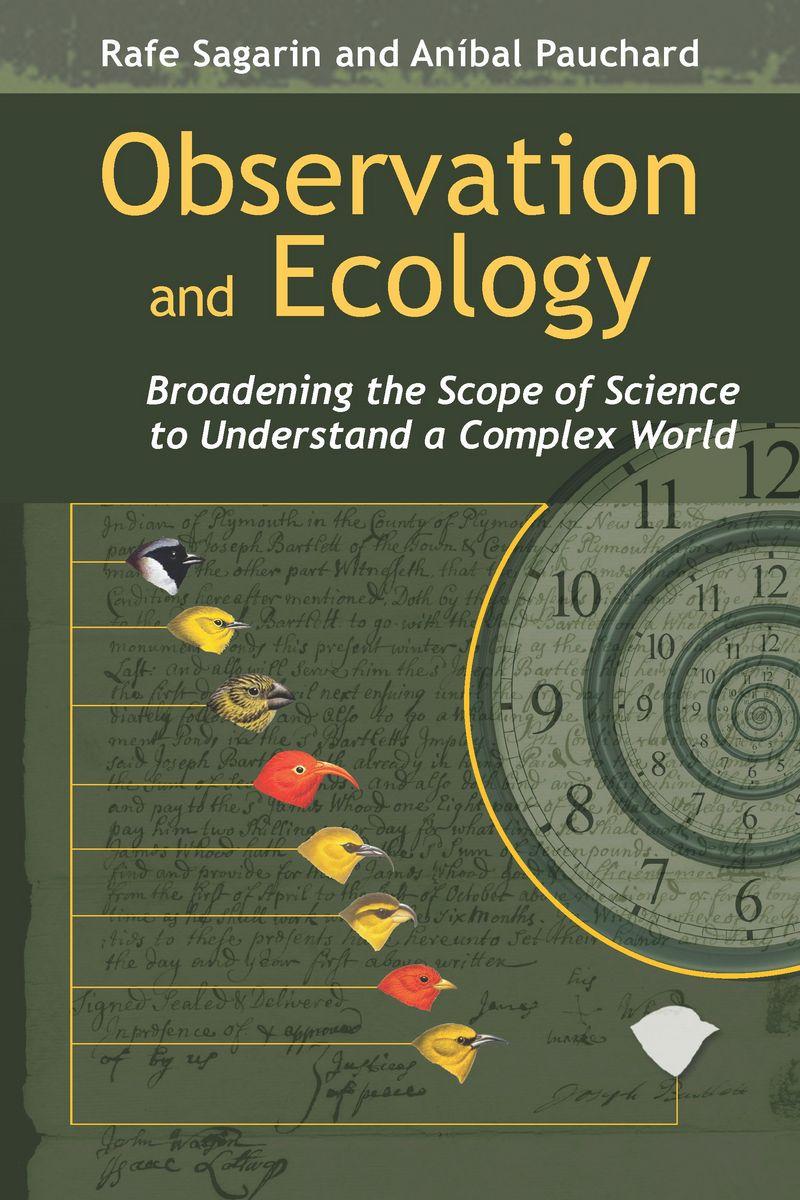
The need to understand and address large-scale environmental problems that are difficult to study in controlled environments—issues ranging from climate change to overfishing to invasive species—is driving the field of ecology in new and important directions. Observation and Ecology documents that transformation, exploring how scientists and researchers are expanding their methodological toolbox to incorporate an array of new and reexamined observational approaches—from traditional ecological knowledge to animal-borne sensors to genomic and remote-sensing technologies—to track, study, and understand current environmental problems and their implications.
The authors paint a clear picture of what observational approaches to ecology are and where they fit in the context of ecological science. They consider the full range of observational abilities we have available to us and explore the challenges and practical difficulties of using a primarily observational approach to achieve scientific understanding. They also show how observations can be a bridge from ecological science to education, environmental policy, and resource management.
Observations in ecology can play a key role in understanding our changing planet and the consequences of human activities on ecological processes. This book will serve as an important resource for future scientists and conservation leaders who are seeking a more holistic and applicable approach to ecological science.
Pay easily by card, Klarna, Apple Pay or Google Pay. Not happy? You always have a 14-day money-back guarantee. Read more in our terms. If you have any questions, email us at hello@memmo.org.
Memmo makes studying easier – wherever you are in the world. We bring your course books and smart study tools together in one place: summaries, quizzes, podcasts and flashcards. Plus Ted, your study buddy who answers anything you wonder. Over 50,000 students already study here – built to help you learn faster and stress less.