
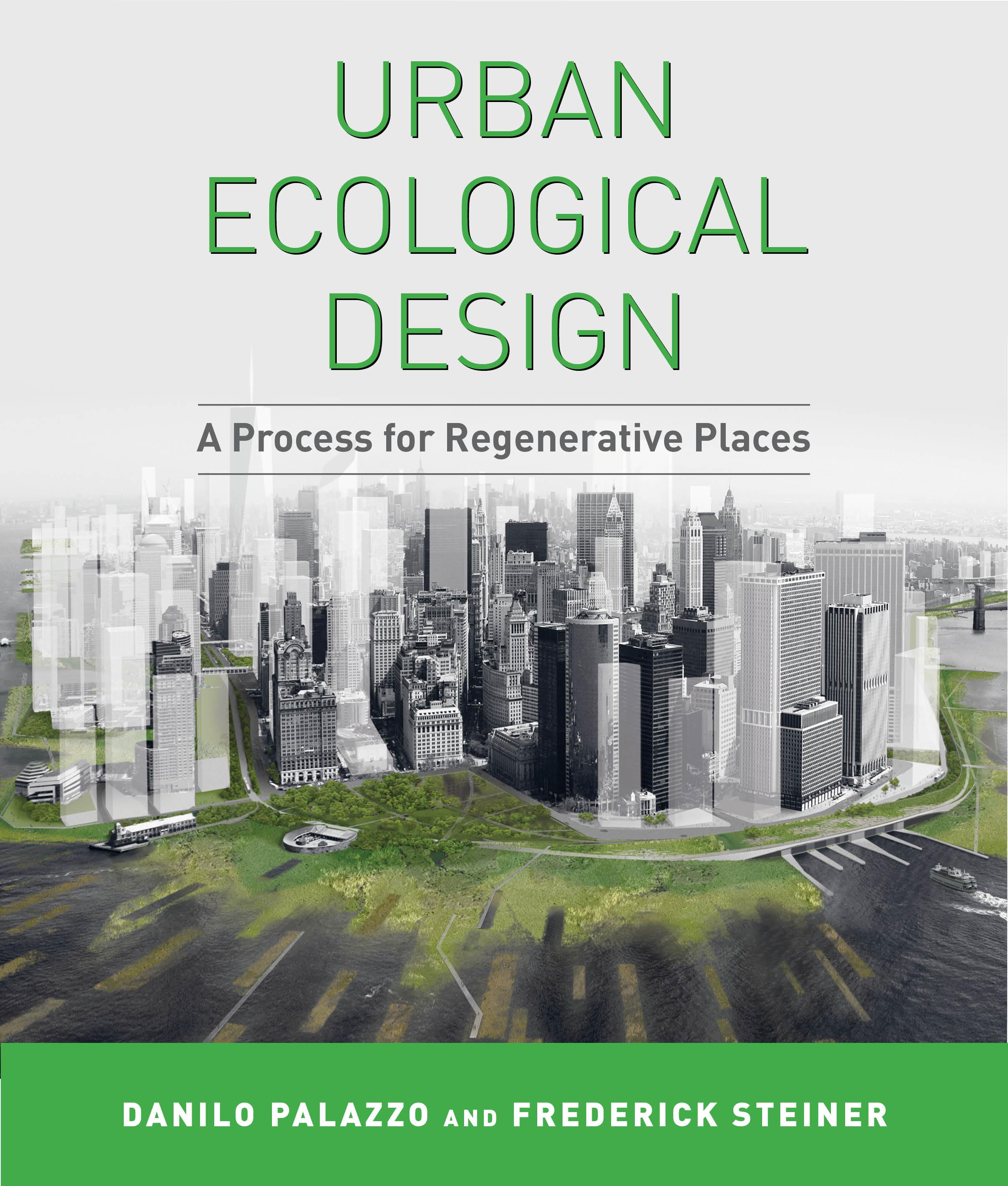
This trailblazing book outlines an interdisciplinary "process model" for urban design that has been developed and tested over time. Its goal is not to explain how to design a specific city precinct or public space, but to describe useful steps to approach the transformation of urban spaces. Urban Ecological Design illustrates the different stages in which the process is organized, using theories, techniques, images, and case studies. In essence, it presents a "how-to" method to transform the urban landscape that is thoroughly informed by theory and practice.
The authors note that urban design is viewed as an interface between different disciplines. They describe the field as "peacefully overrun, invaded, and occupied" by city planners, architects, engineers, and landscape architects (with developers and politicians frequently joining in). They suggest that environmental concerns demand the consideration of ecology and sustainability issues in urban design. It is, after all, the urban designer who helps to orchestrate human relationships with other living organisms in the built environment.
The overall objective of the book is to reinforce the role of the urban designer as an honest broker and promoter of design processes and as an active agent of social creativity in the production of the public realm.
Pay easily by card, Klarna, Apple Pay or Google Pay. Not happy? You always have a 14-day money-back guarantee. Read more in our terms. If you have any questions, email us at hello@memmo.org.
Memmo makes studying easier – wherever you are in the world. We bring your course books and smart study tools together in one place: summaries, quizzes, podcasts and flashcards. Plus Ted, your study buddy who answers anything you wonder. Over 50,000 students already study here – built to help you learn faster and stress less.