
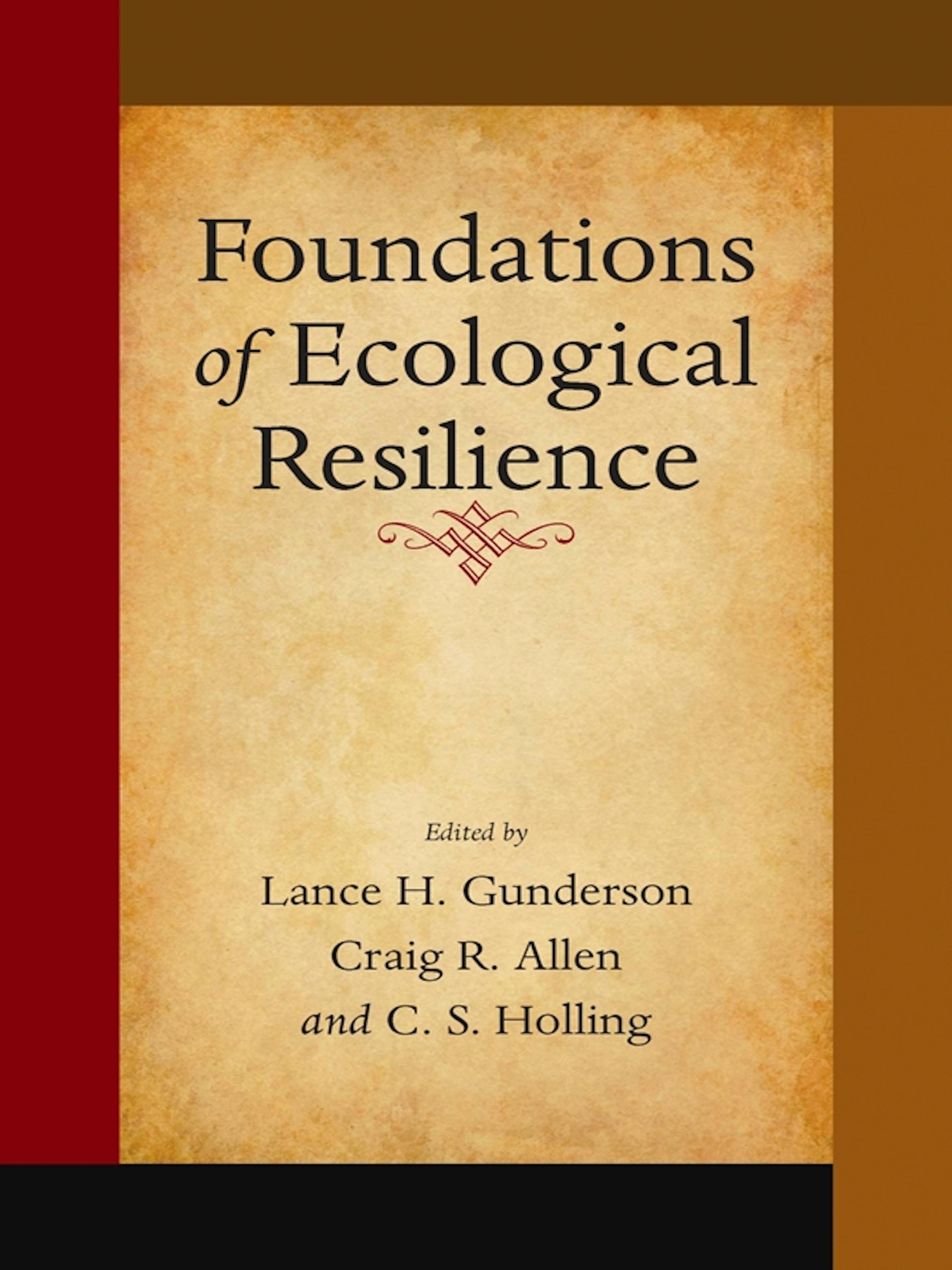
Ecological resilience provides a theoretical foundation for understanding how complex systems adapt to and recover from localized disturbances like hurricanes, fires, pest outbreaks, and floods, as well as large-scale perturbations such as climate change. Ecologists have developed resilience theory over the past three decades in an effort to explain surprising and nonlinear dynamics of complex adaptive systems. Resilience theory is especially important to environmental scientists for its role in underpinning
adaptive management approaches to ecosystem and resource management.
Foundations of Ecological Resilience is a collection of the most important articles on the subject of ecological resilience—those writings that have defined and developed basic concepts in the field and help explain its importance and meaning for scientists and researchers.
The book’s three sections cover articles that have shaped or defined the concepts and theories of resilience, including key papers that broke new conceptual ground and contributed novel ideas to the field; examples that demonstrate ecological resilience in a range of ecosystems; and articles that present practical methods for understanding and managing nonlinear ecosystem dynamics.
Foundations of Ecological Resilience is an important contribution to our collective understanding of resilience and an invaluable resource for students and scholars in ecology, wildlife ecology, conservation biology, sustainability, environmental science, public policy, and related fields.
Pay easily by card, Klarna, Apple Pay or Google Pay. Not happy? You always have a 14-day money-back guarantee. Read more in our terms. If you have any questions, email us at hello@memmo.org.
Memmo makes studying easier – wherever you are in the world. We bring your course books and smart study tools together in one place: summaries, quizzes, podcasts and flashcards. Plus Ted, your study buddy who answers anything you wonder. Over 50,000 students already study here – built to help you learn faster and stress less.