
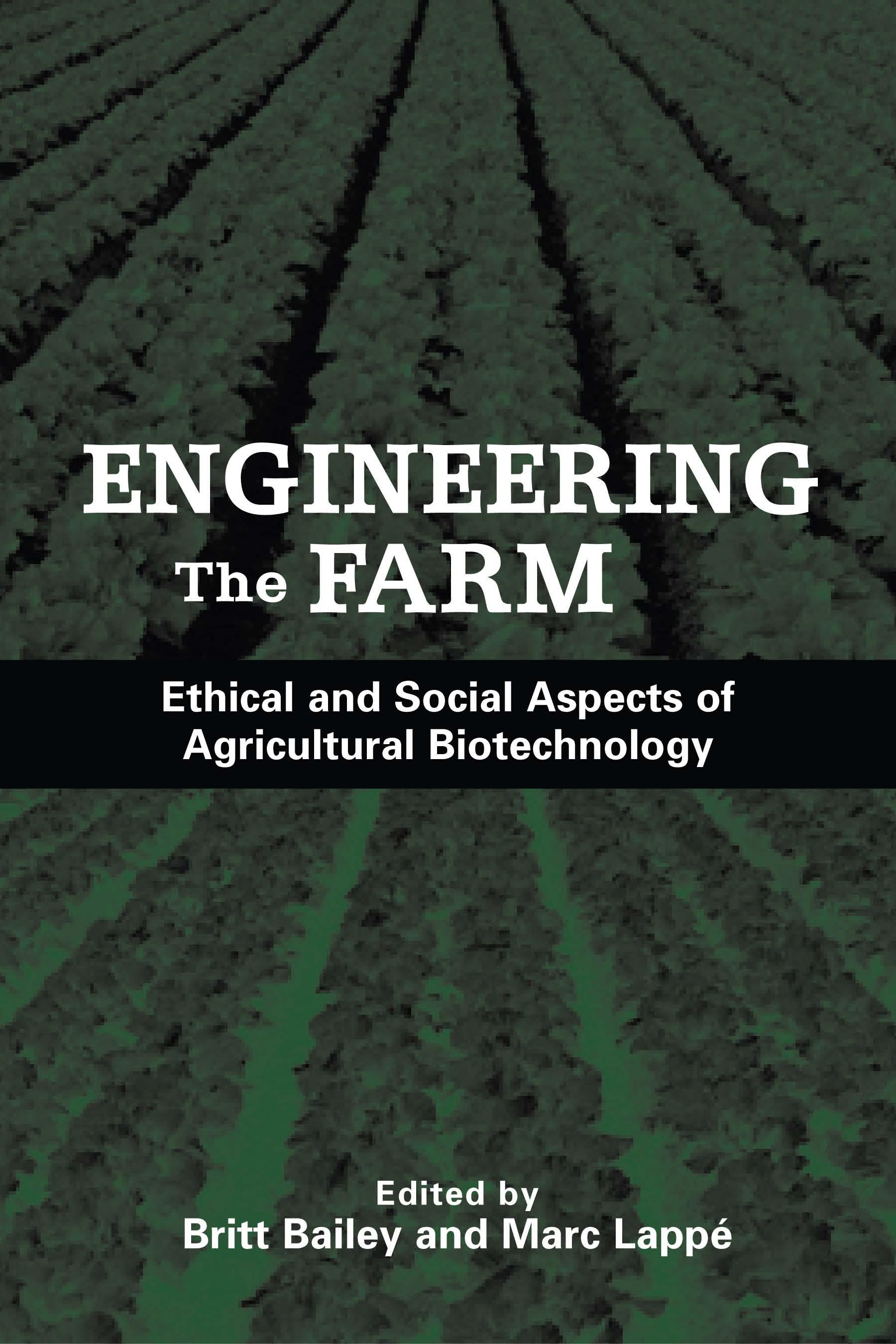
Engineering the Farm offers a wide-ranging examination of the social and ethical issues surrounding the production and consumption of genetically modified organisms (GMOs), with leading thinkers and activists taking a broad theoretical approach to the subject. Topics covered include:
- the historical roots of the anti-biotechnology movement
- ethical issues involved in introducing genetically altered crops
- questions of patenting and labeling
- the "precautionary principle" and its role in the regulation of GMOs
- effects of genetic modification on the world's food supply
- ecological concerns and impacts on traditional varieties of domesticated crops
- potential health effects of GMOs
Contributors argue that the scope, scale, and size of the present venture in crop modification is so vast and intensive that a thoroughgoing review of agricultural biotechnology must consider its global, moral, cultural, and ecological impacts as well as its effects on individual consumers. Throughout, they argue that more research is needed on genetically modified food and that consumers are entitled to specific information about how food products have been developed.
Despite its increasing role in worldwide food production, little has been written about the broader social and ethical implications of GMOs. Engineering the Farm offers a unique approach to the subject for academics, activists, and policymakers involved with questions of environmental policy, ethics, agriculture, environmental health, and related fields.
Pay easily by card, Klarna, Apple Pay or Google Pay. Not happy? You always have a 14-day money-back guarantee. Read more in our terms. If you have any questions, email us at hello@memmo.org.
Memmo makes studying easier – wherever you are in the world. We bring your course books and smart study tools together in one place: summaries, quizzes, podcasts and flashcards. Plus Ted, your study buddy who answers anything you wonder. Over 50,000 students already study here – built to help you learn faster and stress less.