
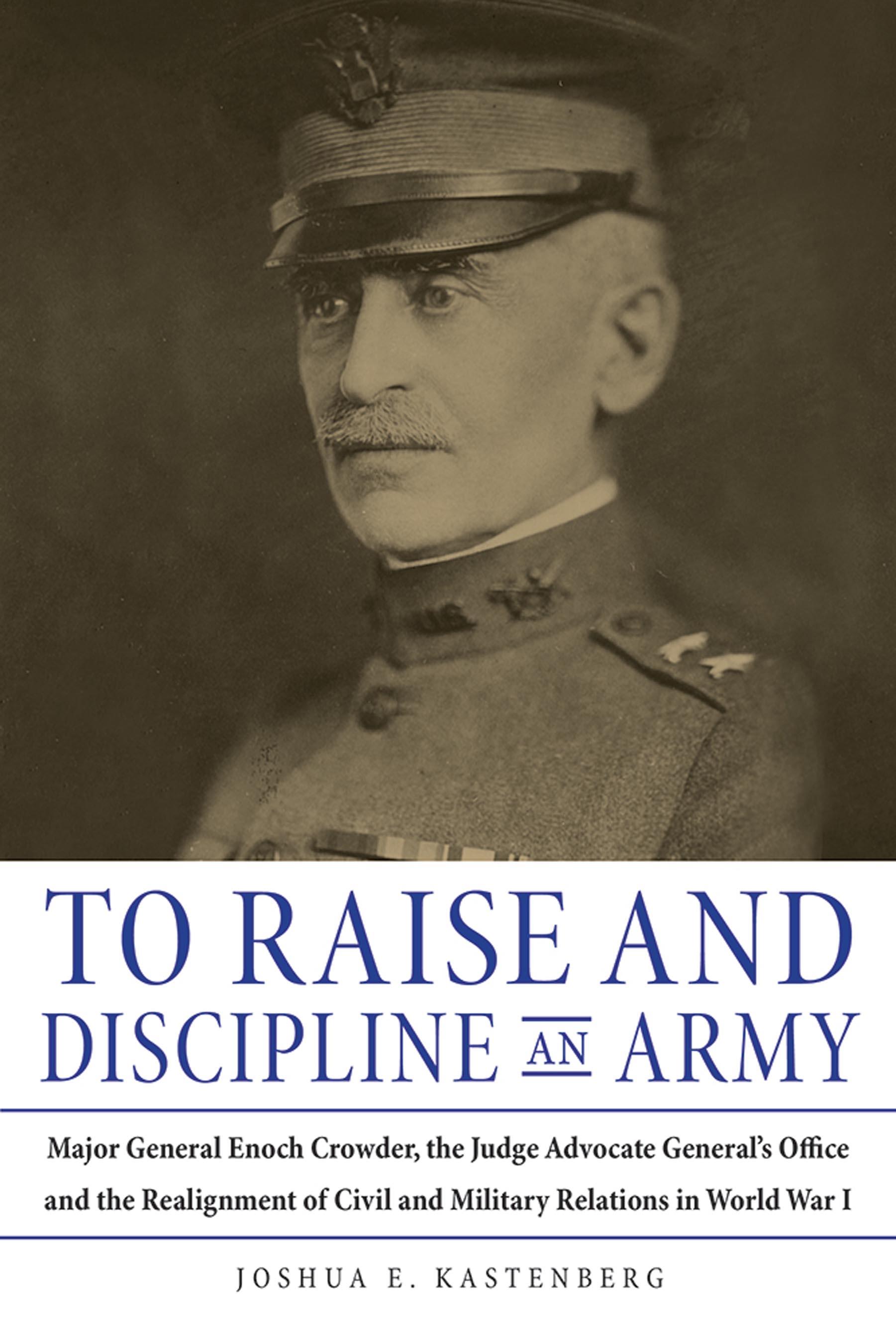
Major General Enoch Crowder served as the Judge Advocate General of the United States Army from 1911 to 1923. In 1915, Crowder convinced Congress to increase the size of the Judge Advocate General's Office—the legal arm of the United States Army—from thirteen uniformed attorneys to more than four hundred. Crowder's recruitment of some of the nation's leading legal scholars, as well as former congressmen and state supreme court judges, helped legitimize President Woodrow Wilson's wartime military and legal policies. As the United States entered World War I in 1917, the army numbered about 120,000 soldiers. The Judge Advocate General's Office was instrumental in extending the military's reach into the everyday lives of citizens to enable the construction of an army of more than four million soldiers by the end of the war. Under Crowder's leadership, the office was responsible for the creation and administration of the Selective Service Act, under which thousands of men were drafted into military service, as well as enforcement of the Espionage Act and wartime prohibition. In this first published history of the Judge Advocate General's Office between the years of 1914 and 1922, Joshua Kastenberg examines not only courts-martial, but also the development of the laws of war and the changing nature of civil-military relations. The Judge Advocate General's Office influenced the legislative and judicial branches of the government to permit unparalleled assertions of power, such as control over local policing functions and the economy. Judge advocates also altered the nature of laws to recognize a person's diminished mental health as a defense in criminal trials, influenced the assertion of US law overseas, and affected the evolving nature of the law of war. This groundbreaking study will appeal to scholars, students, and general readers of US history, as well as military, legal, and political historians.
Pay easily by card, Klarna, Apple Pay or Google Pay. Not happy? You always have a 14-day money-back guarantee. Read more in our terms. If you have any questions, email us at hello@memmo.org.
Memmo makes studying easier – wherever you are in the world. We bring your course books and smart study tools together in one place: summaries, quizzes, podcasts and flashcards. Plus Ted, your study buddy who answers anything you wonder. Over 50,000 students already study here – built to help you learn faster and stress less.