
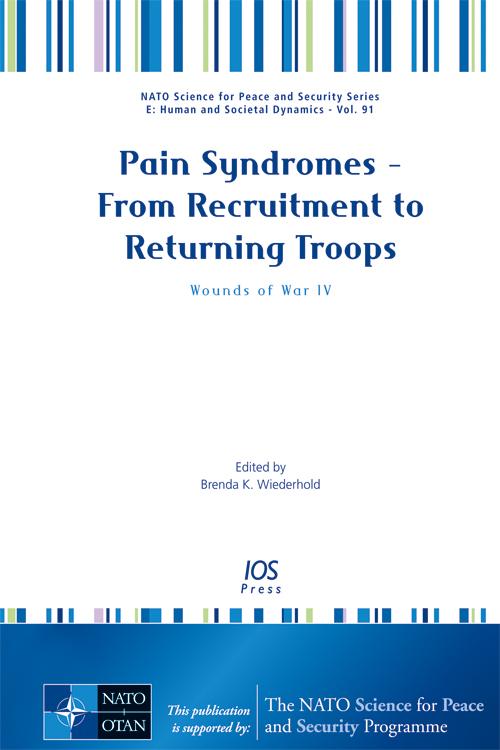
It has been shown that those who have served in both combat missions and peacekeeping operations are at increased risk for pain syndromes. Research suggests that this may result from their “wounds of war.” Some wounds may be “invisible,” such as depression, stress, and chronic pain, while others, such as physical disabilities, are more obvious.
In October 2011, twenty-seven scientists and representatives from NATO and partner countries met in Südkärnten, Austria for a three-day NATO Advanced Research Workshop entitled “Wounds of War: Pain Syndromes – From Recruitment to Returning Troops.”
The aim of this publication, which presents papers from that workshop, is to critically assess the existing knowledge and to identify directions for future actions.
The book addresses four key questions:
1. Vulnerability to Pain syndromes: Are certain types of people at a higher risk for pain syndromes (background, ethnicity, childhood trauma, etc.)?
2. Diagnosis and Assessment Issues of Pain Syndromes: Which methods are used to diagnose and assess pain?
3. Treatment of Pain Syndromes: What are the latest treatment and therapy opportunities for soldiers who experience pain syndromes?
4. Clinical Updates on Pain Syndromes: What can we learn from recent clinical updates on pain syndromes?
Pay easily by card, Klarna, Apple Pay or Google Pay. Not happy? You always have a 14-day money-back guarantee. Read more in our terms. If you have any questions, email us at hello@memmo.org.
Memmo makes studying easier – wherever you are in the world. We bring your course books and smart study tools together in one place: summaries, quizzes, podcasts and flashcards. Plus Ted, your study buddy who answers anything you wonder. Over 50,000 students already study here – built to help you learn faster and stress less.