
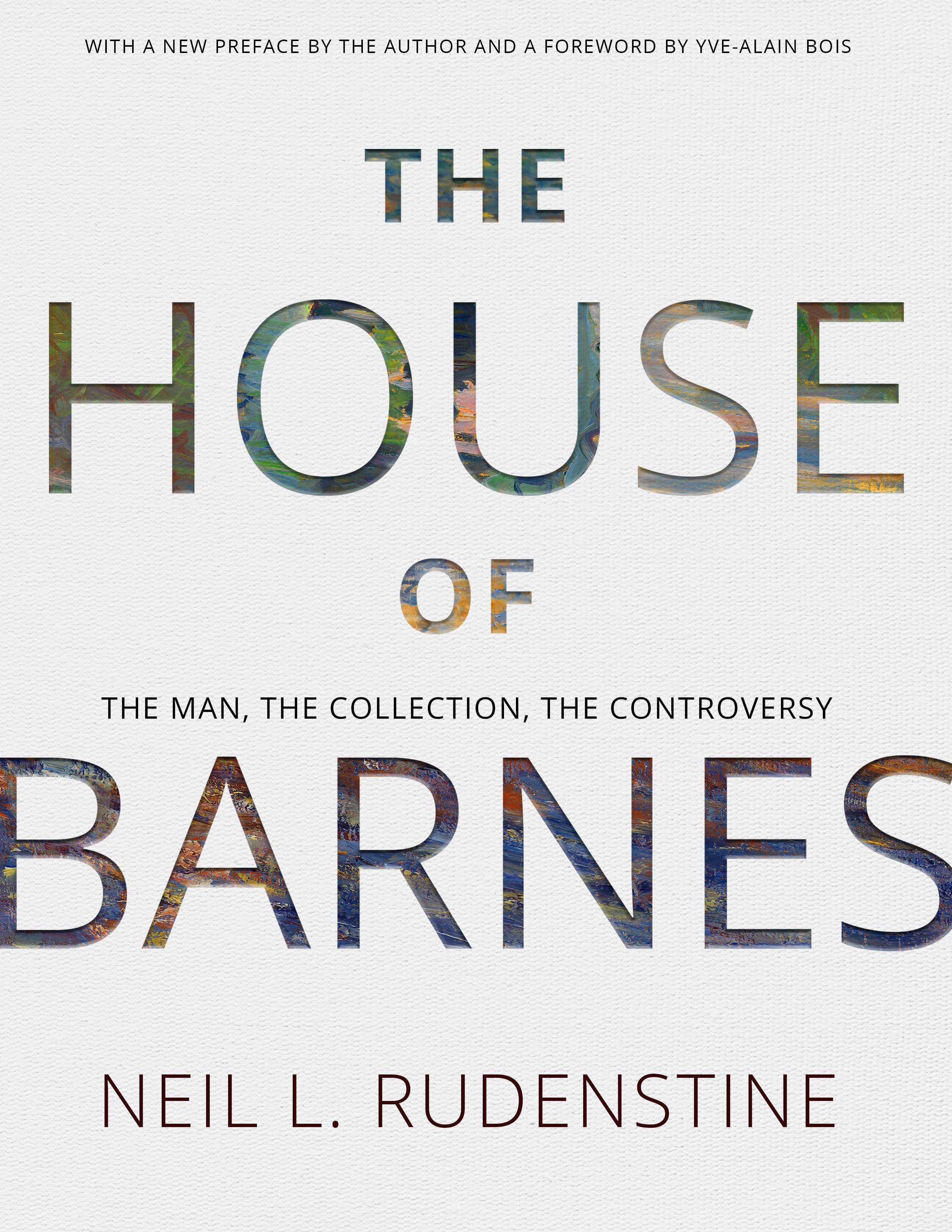
The life and times of extraordinary Philadelphia art collector Albert C. Barnes
Philadelphia art collector Albert C. Barnes (1872–1951) is renowned today for collecting many of the world’s most important impressionist, post-impressionist, and modern paintings, and displaying them alongside African masks, Native American jewelry, Greek antiquities, and decorative metalwork. The museum that bears his name holds more than eight hundred paintings, with a strong focus on Renoir, Cézanne, Matisse, and Picasso, as well as other European and American masters.
In The House of Barnes, Neil L. Rudenstine provides the first scholarly study on the historical, art historical, and political context during which Barnes purchased his masterpieces and attempted to redefine aesthetic education. Inspired by his good friend John Dewey’s educational philosophy, Barnes held art-appreciation classes for the workers in his factory. His successes there led him to establish the Barnes Foundation in Merion, Pennsylvania—more as an educational experiment than a typical museum.
In 2012, the Barnes Foundation moved to the Benjamin Franklin Parkway in Philadelphia. Rudenstine presents the controversial events surrounding the Barnes Foundation’s move to Philadelphia, including an analysis of the Foundation’s financial plight, a review of the major court cases over the decades, and a characterization of the fervent reactions following the court’s decision to allow the move to take place.
The House of Barnes chronicles the life and times of an extraordinary collector and the continued endurance of the Barnes Foundation long after the death of its founder. Originally published in 2012, this new edition contains sixteen pages of full-color reproductions of masterpieces from the collection, a new preface from the author, and a foreword from the prominent art historian Yve-Alain Bois.
Pay easily by card, Klarna, Apple Pay or Google Pay. Not happy? You always have a 14-day money-back guarantee. Read more in our terms. If you have any questions, email us at hello@memmo.org.
Memmo makes studying easier – wherever you are in the world. We bring your course books and smart study tools together in one place: summaries, quizzes, podcasts and flashcards. Plus Ted, your study buddy who answers anything you wonder. Over 50,000 students already study here – built to help you learn faster and stress less.