
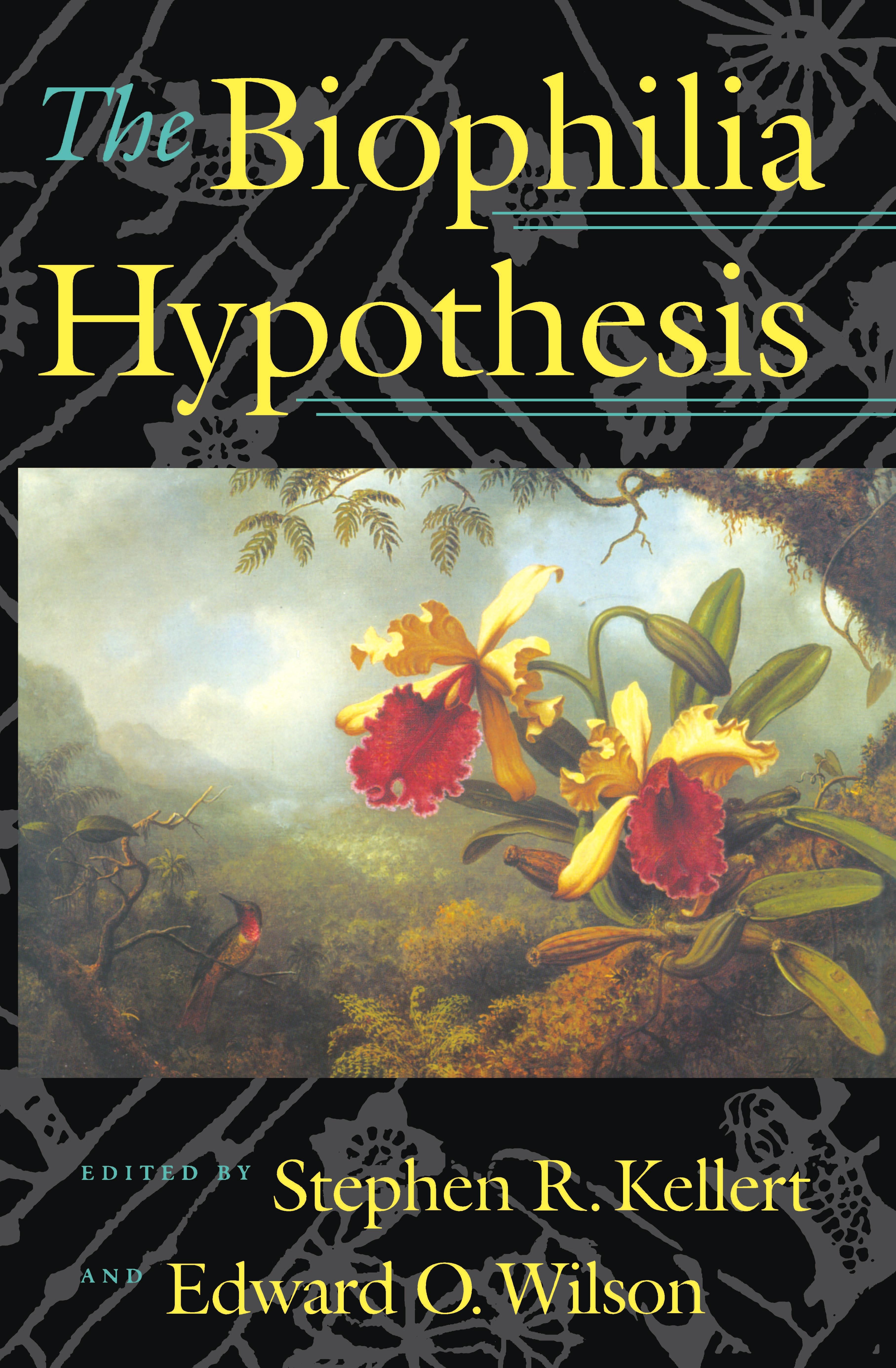
The Biophilia Hypothesis
"Biophilia" is the term coined by Edward O. Wilson to describe what he believes is humanity's innate affinity for the natural world. In his landmark book Biophilia, he examined how our tendency to focus on life and lifelike processes might be a biologically based need, integral to our development as individuals and as a species. That idea has caught the imagination of diverse thinkers.
The Biophilia Hypothesis brings together the views of some of the most creative scientists of our time, each attempting to amplify and refine the concept of biophilia. The variety of perspectives -- psychological, biological, cultural, symbolic, and aesthetic -- frame the theoretical issues by presenting empirical evidence that supports or refutes the hypothesis. Numerous examples illustrate the idea that biophilia and its converse, biophobia, have a genetic component:
- fear, and even full-blown phobias of snakes and spiders are quick to develop with very little negative reinforcement, while more threatening modern artifacts -- knives, guns, automobiles -- rarely elicit such a response
- people find trees that are climbable and have a broad, umbrella-like canopy more attractive than trees without these characteristics
- people would rather look at water, green vegetation, or flowers than built structures of glass and concrete
Pay easily by card, Klarna, Apple Pay or Google Pay. Not happy? You always have a 14-day money-back guarantee. Read more in our terms. If you have any questions, email us at hello@memmo.org.
Memmo makes studying easier – wherever you are in the world. We bring your course books and smart study tools together in one place: summaries, quizzes, podcasts and flashcards. Plus Ted, your study buddy who answers anything you wonder. Over 50,000 students already study here – built to help you learn faster and stress less.