
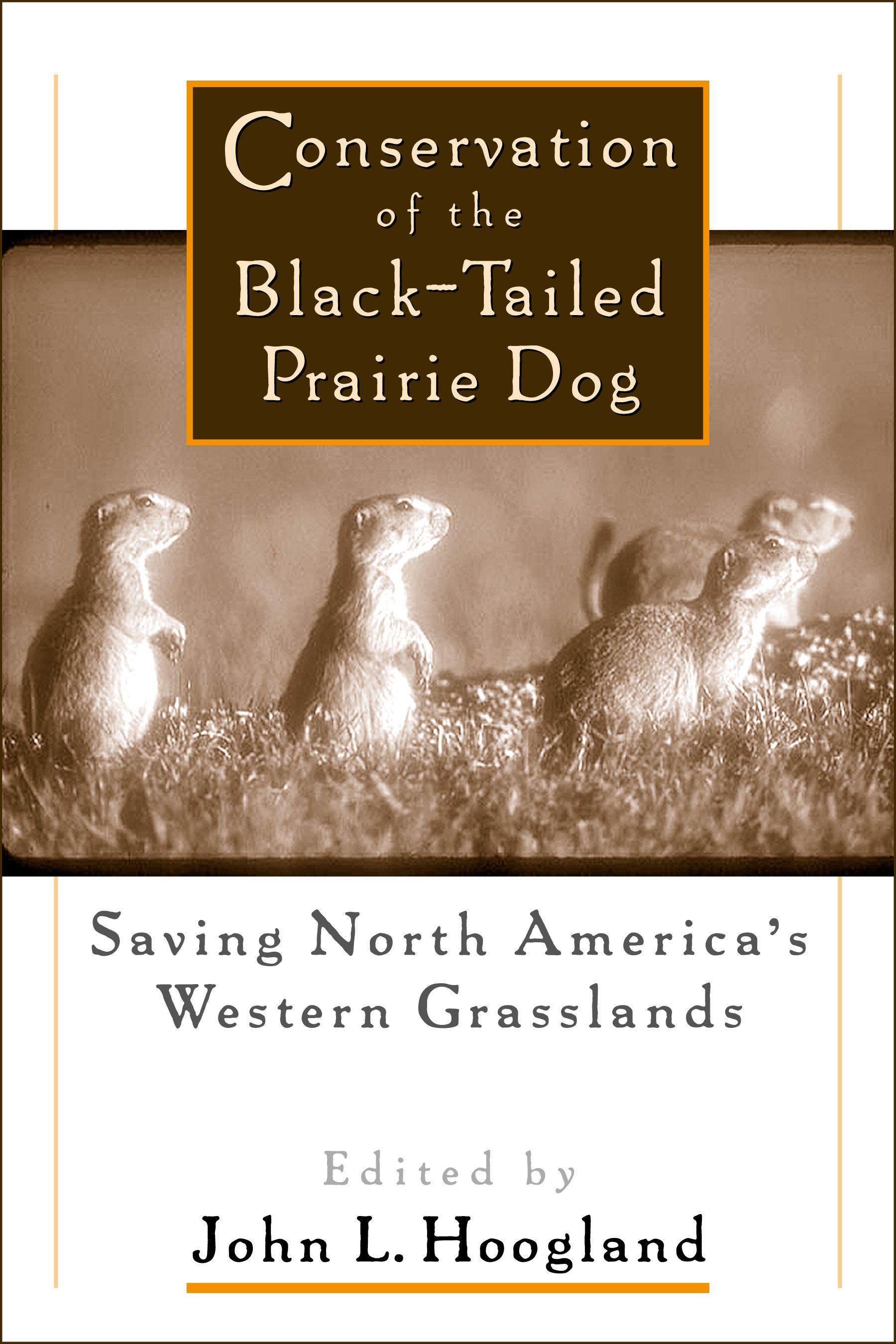
The prairie dog is a colonial, keystone species of the grassland ecosystem of western North America. Myriad animals regularly visit colony-sites to feed on the grass there, to use the burrows for shelter or nesting, or to prey on the prairie dogs. Unfortunately, prairie dogs are disappearing, and the current number is only about 2% of the number encountered by Lewis and Clark in the early 1800s.
Part I of Conservation of the Black-Tailed Prairie Dog summarizes ecology and social behavior for pivotal issues such as when prairie dogs breed, how far they disperse, how they affect other organisms, and how much they compete with livestock. Part II documents how loss of habitat, poisoning, plague, and recreational shooting have caused the precipitous decline of prairie dog populations over the last 200 years. Part III proposes practical solutions that can ensure the long-term survival of the prairie dog and its grassland ecosystem, and also are fair to private landowners. We cannot expect farmers and ranchers to bear all the costs of conservation while the rest of us enjoy all the benefits.
With 700 references, 37 tables, 75 figures and photographs, and a glossary, Conservation of the Black-Tailed Prairie Dog is a unique and vital contribution for wildlife managers, politicians, environmentalists, and curious naturalists.
Pay easily by card, Klarna, Apple Pay or Google Pay. Not happy? You always have a 14-day money-back guarantee. Read more in our terms. If you have any questions, email us at hello@memmo.org.
Memmo makes studying easier – wherever you are in the world. We bring your course books and smart study tools together in one place: summaries, quizzes, podcasts and flashcards. Plus Ted, your study buddy who answers anything you wonder. Over 50,000 students already study here – built to help you learn faster and stress less.