
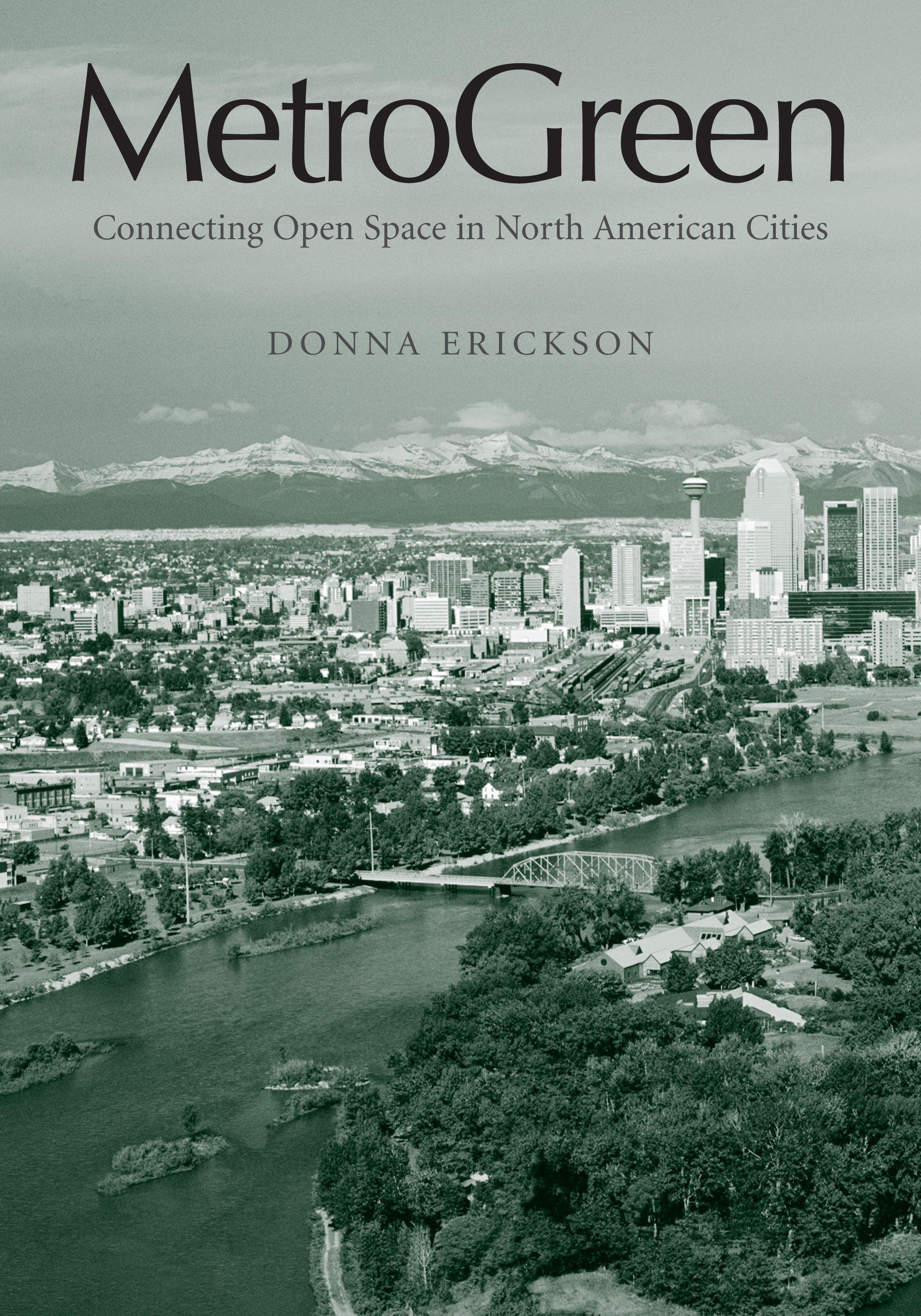
In metropolitan areas across the country, you can hear the laments over the loss of green space to new subdivisions and strip malls. But some city residents have taken unprecedented measures to protect their open land, and a growing movement seeks not only to preserve these lands but to link them in green corridors.
Many land-use and urban planning professionals, along with landscape architects and environmental advocates, have joined in efforts to preserve natural areas. MetroGreen answers their call for a deeper exploration of the latest thinking and newest practices in this growing conservation field. In ten case studies of U.S. and Canadian cities paired for comparative analysis-Toronto and Chicago, Calgary and Denver, and Vancouver and Portland among them-Erickson looks closely at the motivations and objectives for connecting open spaces across metropolitan areas. She documents how open-space networks have been successfully created and protected, while also highlighting the critical human and ecological benefits of connectivity.
MetroGreen's unique focus on several cities rather than a single urban area offers a perspective on the political, economic, cultural, and environmental conditions that affect open-space planning and the outcomes of its implementation.
Pay easily by card, Klarna, Apple Pay or Google Pay. Not happy? You always have a 14-day money-back guarantee. Read more in our terms. If you have any questions, email us at hello@memmo.org.
Memmo makes studying easier – wherever you are in the world. We bring your course books and smart study tools together in one place: summaries, quizzes, podcasts and flashcards. Plus Ted, your study buddy who answers anything you wonder. Over 50,000 students already study here – built to help you learn faster and stress less.