
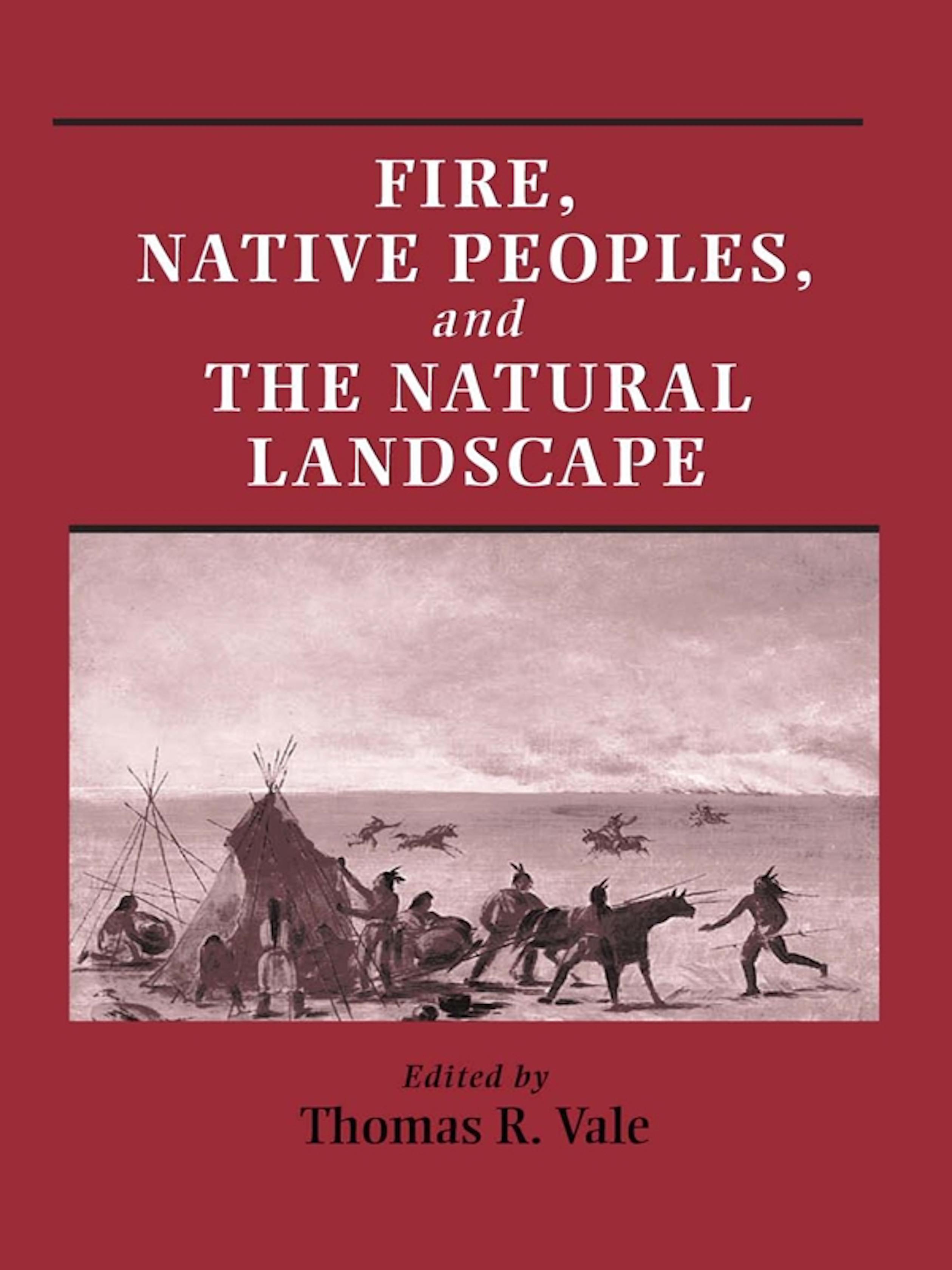
For nearly two centuries, the creation myth for the United States imagined European settlers arriving on the shores of a vast, uncharted wilderness. Over the last two decades, however, a contrary vision has emerged, one which sees the country's roots not in a state of "pristine" nature but rather in a "human-modified landscape" over which native peoples exerted vast control.
Fire, Native Peoples, and the Natural Landscape seeks a middle ground between those conflicting paradigms, offering a critical, research-based assessment of the role of Native Americans in modifying the landscapes of pre-European America. Contributors focus on the western United States and look at the question of fire regimes, the single human impact which could have altered the environment at a broad, landscape scale, and which could have been important in almost any part of the West. Each of the seven chapters is written by a different author about a different subregion of the West, evaluating the question of whether the fire regimes extant at the time of European contact were the product of natural factors or whether ignitions by Native Americans fundamentally changed those regimes.
An introductory essay offers context for the regional chapters, and a concluding section compares results from the various regions and highlights patterns both common to the West as a whole and distinctive for various parts of the western states. The final section also relates the findings to policy questions concerning the management of natural areas, particularly on federal lands, and of the "naturalness" of the pre-European western landscape.
Pay easily by card, Klarna, Apple Pay or Google Pay. Not happy? You always have a 14-day money-back guarantee. Read more in our terms. If you have any questions, email us at hello@memmo.org.
Memmo makes studying easier – wherever you are in the world. We bring your course books and smart study tools together in one place: summaries, quizzes, podcasts and flashcards. Plus Ted, your study buddy who answers anything you wonder. Over 50,000 students already study here – built to help you learn faster and stress less.