
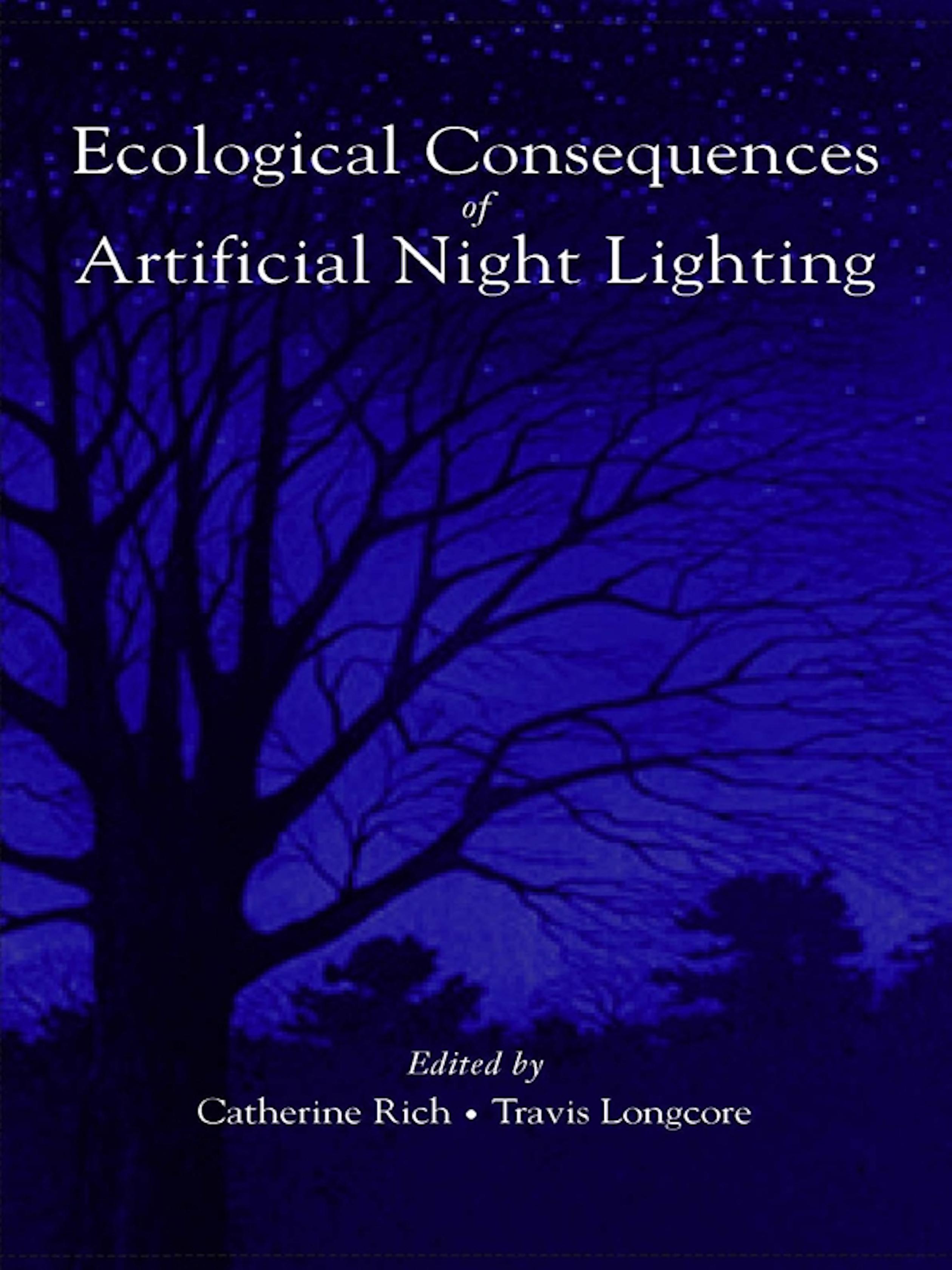
While certain ecological problems associated with artificial night lighting are widely known-for instance, the disorientation of sea turtle hatchlings by beachfront lighting-the vast range of influences on all types of animals and plants is only beginning to be recognized. From nest choice and breeding success of birds to behavioral and physiological changes in salamanders, many organisms are seriously affected by human alterations in natural patterns of light and dark.
Ecological Consequences of Artificial Night Lighting is the first book to consider the environmental effects of the intentional illumination of the night. It brings together leading scientists from around the world to review the state of knowledge on the subject and to describe specific effects that have been observed across a full range of taxonomic groups, including mammals, birds, reptiles and amphibians, fishes, invertebrates, and plants.
Ecological Consequences of Artificial Night Lighting provides a scientific basis to begin addressing the challenge of conserving the nighttime environment. It cogently demonstrates the vital importance of this until-now neglected topic and is an essential new work for conservation planners, researchers, and anyone concerned with human impacts on the natural world.
Pay easily by card, Klarna, Apple Pay or Google Pay. Not happy? You always have a 14-day money-back guarantee. Read more in our terms. If you have any questions, email us at hello@memmo.org.
Memmo makes studying easier – wherever you are in the world. We bring your course books and smart study tools together in one place: summaries, quizzes, podcasts and flashcards. Plus Ted, your study buddy who answers anything you wonder. Over 50,000 students already study here – built to help you learn faster and stress less.