
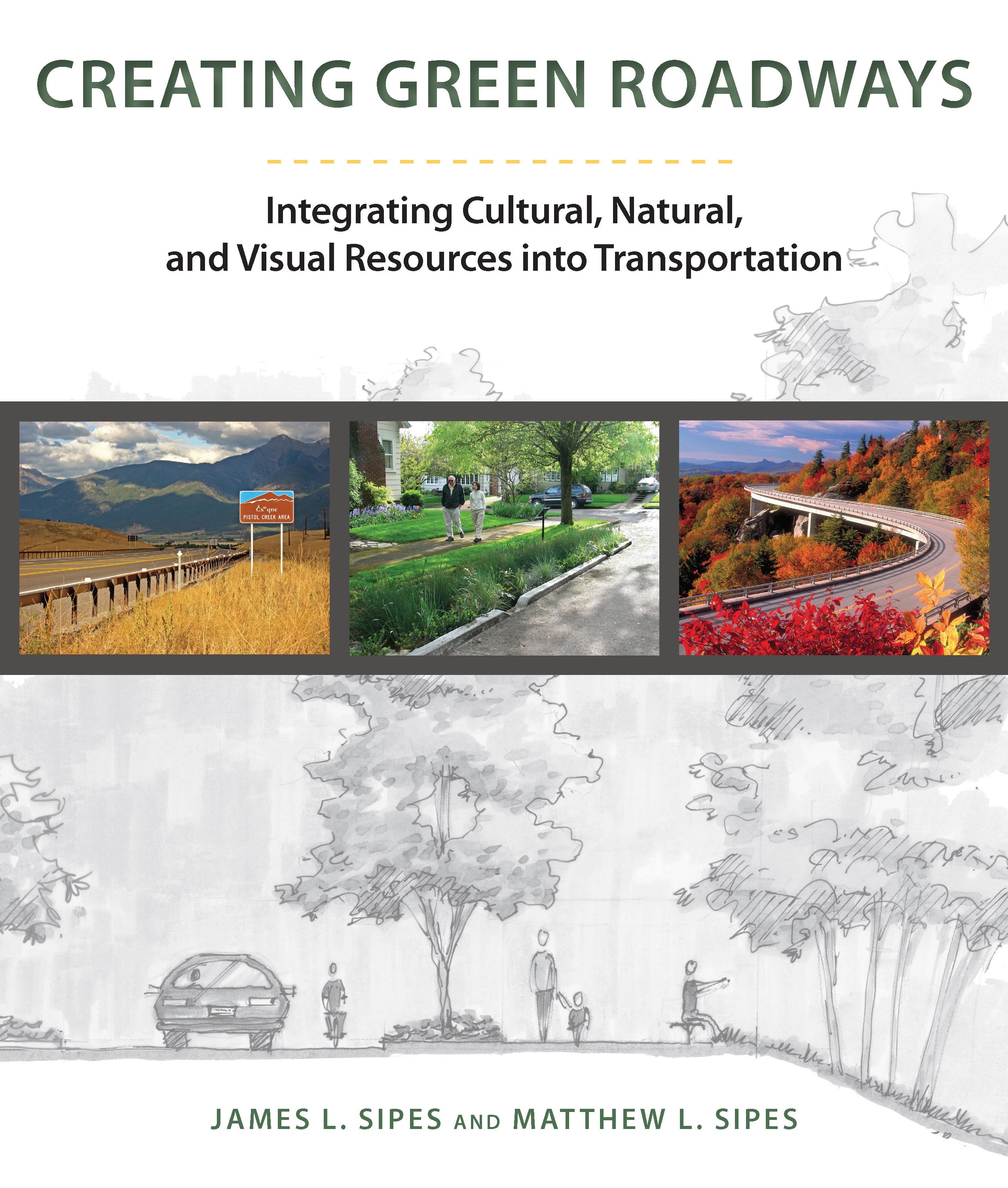
Roads and parking lots in the United States cover more ground than the entire state of Georgia. And while proponents of sustainable transit often focus on getting people off the roads, they will remain at the heart of our transportation systems for the foreseeable future. In Creating Green Roadways, James and Matthew Sipes demonstrate that roads don’t have to be the enemy of sustainability: they can be designed to minimally impact the environment while improving quality of life.
The authors examine traditional, utilitarian methods of transportation planning that have resulted in a host of negative impacts: from urban sprawl and congestion to loss of community identity and excess air and water pollution. They offer a better approach—one that blends form and function. Creating Green Roadways covers topics including transportation policy, the basics of green road design, including an examination of complete streets, public involvement, road ecology, and the economics of sustainable roads. Case studies from metropolitan, suburban, and rural transportation projects around the country, along with numerous photographs, illustrate what makes a project successful.
The need for this information has never been greater, as more than thirty percent of America’s major roads are in poor or mediocre condition, more than a quarter of the nation’s bridges are structurally deficient or functionally obsolete, and congestion in communities of all sizes has never been worse. Creating Green Roadways offers a practical strategy for rethinking how we design, plan, and maintain our transportation infrastructure.
Pay easily by card, Klarna, Apple Pay or Google Pay. Not happy? You always have a 14-day money-back guarantee. Read more in our terms. If you have any questions, email us at hello@memmo.org.
Memmo makes studying easier – wherever you are in the world. We bring your course books and smart study tools together in one place: summaries, quizzes, podcasts and flashcards. Plus Ted, your study buddy who answers anything you wonder. Over 75,000 students already study here – built to help you learn faster and stress less.