
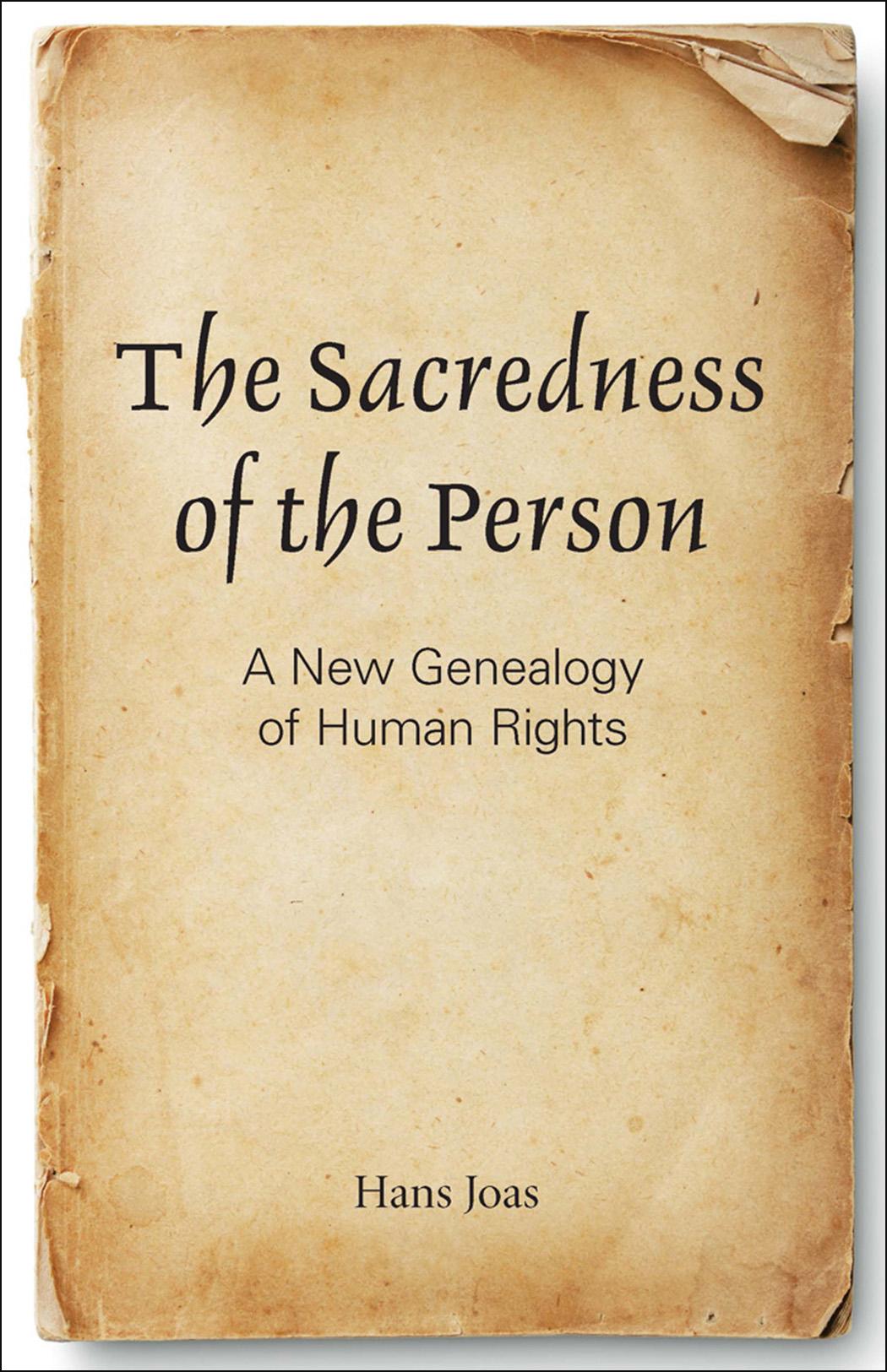
What are the origins of the idea of human rights and universal human dignity? How can we most fully understand—and realize—these rights going into the future? In The Sacredness of the Person, internationally renowned sociologist and social theorist Hans Joas tells a story that differs from conventional narratives by tracing the concept of human rights back to the Judeo-Christian tradition or, alternately, to the secular French Enlightenment. While drawing on sociologists such as Émile Durkheim, Max Weber, and Ernst Troeltsch, Joas sets out a new path, proposing an affirmative genealogy in which human rights are the result of a process of “sacralization” of every human being.
According to Joas, every single human being has increasingly been viewed as sacred. He discusses the abolition of torture and slavery, once common practice in the pre-18th century west, as two milestones in modern human history. The author concludes by portraying the emergence of the UN Declaration of Human Rights of 1948 as a successful process of value generalization. Joas demonstrates that the history of human rights cannot adequately be described as a history of ideas or as legal history, but as a complex transformation in which diverse cultural traditions had to be articulated, legally codified, and assimilated into practices of everyday life. The sacralization of the person and universal human rights will only be secure in the future, warns Joas, through continued support by institutions and society, vigorous discourse in their defense, and their incarnation in everyday life and practice.
Pay easily by card, Klarna, Apple Pay or Google Pay. Not happy? You always have a 14-day money-back guarantee. Read more in our terms. If you have any questions, email us at hello@memmo.org.
Memmo makes studying easier – wherever you are in the world. We bring your course books and smart study tools together in one place: summaries, quizzes, podcasts and flashcards. Plus Ted, your study buddy who answers anything you wonder. Over 50,000 students already study here – built to help you learn faster and stress less.