
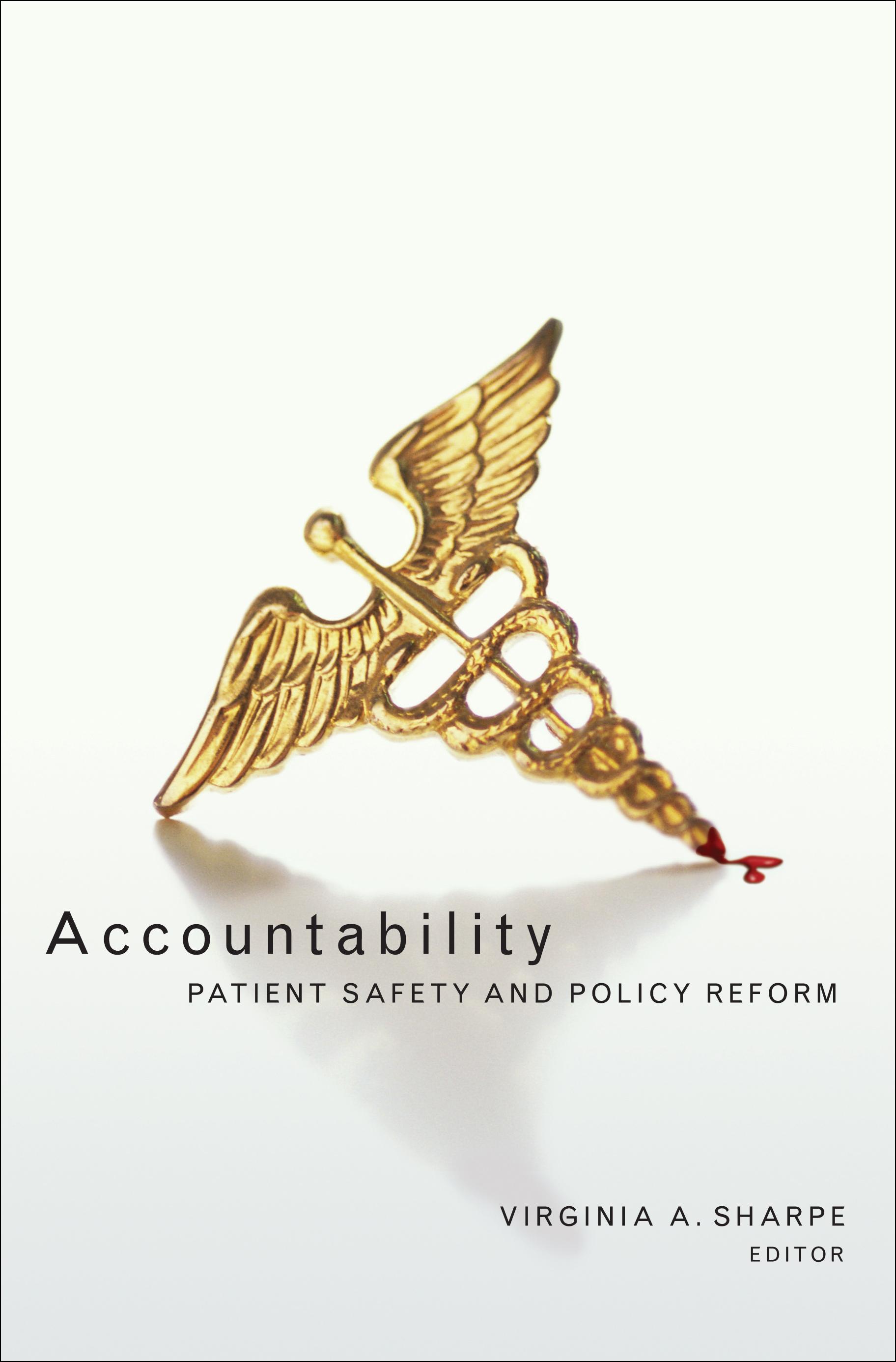
<p>According to a recent Institute of Medicine report, as many as 98,000 Americans die each year as a result of medical error—a figure higher than deaths from automobile accidents, breast cancer, or AIDS. That astounding number of fatalities does not include the number of those serious mistakes that are grievous and damaging but not fatal. Who can forget the tragic case of 17-year-old Jésica Santillán, who died after receiving a heart-lung transplant with an incompatible blood type? What can be done about this? What should be done? How can patients and their families regain a sense of trust in the hospitals and clinicians that care for them? Where do we even begin the discussion?</p><p><I>Accountability</I> brings the issue to the table in response to the demand for patient safety and increased accountability regarding medical errors. In an interdisciplinary approach, Virginia Sharpe draws together the insights of patients and families who have suffered harm, institutional leaders galvanized to reform by tragic events in their own hospitals, philosophers, historians, and legal theorists. Many errors can be traced to flaws in complex systems of health care delivery, not flaws in individual performance. How then should we structure responsibility for medical mistakes so that justice for the injured can be achieved alongside the collection of information that can improve systems and prevent future error?
Bringing together authoritative voices of family members, health care providers, and scholars—from such disciplines as medical history, economics, health policy, law, philosophy, and theology—this book examines how conventional structures of accountability in law and medical structure (structures paradoxically at odds with justice and safety) should be replaced by more ethically informed federal, state, and institutional policies. <I>Accountability</I> calls for public policy that creates not only systems capable of openness concerning safety and error—but policy that also delivers just compensation and honest and humane treatment to those patients and families who have suffered from harmful medical error.</p>
Bringing together authoritative voices of family members, health care providers, and scholars—from such disciplines as medical history, economics, health policy, law, philosophy, and theology—this book examines how conventional structures of accountability in law and medical structure (structures paradoxically at odds with justice and safety) should be replaced by more ethically informed federal, state, and institutional policies. <I>Accountability</I> calls for public policy that creates not only systems capable of openness concerning safety and error—but policy that also delivers just compensation and honest and humane treatment to those patients and families who have suffered from harmful medical error.</p>
Pay easily by card, Klarna, Apple Pay or Google Pay. Not happy? You always have a 14-day money-back guarantee. Read more in our terms. If you have any questions, email us at hello@memmo.org.
Memmo makes studying easier – wherever you are in the world. We bring your course books and smart study tools together in one place: summaries, quizzes, podcasts and flashcards. Plus Ted, your study buddy who answers anything you wonder. Over 50,000 students already study here – built to help you learn faster and stress less.
You might also like
Buy the book0