
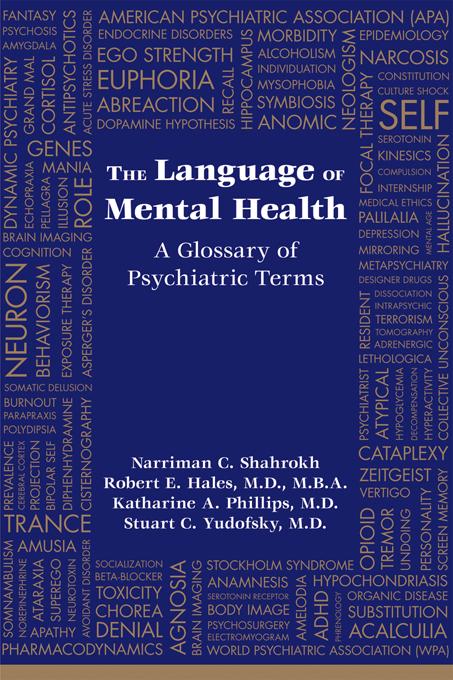
For many years, the American Psychiatric Glossary has been the standard reference for psychiatrists, residents, psychiatric social workers, and other mental health professionals. Last published 8 years ago, it enjoyed unparalleled dominance in the mental health market. Now comes The Language of Mental Health: A Glossary of Psychiatric Terms, which is designed not only to replace its predecessor but also to improve upon its offerings and bring the content firmly into the twenty-first century.
This comprehensive, user-friendly reference boasts an abundance of features, both time-tested and new, as follows: The number of Glossary definitions has been increased by 25%, and coverage has been expanded to include terms specific to newer psychiatric subspecialties, such as geriatric psychiatry, addiction psychiatry, psychosomatic medicine, and child and adolescent psychiatry. The section on "Medications Used in Psychiatry" is expanded and up to date. Medications are organized by drug class (e.g., antidepressants), subclass (e.g., selective serotonin reuptake inhibitors), trade name (e.g., Prozac), and generic name (e.g., fluoxetine). The section on "Psychiatric Measures" is robust and detailed. For example, the entry under "Neuropsychiatric Measures for Cognitive Disorders" lists nearly a dozen assessments, along with their acronyms or abbreviations. The section on "Mental Health Resources" includes vital descriptions and current contact information for dozens of organizations. The Web addresses are especially useful for those seeking immediate assistance or access to information.
Although the reference maintains the level of theoretical, diagnostic, and therapeutic accuracy one would expect from a book for clinicians, it will also prove useful to advocacy groups, attorneys, and mental health patients and their families. Compact enough to slip into a pocket or briefcase, yet substantial enough to withstand frequent consultations and extended study, The Language of Mental Health is a worthy successor to the American Psychiatric Glossary and is the only reference of its caliber and completeness on the market.
Pay easily by card, Klarna, Apple Pay or Google Pay. Not happy? You always have a 14-day money-back guarantee. Read more in our terms. If you have any questions, email us at hello@memmo.org.
Memmo makes studying easier – wherever you are in the world. We bring your course books and smart study tools together in one place: summaries, quizzes, podcasts and flashcards. Plus Ted, your study buddy who answers anything you wonder. Over 50,000 students already study here – built to help you learn faster and stress less.