
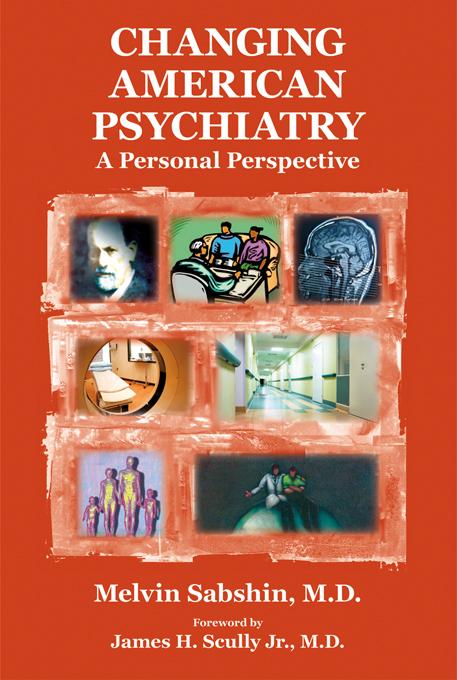
Psychiatrists, psychoanalysts, other mental health workers, behavioral scientists, and university medical and neuroscience professionals will benefit from this articulate insider's view of post-World War II psychiatry in Changing American Psychiatry: A Personal Perspective by Melvin Sabshin, M.D. Dr. Sabshin served as Medical Director of the American Psychiatric Association (APA) for 23 years, from 1974 to 1997, during a period of perhaps the greatest change in psychiatry since the World War II produced a dramatic modification of practice.
The author describes in detail two extraordinary periods of change, the first stimulated by laudatory efforts to understand the high rate of psychiatric casualties among World War II veterans and to provide treatment for them. Psychiatry grew quickly during the postwar years, considerably influenced by the immigration of many Central European psychoanalysts. Gradually, however, psychiatry began to weaken its ties to medicine and lost much of its public respect. By the 1970s, postwar optimism had been replaced by widespread concern that psychiatric practice was being dominated by unsubstantiated formulations rather than reliable evidence. Psychiatry was dramatically impacted by enormous pressure for therapeutic accountability exerted by a managed care reimbursement system. The profession recognized the need for a new direction and resolved to change.
In the foreword to the book, current APA Medical Director James H. Scully Jr., M.D., notes that Dr. Sabshin has woven a personal journey of the history of the intellectual conflicts and changes in the field of psychiatry in the post-war era, culminating in the remedicalization of psychiatry and the development of the DSM-III.
Dr. Sabshin encourages psychiatric professionals to change the field so it can employ an empirically based "bio-psycho-social" model that has the potential to revitalize the next phase of American psychiatry. He details how the potential for the future of psychiatry can be enhanced by today's practicing professionals, stressing the: Need to incorporate the rapid developments of neuroscience into a professional practice that is increasingly integrated with empirically demonstrated psychological and social influences upon mental illness. Importance on continued research that is fed back into practice and keeps the professional evidence-based. Need of psychoanalysis to make its beliefs explicit, formulating hypotheses that can be tested scientifically in order to be employed reliably in evidence-based practice.
This well-crafted historical account describes how the profession has become a more respected and accountable part of medicine and how it scientific credentials have risen as a result. Dr. Sabshin concludes that the use of psychological understanding and psychotherapies must play a major role combined with psychopharmacology in the treatment of psychiatric patients.
Pay easily by card, Klarna, Apple Pay or Google Pay. Not happy? You always have a 14-day money-back guarantee. Read more in our terms. If you have any questions, email us at hello@memmo.org.
Memmo makes studying easier – wherever you are in the world. We bring your course books and smart study tools together in one place: summaries, quizzes, podcasts and flashcards. Plus Ted, your study buddy who answers anything you wonder. Over 75,000 students already study here – built to help you learn faster and stress less.