
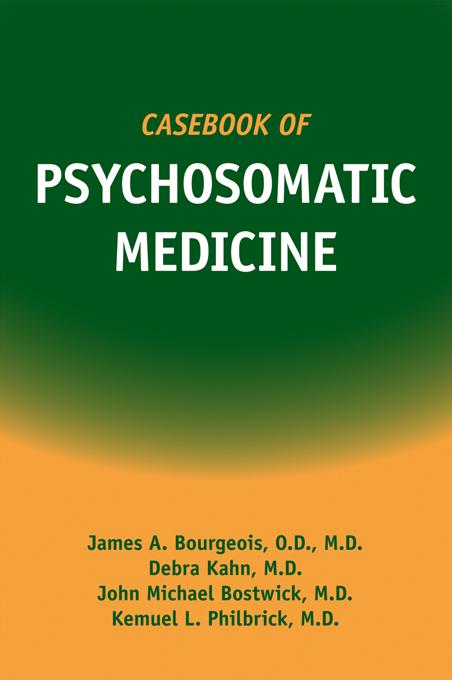
The practice of medicine is both learned and advanced through the compilation and study of cases -- vignettes that record the presentation, diagnosis, and treatment of individual patients and diseases. This is especially true of psychosomatic medicine (PSM), which depends on the "compelling case" to distill clinical knowledge and communicate it to students, residents, and clinicians. An invaluable contribution to the field, the Casebook of Psychosomatic Medicine describes the psychiatric symptoms and/or illnesses managed by the PSM psychiatrist in collaboration with other medical colleagues. The book presents a broad range of cases illustrating the medical, psychosocial, and intertwined situations psychiatrists are likely to encounter in an academic medical center setting.
No other single volume offers a broader range of engaging, detailed, and nuanced PSM cases, or grounds them so firmly in a psychiatric, psychosocial, and spiritual context. Here are just a few of this patient-centered book's most impressive and useful features: The relevant science underlying each case is addressed in discussion sections, allowing the book to be read as a stand-alone volume. Alternatively, the cases can be read as instructive and insightful illustrations by the reader who has already absorbed the fundamentals of PSM from standard textbooks in the field. This user-friendly book is organized by the organ system or disease type of the presenting illness or symptom. Content rare in volumes of this kind includes detailed coverage of the diagnosis and management of cognitive disorders; the management of drug toxicity states; determinations of decisional capacity for medical decision making; and "stress and adaptation", an issue the PSM psychiatrist encounters daily. The authors strongly believe that one of the most crucial roles for the psychiatrist is in the medical center, and the book reflects that orientation. The book addresses the importance of understanding the impact of patients' systemic illnesses on their psychiatric symptoms, and modifying interventions and care accordingly. These abilities are critical to sound PSM practice.
Although PSM has a long and noble history, it is the newest of the psychiatric subspecialties, and as the literature expands, more and more clinicians will incorporate PSM treatment modalities into their practice. The Casebook of Psychosomatic Medicine is an essential contribution to that body of knowledge and establishes a new standard with which to face the future of this exciting field.
Pay easily by card, Klarna, Apple Pay or Google Pay. Not happy? You always have a 14-day money-back guarantee. Read more in our terms. If you have any questions, email us at hello@memmo.org.
Memmo makes studying easier – wherever you are in the world. We bring your course books and smart study tools together in one place: summaries, quizzes, podcasts and flashcards. Plus Ted, your study buddy who answers anything you wonder. Over 75,000 students already study here – built to help you learn faster and stress less.