
The past decade has witnessed remarkable growth in the field of quality measurement in health care. Today's patients want to know that the care they receive is safe, effective, and accessible.
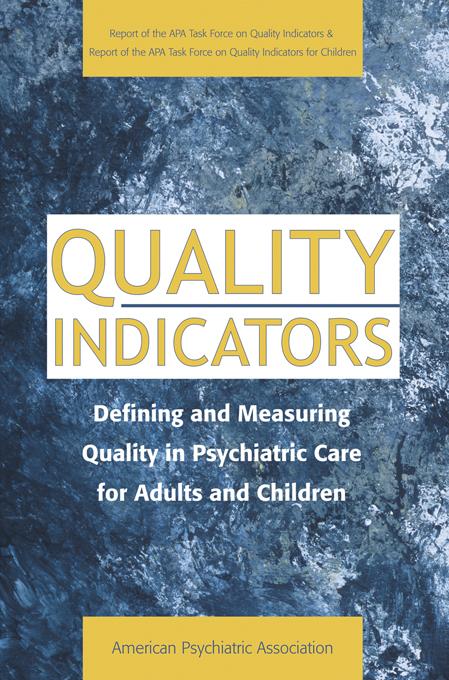
This compelling monograph combines -- for the first time -- the reports from two American Psychiatric Association task forces on quality in psychiatric care (March 1999, which focused on adults, and October 2001, which focused on children and adolescents), offering a clinical framework for quality measurement that provides sample indicators of quality for health plans, facilities, and systems of care.
Using similar formats and definitions, each task force considered a matrix of priority areas of care, including specific patient populations (e.g., elderly, seriously and persistently mentally ill, developmentally disabled people) and diagnostic categories (e.g., depressive disorder, schizophrenia, substance use disorders). Each then examined important aspects of patient care and constructed a quality framework that included dimensions of access, quality (appropriateness of care), perception of care (satisfaction), outcome, and -- for the children's report -- prevention.
Each task force also considered relevant methodological issues: cultural, linguistic, and ethnic differences; data collection and tracking; confidentiality of data; risk adjustment; use of rating scales and standardized instruments; and designation of standards.
Sample recommended goals include For adults: patients with serious and persistent mental illness should have access to newer generations of antipsychotic medications as these become available; patients should achieve a significant reduction in symptom. For children and adolescents: the mental health status of children and adolescents should be assessed annually; children with severe or persistent mental illness whose care involves multiple child-serving systems, caregivers, and service providers should have their care coordinated
Sample indicators include For adults: utilization of new antipsychotics for patients with the diagnosis of schizophrenia; reduction in frequency of panic attacks in patients with the diagnosis of panic disorder For children and adolescents: high levels of satisfaction of adolescents using mental health services or substance abuse services; reduction in a family's stress level and impact of illness
As the initial step in what must be an evolving effort by clinicians to define, measure, report, and improve the care that patients and their families receive, this monograph is essential reading for those who provide and receive care, accredit and regulate care, and purchase and administer clinical services.
Purchasers of mental health care want clear, reliable, meaningful, and comparable information on what care is provided and with what results. APA convened these two task forces to lend its professional expertise to that issue, to advise on how to develop clinically based, patient focused quality indicators that use existing and ongoing research and clinical consensus in selecting potential indicators.
Pay easily by card, Klarna, Apple Pay or Google Pay. Not happy? You always have a 14-day money-back guarantee. Read more in our terms. If you have any questions, email us at hello@memmo.org.
Memmo makes studying easier – wherever you are in the world. We bring your course books and smart study tools together in one place: summaries, quizzes, podcasts and flashcards. Plus Ted, your study buddy who answers anything you wonder. Over 50,000 students already study here – built to help you learn faster and stress less.