
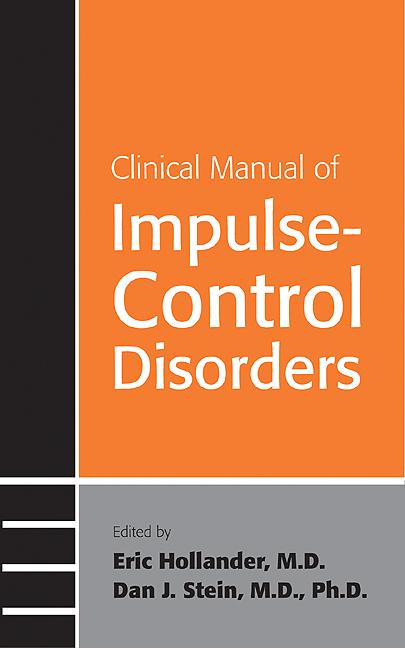
Visibility of impulse-control disorders (ICDs) has never been greater than it is today, both in the field of psychiatry and in popular culture. Changes in both society and technology have contributed to the importance of conceptualizing, assessing, and treating impulse-control disorders (ICDs). The ground-breaking Clinical Manual of Impulse-Control Disorders focuses on all of the different ICDs as a group.
Here, 25 recognized experts provide cutting-edge, concise, and practical information about ICDs, beginning with the phenomenology, assessment, and classification of impulsivity as a core symptom domain that cuts across and drives the expression of these complex disorders. Subsequent chapters discuss Intermittent explosive disorder, an often overlooked ICD characterized by impulsive aggression. Childhood conduct disorder and the antisocial spectrum. Self-injurious behavior and its relationship to impulsive aggression and childhood trauma. Sexual compulsions and their serious public health implications. Binge eating, a highly familial disorder associated with serious medical complications and psychopathology. Trichotillomania, which may be related to obsessive-compulsive disorder, skin picking, and nail biting. Kleptomania, a heterogeneous disorder that shares features with ICDs as well as with mood, anxiety, and addictive disorders. Compulsive shopping, more common in women, with treatments ranging from self-help and financial counseling to trials with selective serotonin reuptake inhibitors. Pyromania and how it differs from arson. Pathological gambling, a maladaptive behavioral addiction that is increasing in step with legalized and Internet gambling. Internet addiction, ranging from excessive seeking of medical information to dangerous sexual behaviors.
The remarkable Clinical Manual of Impulse-Control Disorders sheds light on the complex world of ICDs. As such, it will be welcomed not only by clinicians and researchers but also by individuals and family members coping with these disorders.
Pay easily by card, Klarna, Apple Pay or Google Pay. Not happy? You always have a 14-day money-back guarantee. Read more in our terms. If you have any questions, email us at hello@memmo.org.
Memmo makes studying easier – wherever you are in the world. We bring your course books and smart study tools together in one place: summaries, quizzes, podcasts and flashcards. Plus Ted, your study buddy who answers anything you wonder. Over 50,000 students already study here – built to help you learn faster and stress less.