
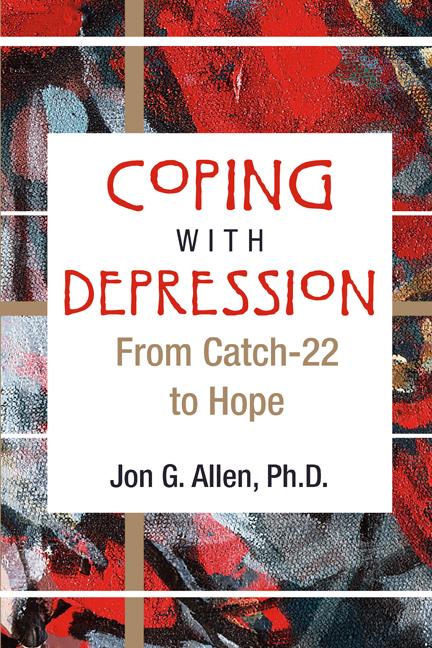
Distilling years of experience in educating psychiatric patients and their families about depression, Jon Allen has written a practical book that addresses the challenges depressed patients face on the road to recovery. Allen advocates approaching depression by focusing on the importance of hope, and he helps patients understand depression through two simple ideas: catch-22 and stress pileup.
This book conveys how the symptoms of depression impede all the things depressed persons must do to recover, thus defusing self-criticism while encouraging patients to take satisfaction in small steps toward improvement. And the concept of stress pileup encompasses a developmental perspective respecting the full range of accumulated biological, psychological, and interpersonal stresses that play into depression. This broad understanding helps patients become more compassionate toward themselves and puts them in a stronger position to make use of professional care.
Coping With Depression is written for a general audience, including depressed persons and their family members, as well as professionals seeking a readable integration of current knowledge that they can use to educate their patients. Although written in nontechnical language, the book provides a sophisticated and comprehensive understanding of the psychological development of depression, the neurobiology of the illness, and the full range of evidence-based treatment modalities. All material is buttressed by extensive references to theoretical, clinical, and research literature.
Coping With Depression emphasizes the concept of agency, encouraging readers to take an active role in their recovery. Countering today's trend toward exclusive reliance on antidepressant medication, the book employs the perspective of developmental psychopathology to integrate psychosocial and neurobiological knowledge. The book explains how biological vulnerability is intertwined with stress stemming from insecure attachment, childhood adversity, stressful life events, emotional conflicts, and problems in close relationships. Going far beyond the "chemical imbalance," the author illustrates how the experience of depression is linked to changes in patterns of brain activity as evidenced by neuroimaging studies. Coping With Depression will help readers understand the development of depression from a biopsychosocial perspective appreciate how depression is compounded by related conditions, including bipolar disorder, anxiety disorders, substance abuse, personality disorders, general medical conditions, and suicidal states understand how recovering from depression entails working on many fronts, including improving physical health, participating in pleasurable activities, countering negative thinking, resolving internal conflicts, and-above all-establishing more stable and secure attachment relationships become knowledgeable about the treatment options that facilitate coping, including cognitive-behavioral, interpersonal, and psychodynamic psychotherapy as well as medication and combined treatment appreciate the centrality of hope in recovery from depression and the challenges to hope that depression poses
To maintain hope, patients, their family members, and clinicians must face the seriousness of the illness of depression and the daunting obstacles to recovery, including catch-22 in all of its manifestations. Throughout the book, Allen reiterates the theme of agency: depressed persons can use their intelligence to understand their illness and do something to recover and remain well, making use of help from others along the way.
Pay easily by card, Klarna, Apple Pay or Google Pay. Not happy? You always have a 14-day money-back guarantee. Read more in our terms. If you have any questions, email us at hello@memmo.org.
Memmo makes studying easier – wherever you are in the world. We bring your course books and smart study tools together in one place: summaries, quizzes, podcasts and flashcards. Plus Ted, your study buddy who answers anything you wonder. Over 75,000 students already study here – built to help you learn faster and stress less.