
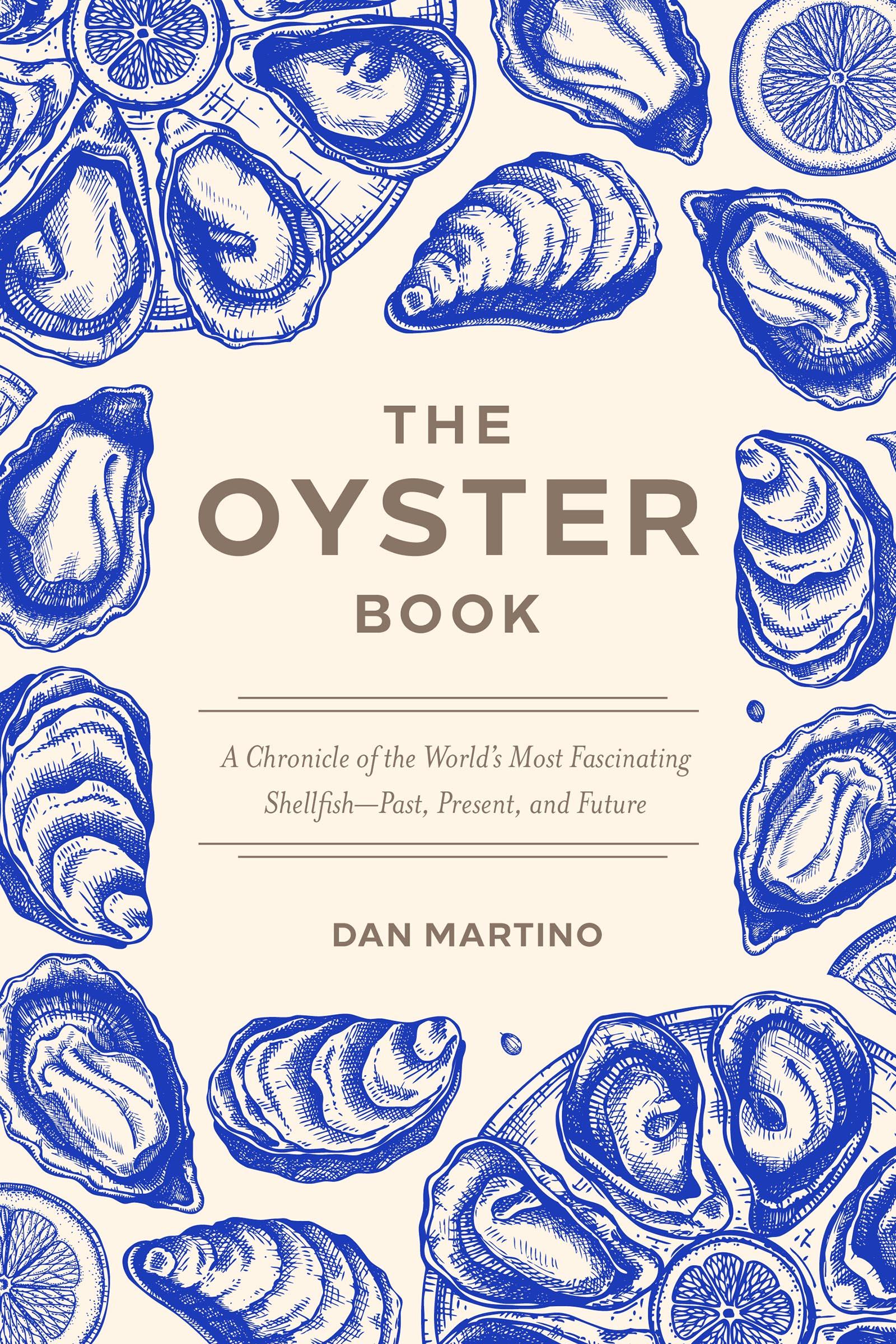
The first book to chronicle the global history of oysters, the current state of the oyster farming industry—including a how-to guide for starting a farm—and the promising environmental solutions that oyster farming presents in this age of food challenges and climate change.
The oyster is one of Earth’s oldest animals, and fossil records show humans have enjoyed them for hundreds of thousands of years. But like so many other creatures, wild oysters were driven to near extinction by overconsumption and pollution. The Clean Water Act passed in 1972 marked a turning point for water quality, and decades later, we’re witnessing a renaissance in oyster culture as the rise of aquaculture (ocean farming) attempts to supply a growing demand for oysters that increases exponentially year after year.
Internationally renowned oyster farmer Dan Martino guides readers through this fascinating history before presenting a detailed breakdown of the current state of the oyster industry as only an insider can describe it. He discusses husbandry, nursery, and farm techniques; the practical side of working with local government to set up a farm; tips for selling into the market; and what qualities make for the perfect oyster. He details the various global styles of farming and the species of oysters farmed, explaining how the they differ in size, texture, shape, and taste—characteristics referred to as “merroir,” to parallel the way “terroir” illuminates how the origin of place affects taste in wine.
The oyster has never been more relevant as we look to the future and the many challenges presented by climate change and a growing population. Martino explores how the current land-based food production system risks collapse as it tries to keep up with growing demand, and oyster farming, which uses no land and minimal freshwater input, is a natural alternative to more resource-intensive food sources. Oysters are also exceptionally good at capturing carbon, making them a necessary element in the quest for climate change solutions.
The Oyster Book is an exploration of the past, present, and future of humanity’s relationship with the oyster, highlighting how humans can learn from our mistakes and harness the oyster’s potential for a more sustainable future.
Pay easily by card, Klarna, Apple Pay or Google Pay. Not happy? You always have a 14-day money-back guarantee. Read more in our terms. If you have any questions, email us at hello@memmo.org.
Memmo makes studying easier – wherever you are in the world. We bring your course books and smart study tools together in one place: summaries, quizzes, podcasts and flashcards. Plus Ted, your study buddy who answers anything you wonder. Over 50,000 students already study here – built to help you learn faster and stress less.