
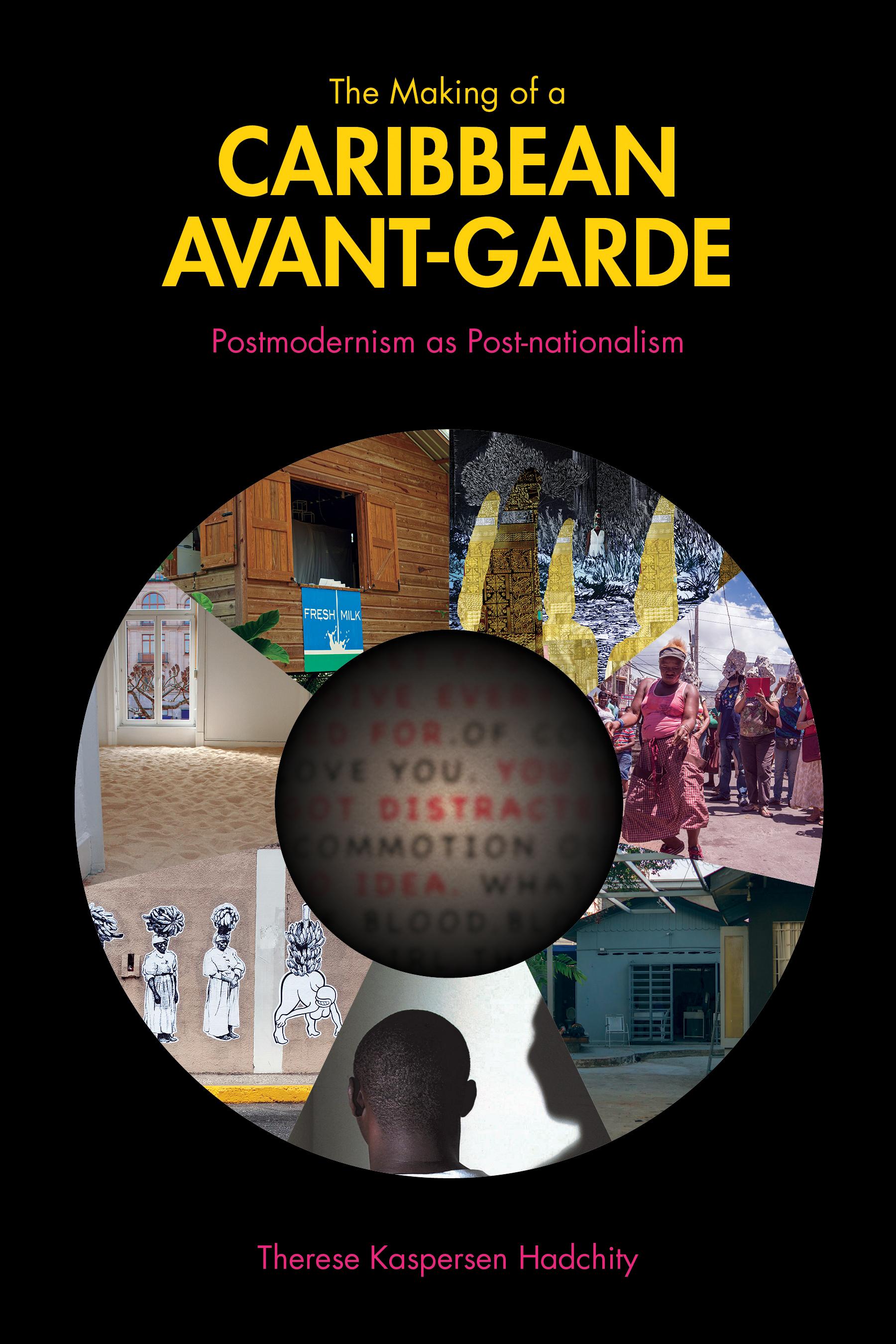
Focusing on the Anglophone Caribbean, The Making of a Caribbean Avant-Garde describes the rise and gradual consolidation of the visual arts avant-garde, which came to local and international attention in the 1990s. The book is centered on the critical and aesthetic strategies employed by this avant-garde to repudiate the previous generation’s commitment to modernism and anti-colonialism. In three sections, it highlights the many converging factors, which have pushed this avant-garde to the forefront of the region’s contemporary scene, and places it all in the context of growing dissatisfaction with the post-colonial state and its cultural policies.
This generational transition has manifested itself not only in a departure from “traditional” in favor of “new” media (i.e., installation, performance, and video rather than painting and sculpture), but also in the advancement of a “postnationalist postmodernism,” which reaches for diasporic and cosmopolitan frames of reference.
Section one outlines the features of a preceding “Creole modernism” and explains the different guises of postnationalism in the region’s contemporary art. In section two, its momentum is connected to the proliferation of independent art spaces and transnational networks, which connect artists across and beyond the region and open up possibilities unavailable to earlier generations. Section three demonstrates the impact of this conceptual and organizational evolution on the selection and exhibition of Caribbean art in the metropole.
Pay easily by card, Klarna, Apple Pay or Google Pay. Not happy? You always have a 14-day money-back guarantee. Read more in our terms. If you have any questions, email us at hello@memmo.org.
Memmo makes studying easier – wherever you are in the world. We bring your course books and smart study tools together in one place: summaries, quizzes, podcasts and flashcards. Plus Ted, your study buddy who answers anything you wonder. Over 50,000 students already study here – built to help you learn faster and stress less.