
Force may establish power, but recognition is what sustains it.
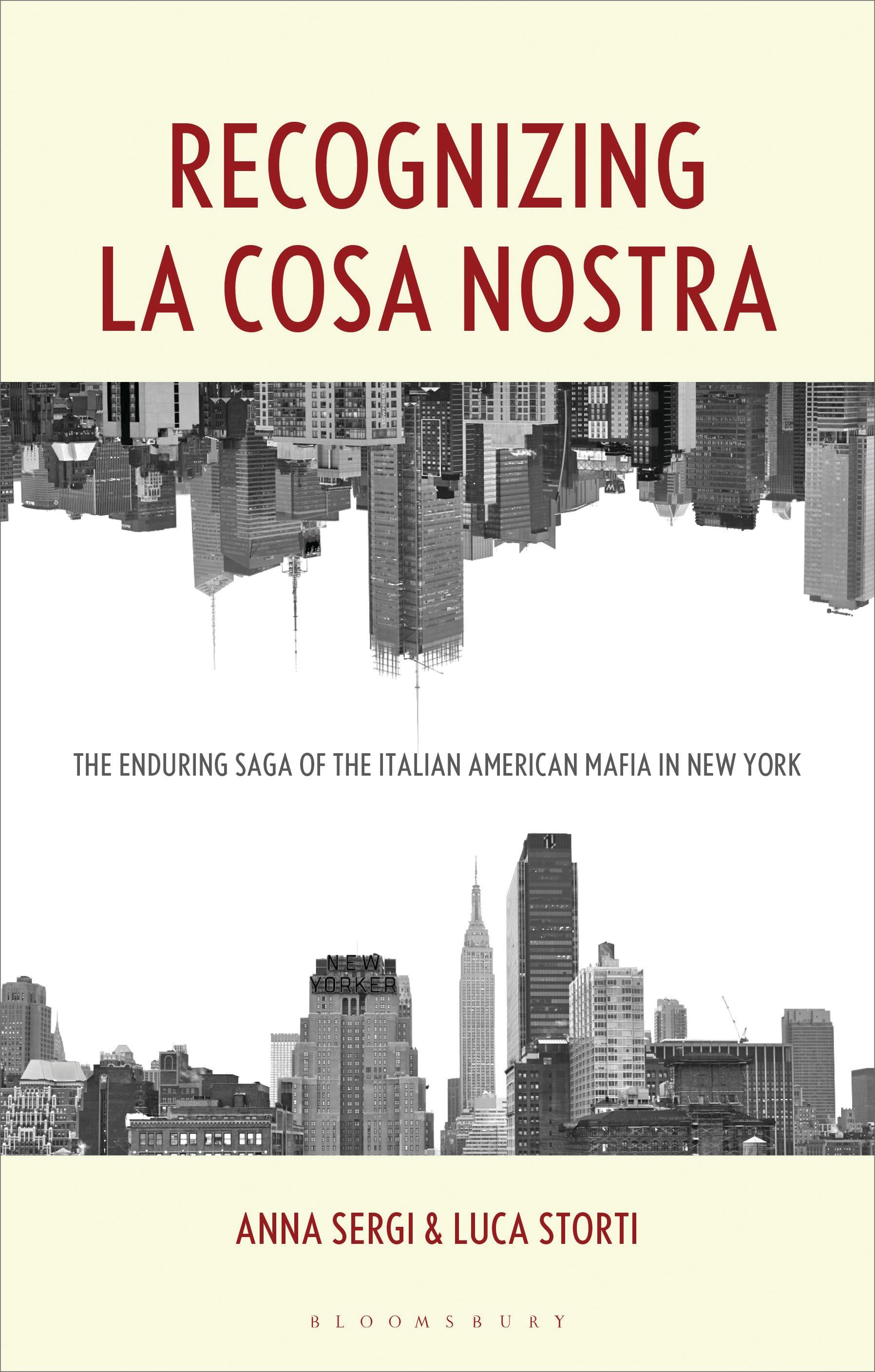
This book offers a contemporary re-examination of La Cosa Nostra (LCN) in New York City, moving beyond outdated images of a monolithic criminal hierarchy to reveal startlingly flexible and adaptive social formations.
Drawing on judicial records, investigative findings, and informal interviews, Anna Sergi and Luca Storti argue that the Five Families' continued relevance depends as much on symbolic resources as on material capabilities. Using a framework centered on social recognition and reputation, the book shows how LCN functions as a “heritage brand,” in which names, rituals, and circulating narratives operate as durable currencies that structure criminal relationships, regulate markets, and reproduce authority across time and space.
The authors demonstrate how the families now operate through semi-autonomous crews and pragmatic cross-family collaboration, where formal membership enhances credibility without enforcing rigid command-and-control. Case studies-from gambling schemes to labor union infiltration-illustrate how selective territorial engagement, strategic visibility, and narrative management enable the mafia to extract value and broker protection while minimizing overt violence.
The analysis also highlights enduring transnational ties between New York and Sicily, showing how shared rituals, migration narratives, and cross-border brokerage transform symbolic capital into operational capacity. These connections reinforce a mutually sustaining relationship between the American and Sicilian branches, anchoring contemporary practices in a transatlantic system of meaning and exchange.
Recognizing La Cosa Nostra reframes the modern mafia as a system sustained by “soft infrastructure”-stories, reputations, and shared cultural knowledge-rather than brute force alone. In doing so, it invites scholars and practitioners alike to rethink organized crime as a form of governance rooted in recognition and legitimacy, not merely corruption and coercion.
This book offers a contemporary re-examination of La Cosa Nostra (LCN) in New York City, moving beyond outdated images of a monolithic criminal hierarchy to reveal startlingly flexible and adaptive social formations.
Drawing on judicial records, investigative findings, and informal interviews, Anna Sergi and Luca Storti argue that the Five Families' continued relevance depends as much on symbolic resources as on material capabilities. Using a framework centered on social recognition and reputation, the book shows how LCN functions as a “heritage brand,” in which names, rituals, and circulating narratives operate as durable currencies that structure criminal relationships, regulate markets, and reproduce authority across time and space.
The authors demonstrate how the families now operate through semi-autonomous crews and pragmatic cross-family collaboration, where formal membership enhances credibility without enforcing rigid command-and-control. Case studies-from gambling schemes to labor union infiltration-illustrate how selective territorial engagement, strategic visibility, and narrative management enable the mafia to extract value and broker protection while minimizing overt violence.
The analysis also highlights enduring transnational ties between New York and Sicily, showing how shared rituals, migration narratives, and cross-border brokerage transform symbolic capital into operational capacity. These connections reinforce a mutually sustaining relationship between the American and Sicilian branches, anchoring contemporary practices in a transatlantic system of meaning and exchange.
Recognizing La Cosa Nostra reframes the modern mafia as a system sustained by “soft infrastructure”-stories, reputations, and shared cultural knowledge-rather than brute force alone. In doing so, it invites scholars and practitioners alike to rethink organized crime as a form of governance rooted in recognition and legitimacy, not merely corruption and coercion.
Pay easily by card, Klarna, Apple Pay or Google Pay. Not happy? You always have a 14-day money-back guarantee. Read more in our terms. If you have any questions, email us at hello@memmo.org.
Memmo makes studying easier – wherever you are in the world. We bring your course books and smart study tools together in one place: summaries, quizzes, podcasts and flashcards. Plus Ted, your study buddy who answers anything you wonder. Over 50,000 students already study here – built to help you learn faster and stress less.