
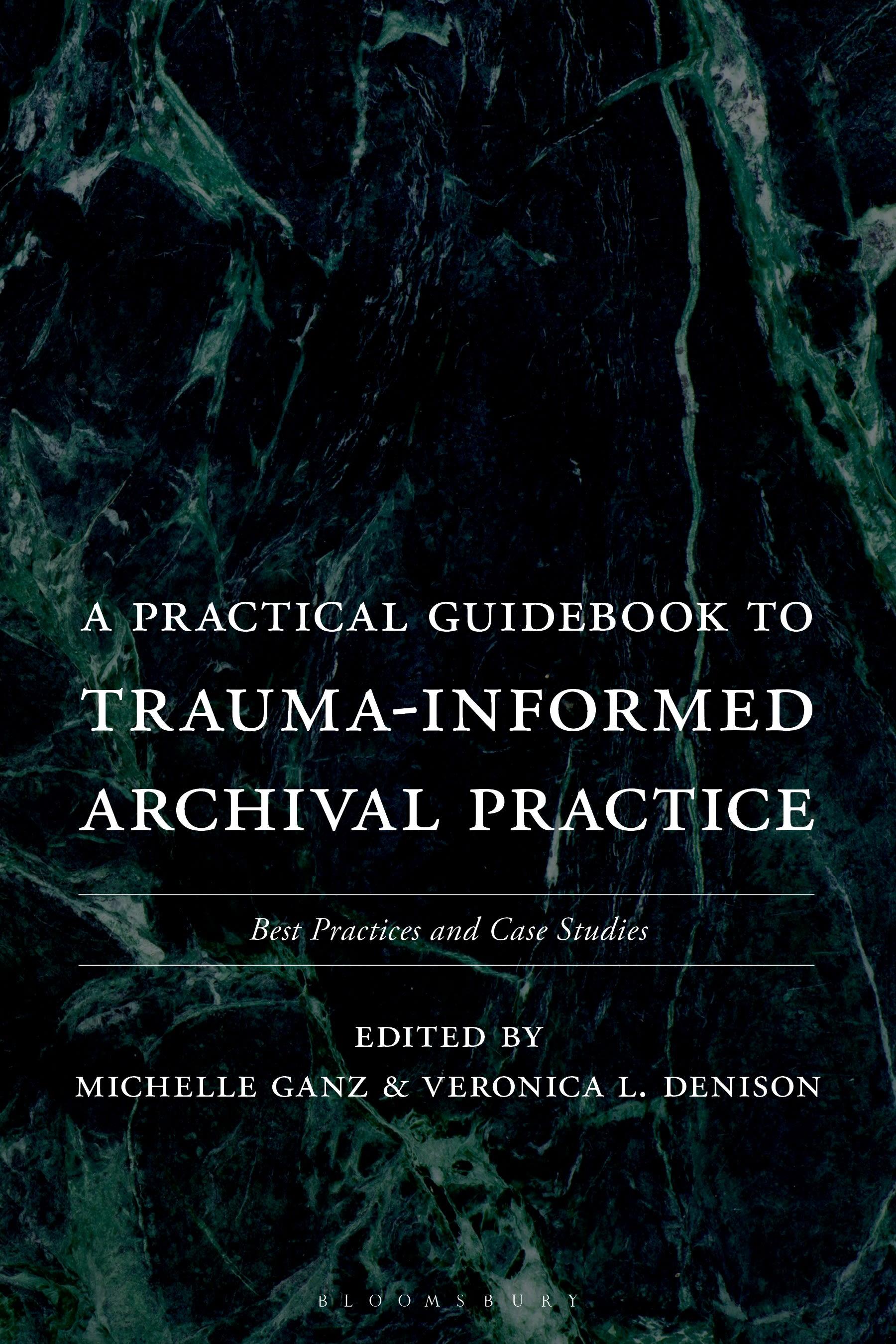
A Practical Guidebook to Trauma-Informed Archival Practice: Best Practices and Case Studies explores trauma in archival work from the archivists' perspective. It examines how trauma can manifest not only when processing collections but also in donor relationships, researcher interactions, and professional practices. This guide offers strategies for creating policies and workflows to reduce harm and foster trust throughout the archival process.
The authors highlight practical approaches to minimizing trauma across archival work, including:
· Supporting grieving donors throughout the donation process
· Identifying trauma in archival workers, support staff, volunteers, and students before, during, and after exposure
· Understanding the effects of trauma on the body and brain and offering short- and long-term solutions
This book is a practical guide for archivists seeking to implement trauma-informed practices that benefit everyone who engages with archival materials.
The authors highlight practical approaches to minimizing trauma across archival work, including:
· Supporting grieving donors throughout the donation process
· Identifying trauma in archival workers, support staff, volunteers, and students before, during, and after exposure
· Understanding the effects of trauma on the body and brain and offering short- and long-term solutions
This book is a practical guide for archivists seeking to implement trauma-informed practices that benefit everyone who engages with archival materials.
Pay easily by card, Klarna, Apple Pay or Google Pay. Not happy? You always have a 14-day money-back guarantee. Read more in our terms. If you have any questions, email us at hello@memmo.org.
Memmo makes studying easier – wherever you are in the world. We bring your course books and smart study tools together in one place: summaries, quizzes, podcasts and flashcards. Plus Ted, your study buddy who answers anything you wonder. Over 50,000 students already study here – built to help you learn faster and stress less.