
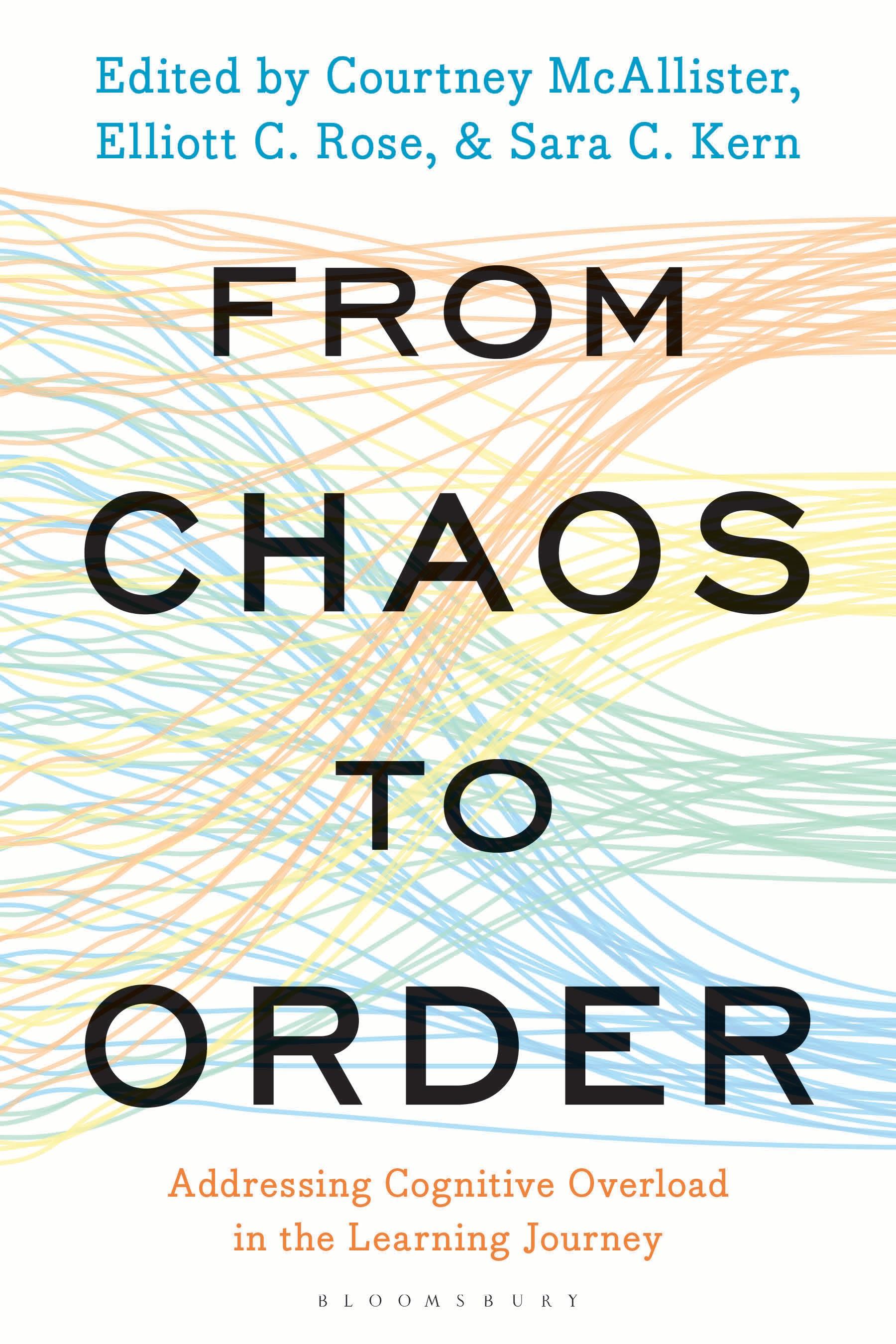
This book explores the multifaceted role cognitive load has on one's learning journey, while introducing actionable approaches and resources to help bolster success.
Multiple deadlines, competing responsibilities, an endless barrage of information, and constant stress: these situations are becoming increasingly common and intense for 21st-century learners. Even well-established needs, like finding and accessing relevant, credible information, take up more cognitive energy in this ever-changing information landscape. As pressure and complexity converge, learners are more likely to experience cognitive overload.
Cognitive load refers to the amount of information an individual is able to retain in their working memory at one time. When cognitive load is surpassed, it can be much more difficult to process, encode, and retain new information. The purpose of this book is to help professionals transform passive efforts to support learners into more purposeful actions that address cognitive overload in the context of research and information seeking.
Library practitioners may take cognitive load into consideration when creating resources like LibGuides, designing instruction sessions, or planning programming. Yet cognitive load cannot be addressed through isolated efforts; it cuts across departmental boundaries and organizational silos. To reflect the cross-sectoral dynamic of cognitive load and its impact, this book is organized around three crucial areas of one's learning journey: Instruction, Systems, and Outreach.
Each section hosts a diverse collection of instructional, system design, and outreach/programmatic ideas that are built upon Cognitive Load Theory, providing readers with actionable approaches and resources that can inform their own practices when meeting the needs of their patrons.
Whether you are a seasoned professional, new to your role, or just keen to explore the intersectionality of cognitive load throughout the learning journey, From Chaos to Order is designed to bring together useful theories, practices, and provocations for future exploration.
Multiple deadlines, competing responsibilities, an endless barrage of information, and constant stress: these situations are becoming increasingly common and intense for 21st-century learners. Even well-established needs, like finding and accessing relevant, credible information, take up more cognitive energy in this ever-changing information landscape. As pressure and complexity converge, learners are more likely to experience cognitive overload.
Cognitive load refers to the amount of information an individual is able to retain in their working memory at one time. When cognitive load is surpassed, it can be much more difficult to process, encode, and retain new information. The purpose of this book is to help professionals transform passive efforts to support learners into more purposeful actions that address cognitive overload in the context of research and information seeking.
Library practitioners may take cognitive load into consideration when creating resources like LibGuides, designing instruction sessions, or planning programming. Yet cognitive load cannot be addressed through isolated efforts; it cuts across departmental boundaries and organizational silos. To reflect the cross-sectoral dynamic of cognitive load and its impact, this book is organized around three crucial areas of one's learning journey: Instruction, Systems, and Outreach.
Each section hosts a diverse collection of instructional, system design, and outreach/programmatic ideas that are built upon Cognitive Load Theory, providing readers with actionable approaches and resources that can inform their own practices when meeting the needs of their patrons.
Whether you are a seasoned professional, new to your role, or just keen to explore the intersectionality of cognitive load throughout the learning journey, From Chaos to Order is designed to bring together useful theories, practices, and provocations for future exploration.
Pay easily by card, Klarna, Apple Pay or Google Pay. Not happy? You always have a 14-day money-back guarantee. Read more in our terms. If you have any questions, email us at hello@memmo.org.
Memmo makes studying easier – wherever you are in the world. We bring your course books and smart study tools together in one place: summaries, quizzes, podcasts and flashcards. Plus Ted, your study buddy who answers anything you wonder. Over 75,000 students already study here – built to help you learn faster and stress less.