
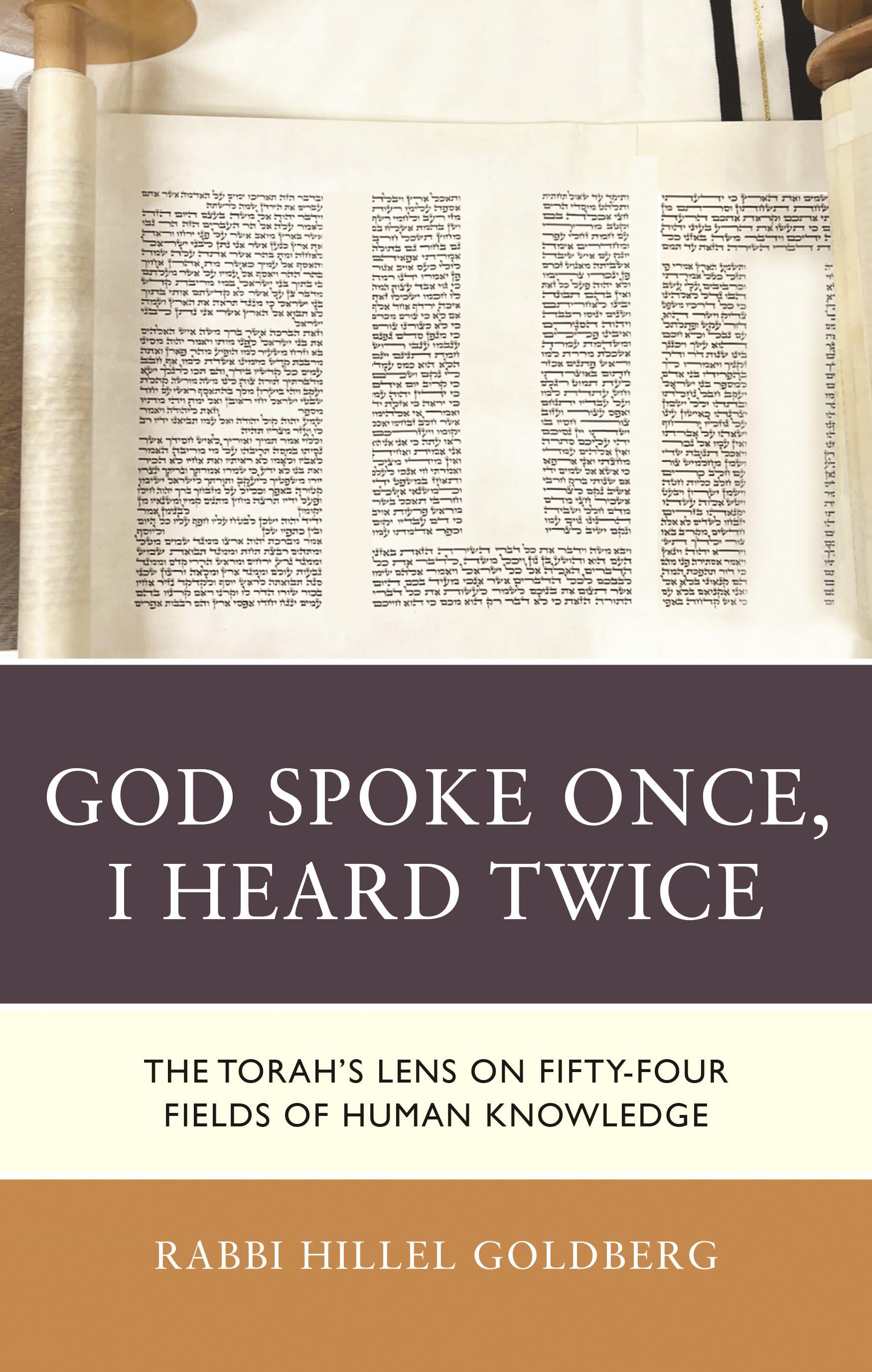
Moving from cosmology to creativity to criminology, the Torah explores the breadth of human existence: ethics and ritual, narratives of Patriarchs and Matriarchs, history and a philosophy of history--all of these drive the first five books of Hebrew Scripture. But as Rabbi Hillel Goldberg explains in this probing and insightful commentary, these sacred texts are governed by one idea-one God. God blesses the human being with power, and also imposes limits. A human being may not kill, not commit any sacrilege, not act unjustly. God retains ultimate power, including the prerogative to make ethical, ritual, and spiritual laws, which fill the Torah. The Torah is a kaleidoscope, and Rabbi Goldberg refracts it through its fifty-four prisms-its fifty-four chapters. But a single reality undergirds all-one God.
Rabbi Goldberg's exploration of the diversity of disciplines in the Torah demonstrates how naturally the idea of monotheism emerges. In Genesis, God chooses one family to carry out His mission in history. The book of Exodus narrates God's liberation of this family's descendants in order to bring His mission to fruition. Leviticus details the laws by which God's people serve Him through ethics, ritual, even agriculture. Numbers begins with the metahistory of God's people as He sustains it with manna and guides it with a pillar of fire and a pillar of cloud; then resumes the history of His people as it wages war and prepares to conquer the promised land. Fearful of idolatry there, Moses in Deuteronomy concludes his exhortation to remain faithful to the invisible presence of God.
Bible commentary, according to Rabbi Goldberg, should mirror the many ways God enters into the human experience. Offering philosophic inquiry, personal reflection, and fresh exegesis-plus a touch of poetry, humor, and storytelling-God Spoke Once, I Heard Twice is a brilliant, learned, and inspired contribution to an ongoing chronicle of faith.
Rabbi Goldberg's exploration of the diversity of disciplines in the Torah demonstrates how naturally the idea of monotheism emerges. In Genesis, God chooses one family to carry out His mission in history. The book of Exodus narrates God's liberation of this family's descendants in order to bring His mission to fruition. Leviticus details the laws by which God's people serve Him through ethics, ritual, even agriculture. Numbers begins with the metahistory of God's people as He sustains it with manna and guides it with a pillar of fire and a pillar of cloud; then resumes the history of His people as it wages war and prepares to conquer the promised land. Fearful of idolatry there, Moses in Deuteronomy concludes his exhortation to remain faithful to the invisible presence of God.
Bible commentary, according to Rabbi Goldberg, should mirror the many ways God enters into the human experience. Offering philosophic inquiry, personal reflection, and fresh exegesis-plus a touch of poetry, humor, and storytelling-God Spoke Once, I Heard Twice is a brilliant, learned, and inspired contribution to an ongoing chronicle of faith.
Pages: 376
Category: Religion & Teologi
e-ISBN: 9781538188507
Shipping weight: 1.2 kg
Ships in: 1-2 days
Pay easily by card, Klarna, Apple Pay or Google Pay. Not happy? You always have a 14-day money-back guarantee. Read more in our terms. If you have any questions, email us at hello@memmo.org.
Memmo makes studying easier – wherever you are in the world. We bring your course books and smart study tools together in one place: summaries, quizzes, podcasts and flashcards. Plus Ted, your study buddy who answers anything you wonder. Over 50,000 students already study here – built to help you learn faster and stress less.