
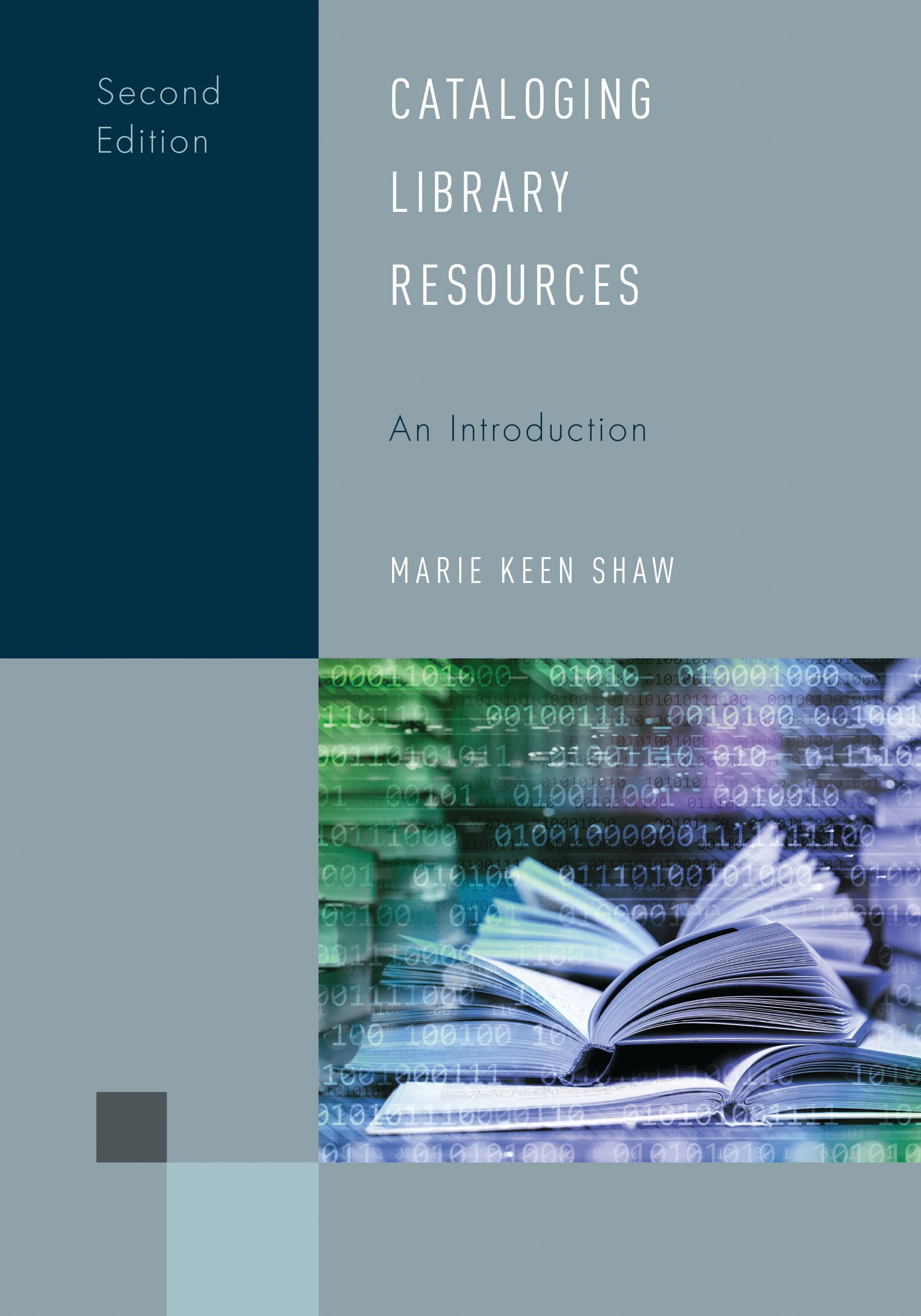
This revised text is aimed specifically for library support staff and purposefully aligned with the American Library Association – Library Support Staff Certification (LSSC) competency standards for Cataloging and Classification. In recent years AACR2 rules and MARC21 cataloging standards have evolved to RDA rules and BIBFRAME standards. Today catalogers must have the knowledge and skills to apply RDA rules of cataloging and use the BIBFRAME standards for data entry.
Written in clear language and featuring practical examples, Cataloging Library Resources: An Introduction Revised edition will instruct library support staff to become proficient catalogers. Other books on this topic are written for professional librarians rather than support staff. And although the majority of library support staff do not hold professional degrees, many are expected to do the complex and technical work of catalogers. This book provides many examples that support staff can use to learn how to catalog all types of library print, media, and digital materials using the most up-to-date Library of Congress standards.
Using this handbook as a guide, readers will be able to perform the ALA-LSSC cataloging and classification competencies and the new RDA, FRBR, and BIBFRAME standards listed below:
Apply and manage the appropriate processes, computer technology, and equipment for cataloging and classification.
Apply principles of Resource Description and Access (RDA) and the Functional Requirements for Bibliographic Records (FRBR) when creating cataloging records.
Apply principles of the Bibliographic Framework Initiative (BIBFRAME) and utilize the BIBFRAME model to create cataloging records.
Use the basic cataloging and classification tools, both print and online, including bibliographic utilities and format standards.
Understand the value of authority control and its basic principles, and can identify and apply appropriate access points for personal names, corporate bodies, series, and subjects.
Explain the value and advantages of cooperative or collaborative cataloging practices to enhance services.
Know the basics of standard metadata formats and cataloging rules to select, review, and edit catalog records, and to generate metadata in various formats.
Use and apply the classification systems of Dewey, Library of Congress, and Government Documents.And much more!
Written in clear language and featuring practical examples, Cataloging Library Resources: An Introduction Revised edition will instruct library support staff to become proficient catalogers. Other books on this topic are written for professional librarians rather than support staff. And although the majority of library support staff do not hold professional degrees, many are expected to do the complex and technical work of catalogers. This book provides many examples that support staff can use to learn how to catalog all types of library print, media, and digital materials using the most up-to-date Library of Congress standards.
Using this handbook as a guide, readers will be able to perform the ALA-LSSC cataloging and classification competencies and the new RDA, FRBR, and BIBFRAME standards listed below:
Apply and manage the appropriate processes, computer technology, and equipment for cataloging and classification.
Apply principles of Resource Description and Access (RDA) and the Functional Requirements for Bibliographic Records (FRBR) when creating cataloging records.
Apply principles of the Bibliographic Framework Initiative (BIBFRAME) and utilize the BIBFRAME model to create cataloging records.
Use the basic cataloging and classification tools, both print and online, including bibliographic utilities and format standards.
Understand the value of authority control and its basic principles, and can identify and apply appropriate access points for personal names, corporate bodies, series, and subjects.
Explain the value and advantages of cooperative or collaborative cataloging practices to enhance services.
Know the basics of standard metadata formats and cataloging rules to select, review, and edit catalog records, and to generate metadata in various formats.
Use and apply the classification systems of Dewey, Library of Congress, and Government Documents.And much more!
Pay easily by card, Klarna, Apple Pay or Google Pay. Not happy? You always have a 14-day money-back guarantee. Read more in our terms. If you have any questions, email us at hello@memmo.org.
Memmo makes studying easier – wherever you are in the world. We bring your course books and smart study tools together in one place: summaries, quizzes, podcasts and flashcards. Plus Ted, your study buddy who answers anything you wonder. Over 50,000 students already study here – built to help you learn faster and stress less.