
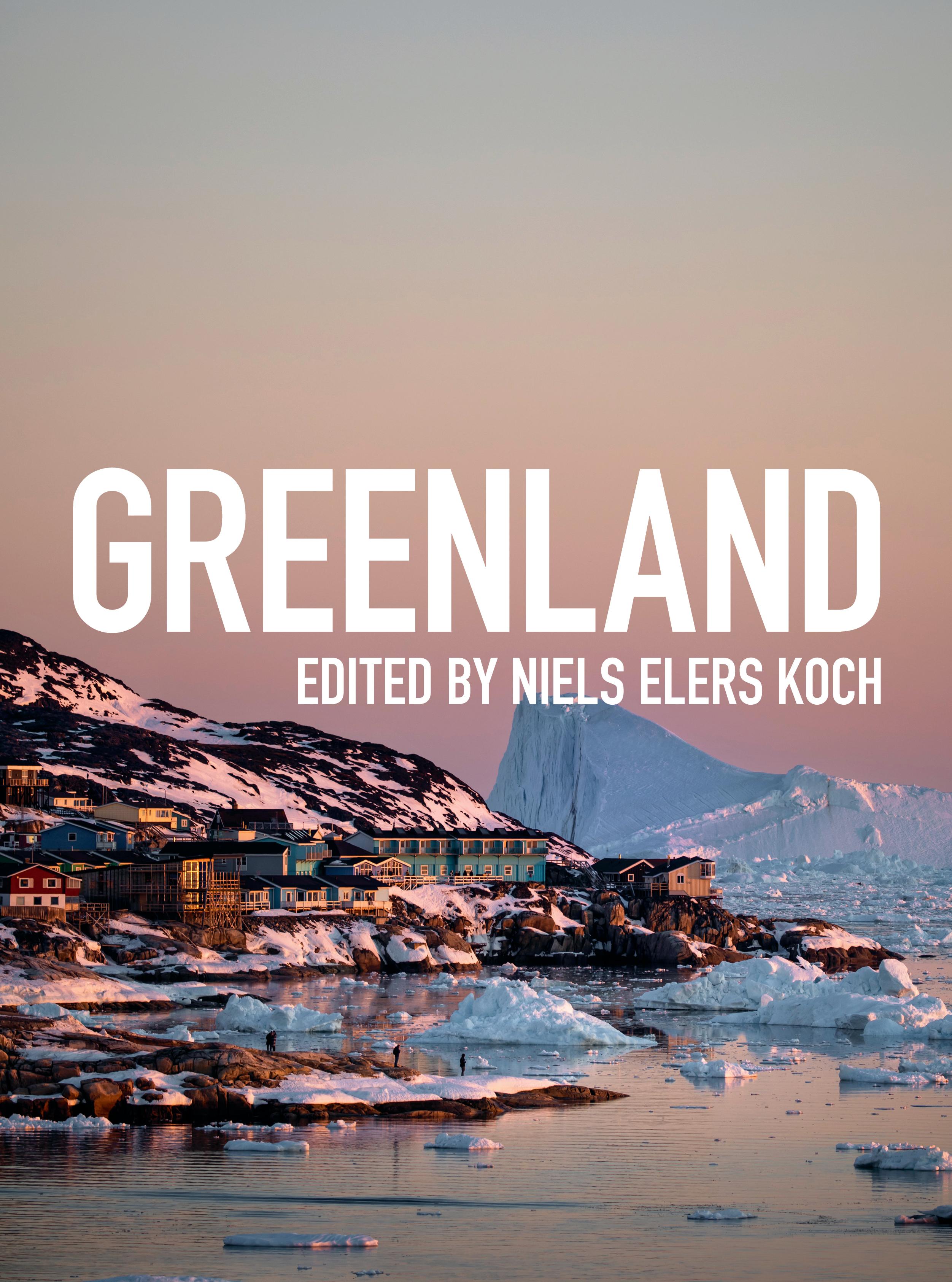
Greenland provides extensive and richly illustrated, area-specific knowledge about Greenland’s nature and landscape, history, culture, society and businesses as well as its towns and settlements. A total of 87 mainly Greenlandic researchers and experts have contributed with their knowledge to this book about the most essential topics from Cape Morris Jesup to Uummannarsuaq (Cape Farewell) and from Qaanaaq to Danmarkshavn.
Covering almost 2.5 million km2 and with a population of around 56,000, Greenland is the world’s largest island and most sparsely populated area. Gain an insight into the history of geological formations and read about the ice sheet, which, as a result of melting and global warming, is now the subject of increased international interest. Understand the background of the marvelous icebergs at Qeqertarsuup Tunua and take the dog sled or snowmobile to the small remote and self-sufficient settlements. Take a tour of the capital of Nuuk and the other towns on the southern part of the west coast. This was where Danish-Norwegian missionary Hans Egede first set foot in 1721, and from where the Danish colonization began, which had a severe impact on Inuit culture. Read about modernization endeavors, the calls for secession, the influence of the rock band Sume and the referendums in 1979 and 2008 that led to Greenlandic self-government. Learn about the traditional culture featuring elements such as the drum dance, which has seen renewed interest and has been included on UNESCO’s World Heritage List of Intangible Cultural Heritage. Greenland covers all the essentials. From the most common to the most special.
Covering almost 2.5 million km2 and with a population of around 56,000, Greenland is the world’s largest island and most sparsely populated area. Gain an insight into the history of geological formations and read about the ice sheet, which, as a result of melting and global warming, is now the subject of increased international interest. Understand the background of the marvelous icebergs at Qeqertarsuup Tunua and take the dog sled or snowmobile to the small remote and self-sufficient settlements. Take a tour of the capital of Nuuk and the other towns on the southern part of the west coast. This was where Danish-Norwegian missionary Hans Egede first set foot in 1721, and from where the Danish colonization began, which had a severe impact on Inuit culture. Read about modernization endeavors, the calls for secession, the influence of the rock band Sume and the referendums in 1979 and 2008 that led to Greenlandic self-government. Learn about the traditional culture featuring elements such as the drum dance, which has seen renewed interest and has been included on UNESCO’s World Heritage List of Intangible Cultural Heritage. Greenland covers all the essentials. From the most common to the most special.
Pay easily by card, Klarna, Apple Pay or Google Pay. Not happy? You always have a 14-day money-back guarantee. Read more in our terms. If you have any questions, email us at hello@memmo.org.
Memmo makes studying easier – wherever you are in the world. We bring your course books and smart study tools together in one place: summaries, quizzes, podcasts and flashcards. Plus Ted, your study buddy who answers anything you wonder. Over 50,000 students already study here – built to help you learn faster and stress less.