
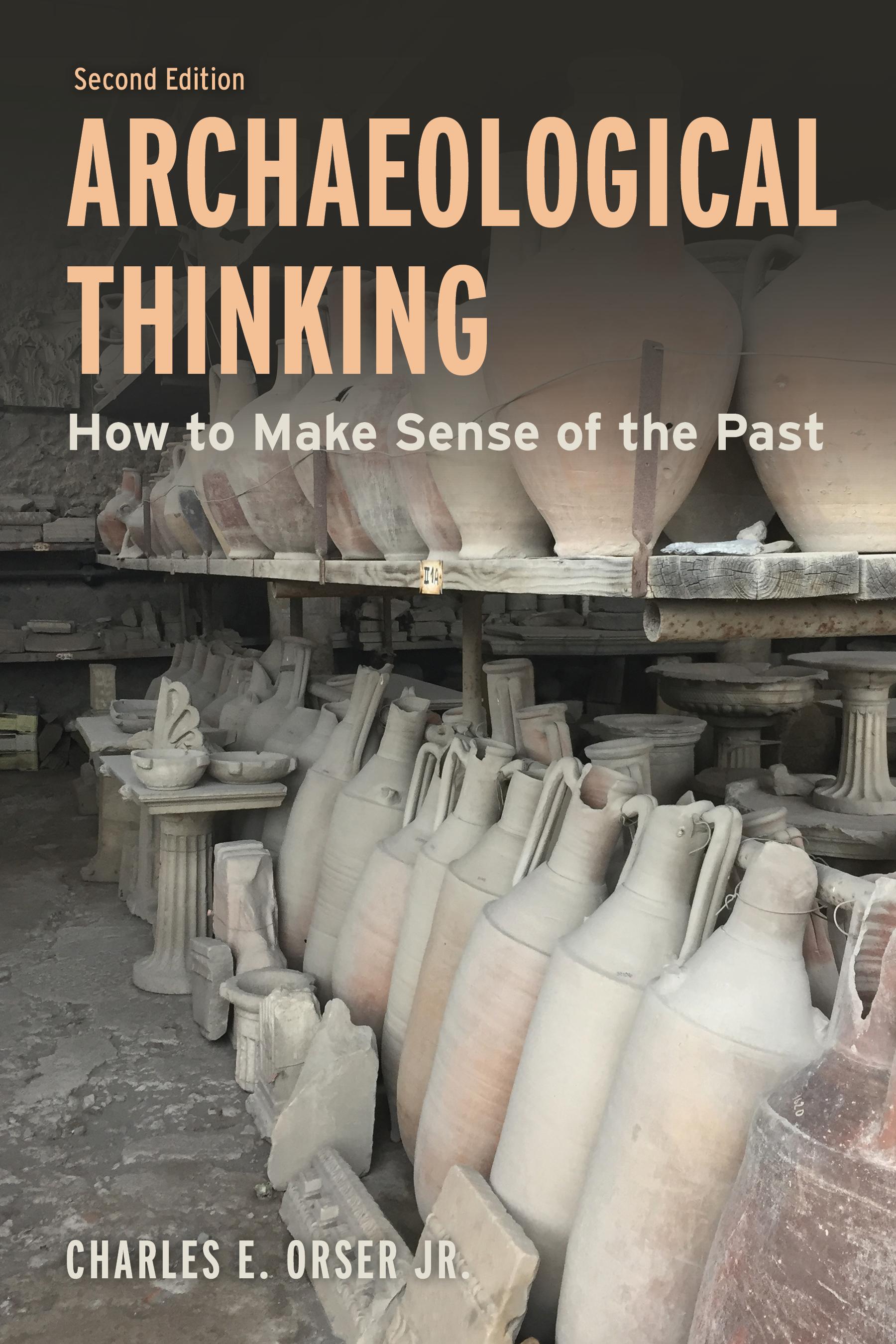
How do archaeologists think? How do archaeologists take the scattered and fragmentary remains collected from past settlements and create meaningful, reasonable interpretations of past human history? In the second edition of Archaeological Thinking, Charles E. Orser, Jr. provides answers to these questions and more by explaining in non-technical language the most basic elements of critical thinking in archaeology.
This book explores and explains such topics as:
the use of logic in framing argumentsthe curious issue of fact selectionthe use of analogiesthe role of archaeology in contemporary society and among present-day communitiesapproaches to understanding the pastand the dangers of deceitful archaeological thinking.
Examples taken from the world of ancient aliens, mythical sunken cities, and mysterious creatures help readers learn how to separate reality from fiction regardless of their desire to become a professional archaeologist.
This book explores and explains such topics as:
the use of logic in framing argumentsthe curious issue of fact selectionthe use of analogiesthe role of archaeology in contemporary society and among present-day communitiesapproaches to understanding the pastand the dangers of deceitful archaeological thinking.
Examples taken from the world of ancient aliens, mythical sunken cities, and mysterious creatures help readers learn how to separate reality from fiction regardless of their desire to become a professional archaeologist.
Pay easily by card, Klarna, Apple Pay or Google Pay. Not happy? You always have a 14-day money-back guarantee. Read more in our terms. If you have any questions, email us at hello@memmo.org.
Memmo makes studying easier – wherever you are in the world. We bring your course books and smart study tools together in one place: summaries, quizzes, podcasts and flashcards. Plus Ted, your study buddy who answers anything you wonder. Over 75,000 students already study here – built to help you learn faster and stress less.