
Is it due to lack of critical agency that precarious persons opt, time and again, for political views that contribute to their marginalization? How should we understand that alleged loss of critical agency and how could it be countered? Influential perspectives in critical theory have answered these questions by highlighting how certain ideological mechanisms, incorporated thoughtlessly by the most vulnerable bodies, function to obscure their interests and the causes of the condition they find themselves in.
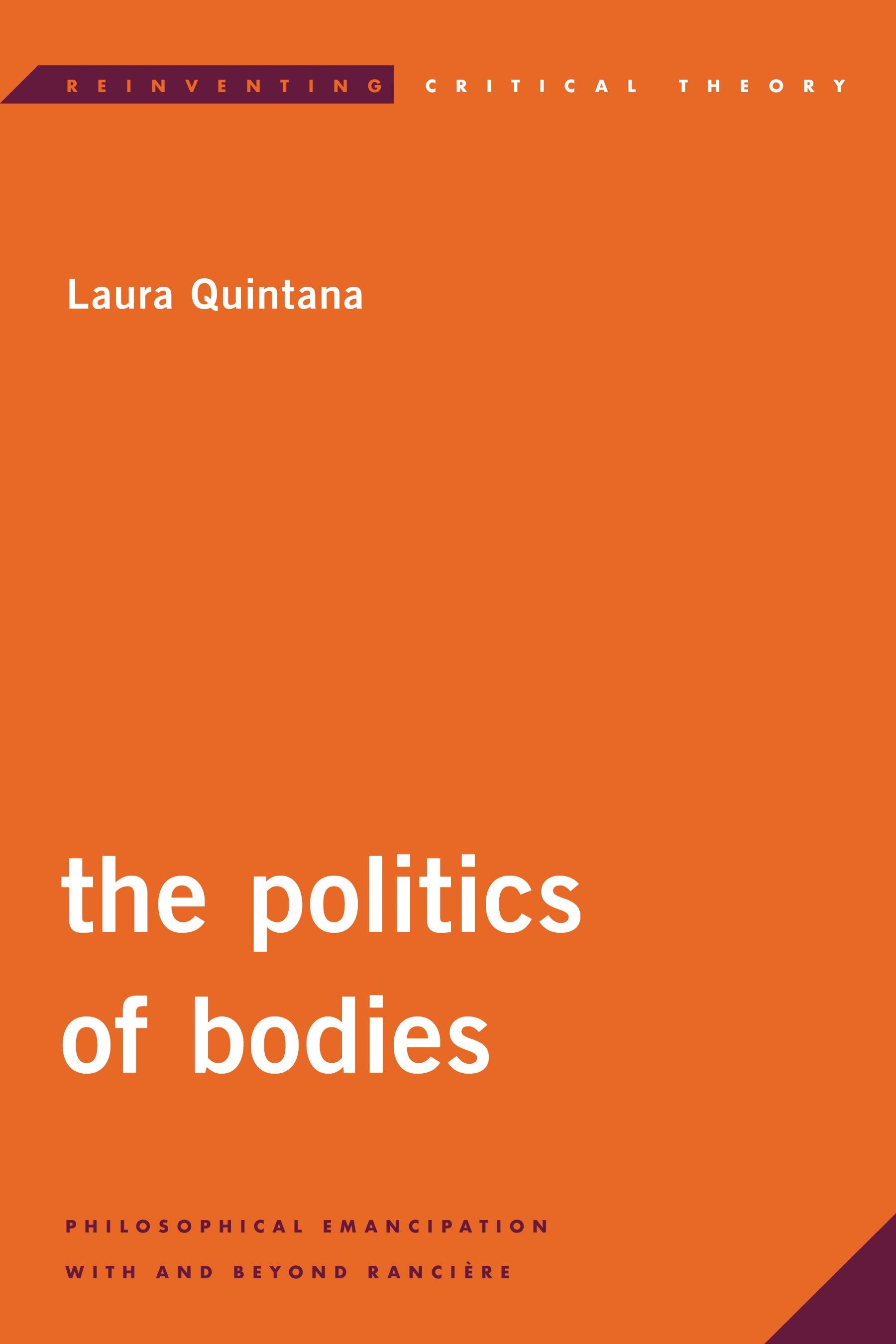
Through an original interpretation of Jacques Rancière’s thought, but also going beyond it, The Politics of Bodies establishes a different horizon of reflection. Laura Quintana’s main hypothesis is that the lack of critical agency today has more to do with a loss of the desire for transformation, fostered by neoliberal consensual dynamics, than with techniques of deceit and manipulation. In developing her interpretation of Rancière’s thought, Quintana provides an analysis of certain aesthetic-political and socioeconomic conditions of the historical present, anchored mainly in Latin America. Thus, she addresses the corporeal transformations produced by emancipatory practices, the ways in which they affect configurations of power, and the manner in which they can be disseminated in and, in turn, alter the political landscape.
Through an original interpretation of Jacques Rancière’s thought, but also going beyond it, The Politics of Bodies establishes a different horizon of reflection. Laura Quintana’s main hypothesis is that the lack of critical agency today has more to do with a loss of the desire for transformation, fostered by neoliberal consensual dynamics, than with techniques of deceit and manipulation. In developing her interpretation of Rancière’s thought, Quintana provides an analysis of certain aesthetic-political and socioeconomic conditions of the historical present, anchored mainly in Latin America. Thus, she addresses the corporeal transformations produced by emancipatory practices, the ways in which they affect configurations of power, and the manner in which they can be disseminated in and, in turn, alter the political landscape.
Pay easily by card, Klarna, Apple Pay or Google Pay. Not happy? You always have a 14-day money-back guarantee. Read more in our terms. If you have any questions, email us at hello@memmo.org.
Memmo makes studying easier – wherever you are in the world. We bring your course books and smart study tools together in one place: summaries, quizzes, podcasts and flashcards. Plus Ted, your study buddy who answers anything you wonder. Over 50,000 students already study here – built to help you learn faster and stress less.