
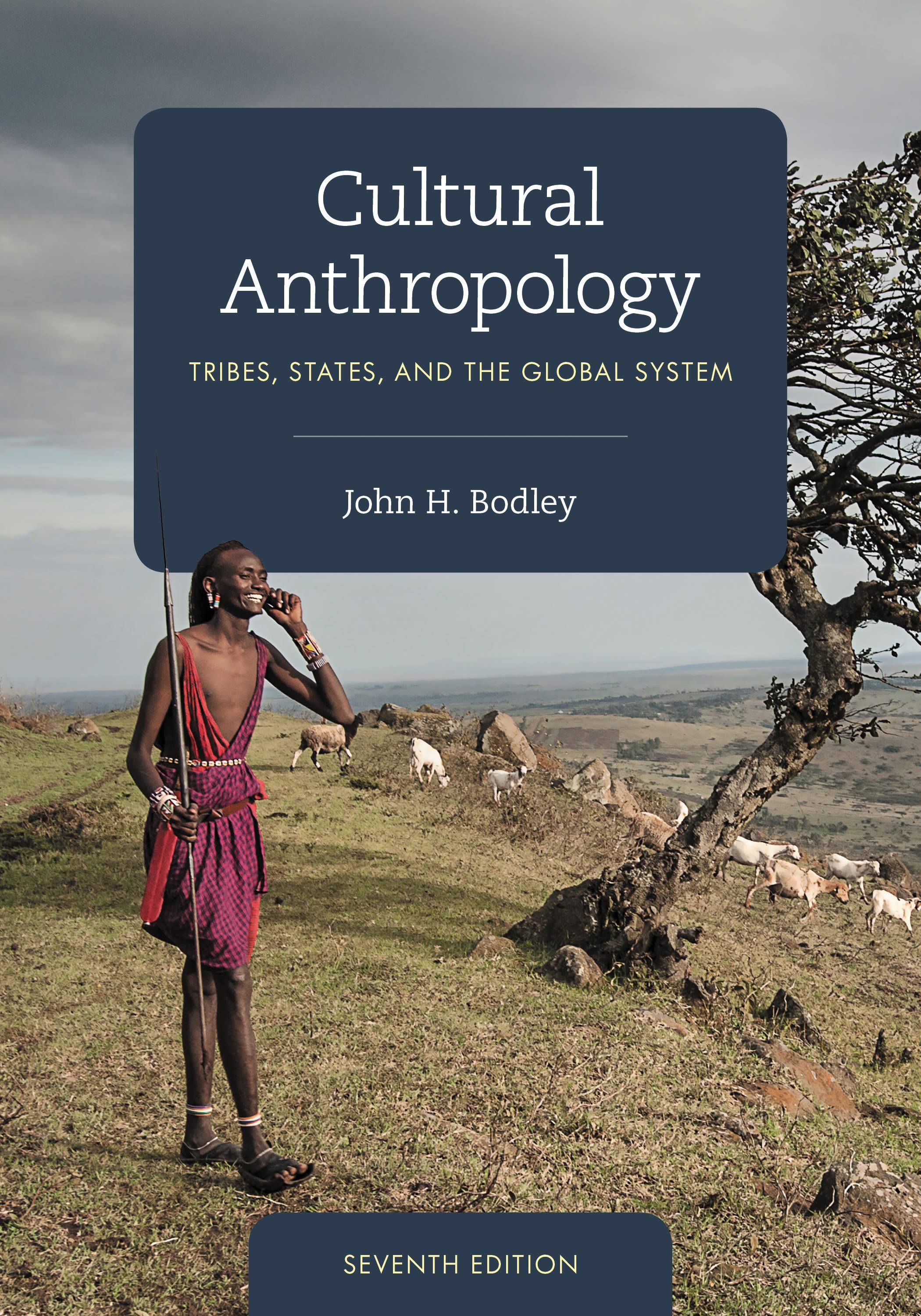
Cultural Anthropology: Tribes, States, and the Global System, Seventh Edition, provides balanced coverage of three dramatically different cultural worlds by focusing on problems of social inequality, human well-being, social justice, and sustainability. Author John Bodley challenges students to consider “big questions” about the nature of cultural systems: How are cultures structured to satisfy basic human needs? What is it like to be human under different cultural conditions? Are DNA, language, and environment determinants of culture? Are materialist explanations more useful than ideological ones? What are the major turning points in human history? Scale and power remains the primary theoretical framework, but cultural evolutionary perspectives have been expanded.
NEW TO THIS EDITION
Chapter Two now includes a new section discussing evolutionary cultural anthropology, a new box that updates the archaeological, biological anthropology, and genetic material on anatomically modern humans, and a discussion of the connection between evolutionary anthropology and the moral domains and values that support social cooperation.
Chapter Six has new sections on soul beliefs and shamanism, wealth and well-being, and findings from the long-running Tsimane health project in the Bolivian Amazon. The section on the “mental abilities of tribal peoples” is revised to read “cognitive abilities” and a new discussion of working memory as a defining feature of fully modern humans is included.
Chapter Seven includes a new box presenting some of the latest genetic, linguistic, and paleoclimate findings related to the colonization of the Pacific.
Chapter Ten adds a new section on demographic-structural and cultural evolutionary theory on the rise and fall of politically centralized societies using the Seshat Global History Databank.
Chapter Thirteen adds a new section “A Cascade of Unsustainability Warnings” on the very alarming back to back IPCC special report on the dangers of global warming exceeding 1.5oC, published in fall 2018, and the spring 2019 IPBES Global Assessment of Biodiversity and Ecosystem Services.
Chapter Fourteen adds two new sections, the first questioning whether capitalism itself can be sustainable, the second considering the alternatives for adapting to climate change.
Ancillary materials for both instructors and students are written by the author and include an instructor’s manual, test bank, presentation slides, and an open-access companion website.
NEW TO THIS EDITION
Chapter Two now includes a new section discussing evolutionary cultural anthropology, a new box that updates the archaeological, biological anthropology, and genetic material on anatomically modern humans, and a discussion of the connection between evolutionary anthropology and the moral domains and values that support social cooperation.
Chapter Six has new sections on soul beliefs and shamanism, wealth and well-being, and findings from the long-running Tsimane health project in the Bolivian Amazon. The section on the “mental abilities of tribal peoples” is revised to read “cognitive abilities” and a new discussion of working memory as a defining feature of fully modern humans is included.
Chapter Seven includes a new box presenting some of the latest genetic, linguistic, and paleoclimate findings related to the colonization of the Pacific.
Chapter Ten adds a new section on demographic-structural and cultural evolutionary theory on the rise and fall of politically centralized societies using the Seshat Global History Databank.
Chapter Thirteen adds a new section “A Cascade of Unsustainability Warnings” on the very alarming back to back IPCC special report on the dangers of global warming exceeding 1.5oC, published in fall 2018, and the spring 2019 IPBES Global Assessment of Biodiversity and Ecosystem Services.
Chapter Fourteen adds two new sections, the first questioning whether capitalism itself can be sustainable, the second considering the alternatives for adapting to climate change.
Ancillary materials for both instructors and students are written by the author and include an instructor’s manual, test bank, presentation slides, and an open-access companion website.
Pay easily by card, Klarna, Apple Pay or Google Pay. Not happy? You always have a 14-day money-back guarantee. Read more in our terms. If you have any questions, email us at hello@memmo.org.
Memmo makes studying easier – wherever you are in the world. We bring your course books and smart study tools together in one place: summaries, quizzes, podcasts and flashcards. Plus Ted, your study buddy who answers anything you wonder. Over 50,000 students already study here – built to help you learn faster and stress less.