
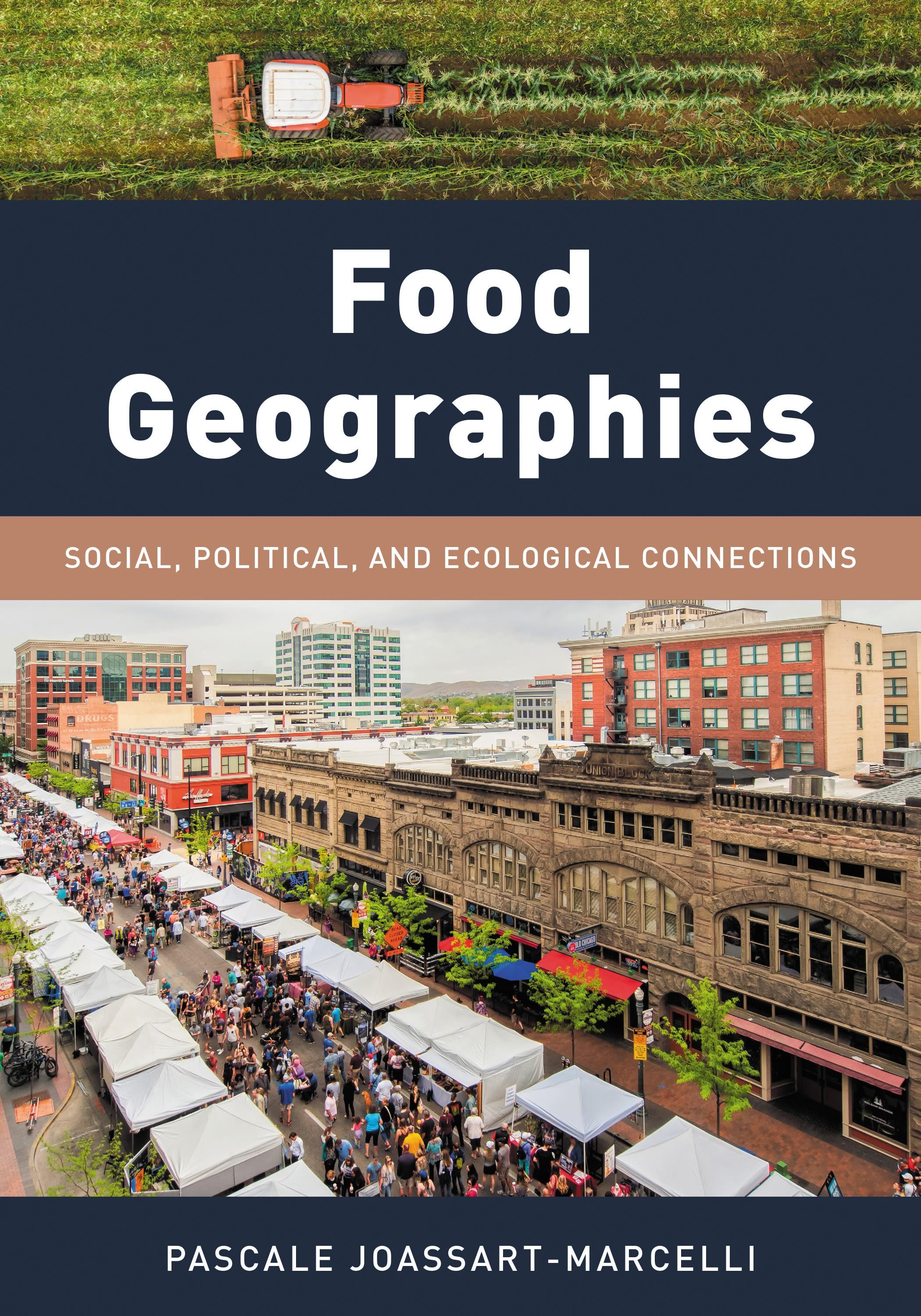
What is the significance of food in our everyday lives? Food Geographies addresses this broad question by examining the social, political, and ecological connections that food weaves between people and places across the world and revealing the centrality of food in the human experience. This interdisciplinary and systemic perspective provides readers with key concepts, analytical tools, and critical skills to better understand and address the many issues facing the contemporary food system, including food insecurity, environmental degradation, climate change, labor exploitation, social inequality, power imbalance in decision making, and threats to health and well-being. It takes readers to places including modern plantations in Peru, collective farms in Tanzania, food halls in France, home kitchens in Japan, community gardens in Brazil, pubs in England, and animal feeding operations in America. By raising important questions about the current system, readers will explore ways to enact meaningful change to build better future food geographies by producing, consuming, and engaging with food differently.
Pay easily by card, Klarna, Apple Pay or Google Pay. Not happy? You always have a 14-day money-back guarantee. Read more in our terms. If you have any questions, email us at hello@memmo.org.
Memmo makes studying easier – wherever you are in the world. We bring your course books and smart study tools together in one place: summaries, quizzes, podcasts and flashcards. Plus Ted, your study buddy who answers anything you wonder. Over 50,000 students already study here – built to help you learn faster and stress less.