
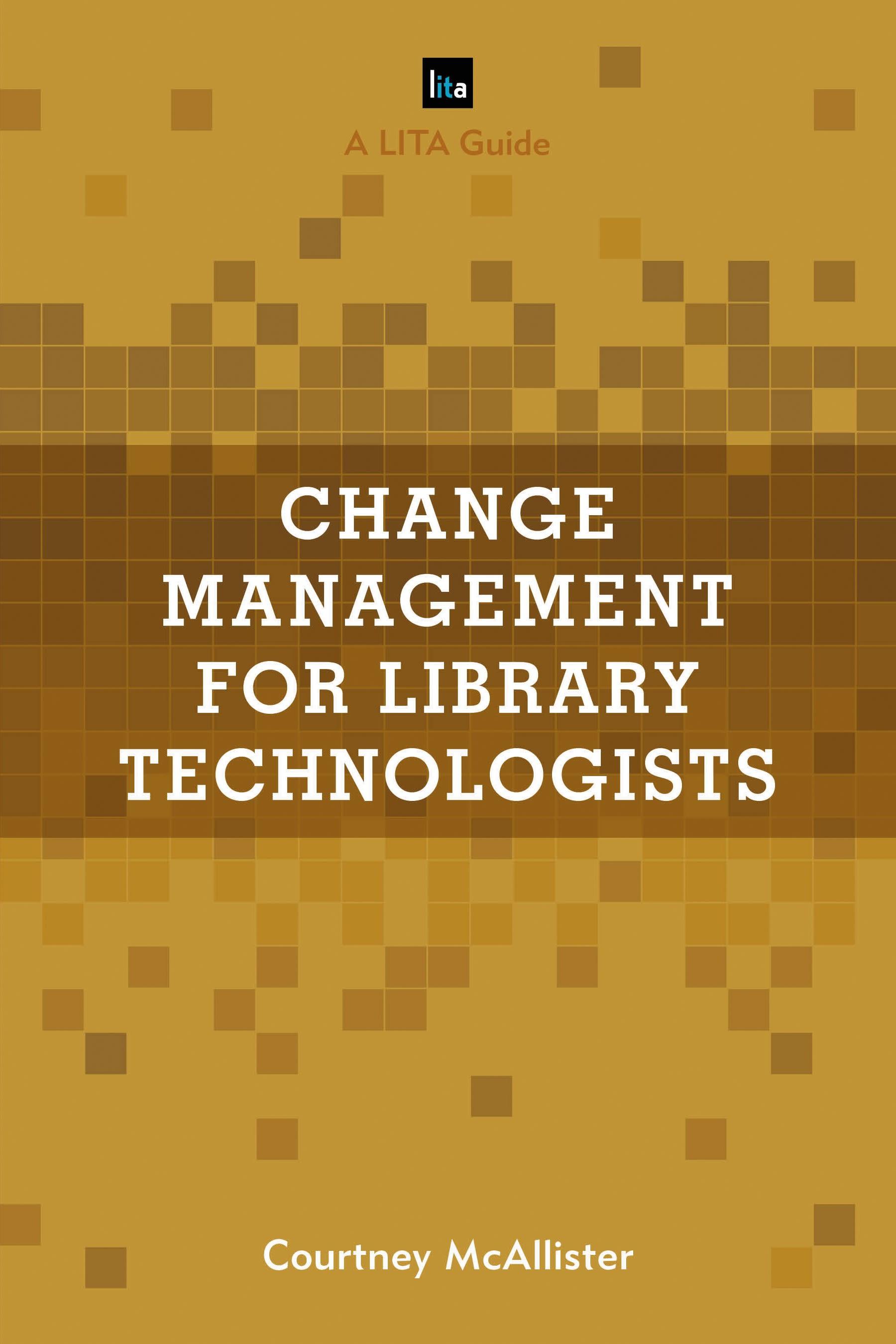
Technology has transformed how libraries, archives, and museums store and display their collections, engage with their users, and serve their communities. The pressure to implement new technologies is constant, but technology that isn’t truly useful to users, staff, and stakeholders can represent a huge investment of time and money that yields little reward. In order to make meaningful technology changes in our libraries, archives, and museums, we need a flexible toolkit that will help information professionals become change leaders, navigating the equally complex variables associated with system specs and human experience or perception. Change management incorporates these concerns into a comprehensive framework.
Change management principles form the foundation for this book’s approach to managing technology change. While change will inevitably elicit unexpected situations or complications, cultivating a change management repertoire can help information professionals better identify opportunities for valuable technology change, plan and execute those changes, assess the process, and translate the experience into enriched plans for the future. Whether you have been managing library systems for decades or are an MLIS student, this book is designed to introduce you to change management principles and practical skills that you can apply to your local organization’s needs.
Chapters on assessment, communication, and iterative change outline a wide range of skills that can facilitate changes like an ILS migration, makerspace launch, website re-design, or room reservation process overhaul. The condensed case studies integrated throughout the book demonstrate the breadth of technology changes taking place in the field and give first-hand accounts of triumphs and learning experiences. There is universal template that guarantees successful technology change. But a robust change management toolkit can cultivate organizational adaptability and responsiveness that empowers libraries, archives, and museums to make the most of current technology changes and positions them to embrace new ones.
Change management principles form the foundation for this book’s approach to managing technology change. While change will inevitably elicit unexpected situations or complications, cultivating a change management repertoire can help information professionals better identify opportunities for valuable technology change, plan and execute those changes, assess the process, and translate the experience into enriched plans for the future. Whether you have been managing library systems for decades or are an MLIS student, this book is designed to introduce you to change management principles and practical skills that you can apply to your local organization’s needs.
Chapters on assessment, communication, and iterative change outline a wide range of skills that can facilitate changes like an ILS migration, makerspace launch, website re-design, or room reservation process overhaul. The condensed case studies integrated throughout the book demonstrate the breadth of technology changes taking place in the field and give first-hand accounts of triumphs and learning experiences. There is universal template that guarantees successful technology change. But a robust change management toolkit can cultivate organizational adaptability and responsiveness that empowers libraries, archives, and museums to make the most of current technology changes and positions them to embrace new ones.
Pages: 138
Category: Företagande & Management
e-ISBN: 9781538118702
Shipping weight: 1.2 kg
Ships in: 1-2 days
Pay easily by card, Klarna, Apple Pay or Google Pay. Not happy? You always have a 14-day money-back guarantee. Read more in our terms. If you have any questions, email us at hello@memmo.org.
Memmo makes studying easier – wherever you are in the world. We bring your course books and smart study tools together in one place: summaries, quizzes, podcasts and flashcards. Plus Ted, your study buddy who answers anything you wonder. Over 50,000 students already study here – built to help you learn faster and stress less.