
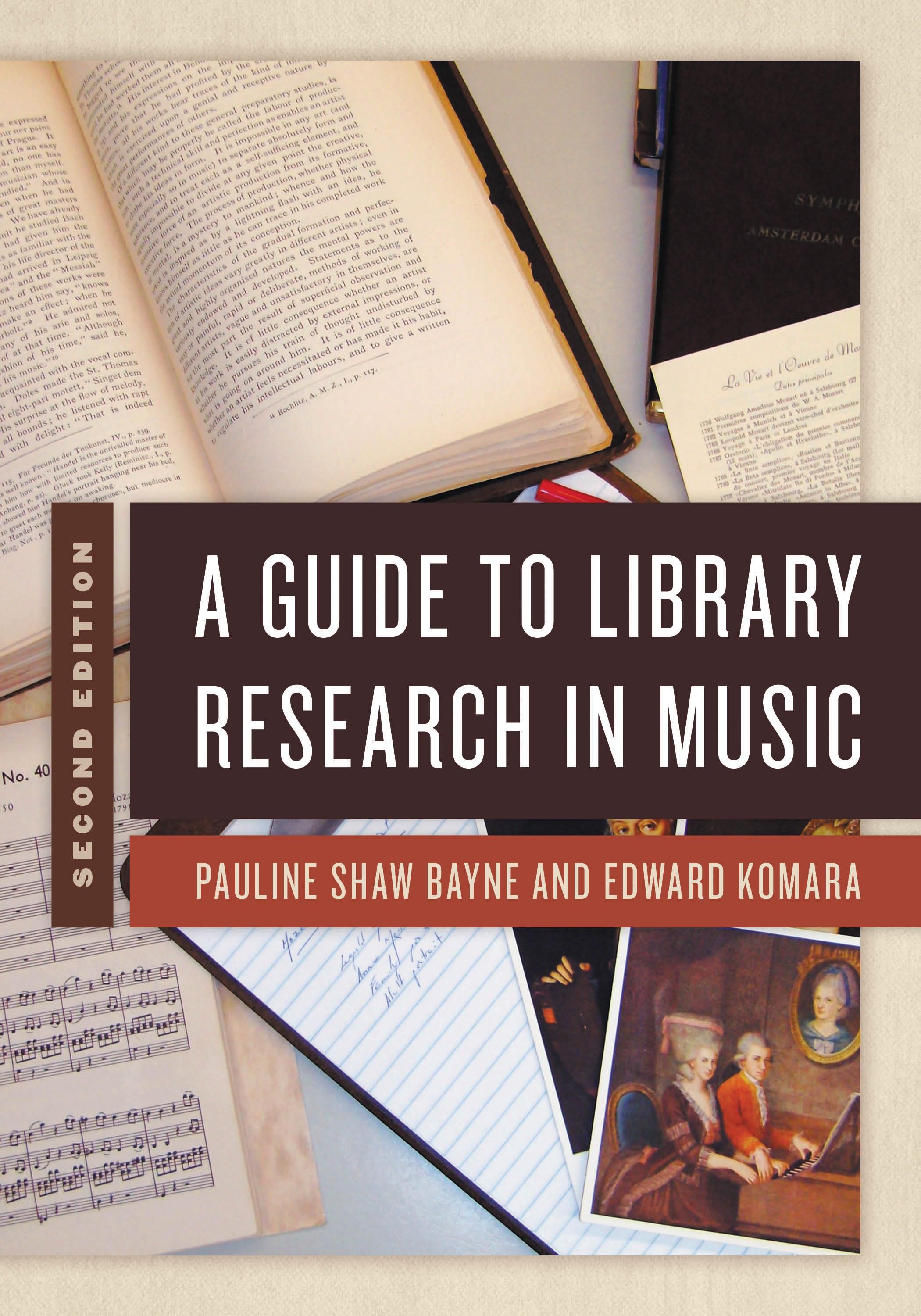
A Guide to Library Research in Music introduces students to the process and techniques for researching and writing about music. It provides examples of different types of writing, offers a thorough introduction to music literature, describes various information-searching methods and library-based organizational systems, and explores the wide array of music resources.
This second edition discusses the latest innovations in library catalog searching, new matters in digital technology, and the expansion in musical genres for library research. The book’s organization allows for three independent tracks of study.
Part 1 treats essentials of the research process, explaining starting-point resources such as library catalogs, dictionaries, and bibliographies. It addresses scholarly documentation, the use of style manuals, and basics of copyright.
Part 2 develops skills and strategies for library- and Internet-based research, describing database structures and library catalogs, subject searching in catalogs and journal indexes, keyword searching techniques, related-record searching and citation databases, and the use of experts and thematic catalogs.
Part 3 discusses the organization of a music library, emphasizing score collections, books and journals in music literature, and music teaching publications.
This second edition discusses the latest innovations in library catalog searching, new matters in digital technology, and the expansion in musical genres for library research. The book’s organization allows for three independent tracks of study.
Part 1 treats essentials of the research process, explaining starting-point resources such as library catalogs, dictionaries, and bibliographies. It addresses scholarly documentation, the use of style manuals, and basics of copyright.
Part 2 develops skills and strategies for library- and Internet-based research, describing database structures and library catalogs, subject searching in catalogs and journal indexes, keyword searching techniques, related-record searching and citation databases, and the use of experts and thematic catalogs.
Part 3 discusses the organization of a music library, emphasizing score collections, books and journals in music literature, and music teaching publications.
Pay easily by card, Klarna, Apple Pay or Google Pay. Not happy? You always have a 14-day money-back guarantee. Read more in our terms. If you have any questions, email us at hello@memmo.org.
Memmo makes studying easier – wherever you are in the world. We bring your course books and smart study tools together in one place: summaries, quizzes, podcasts and flashcards. Plus Ted, your study buddy who answers anything you wonder. Over 50,000 students already study here – built to help you learn faster and stress less.