
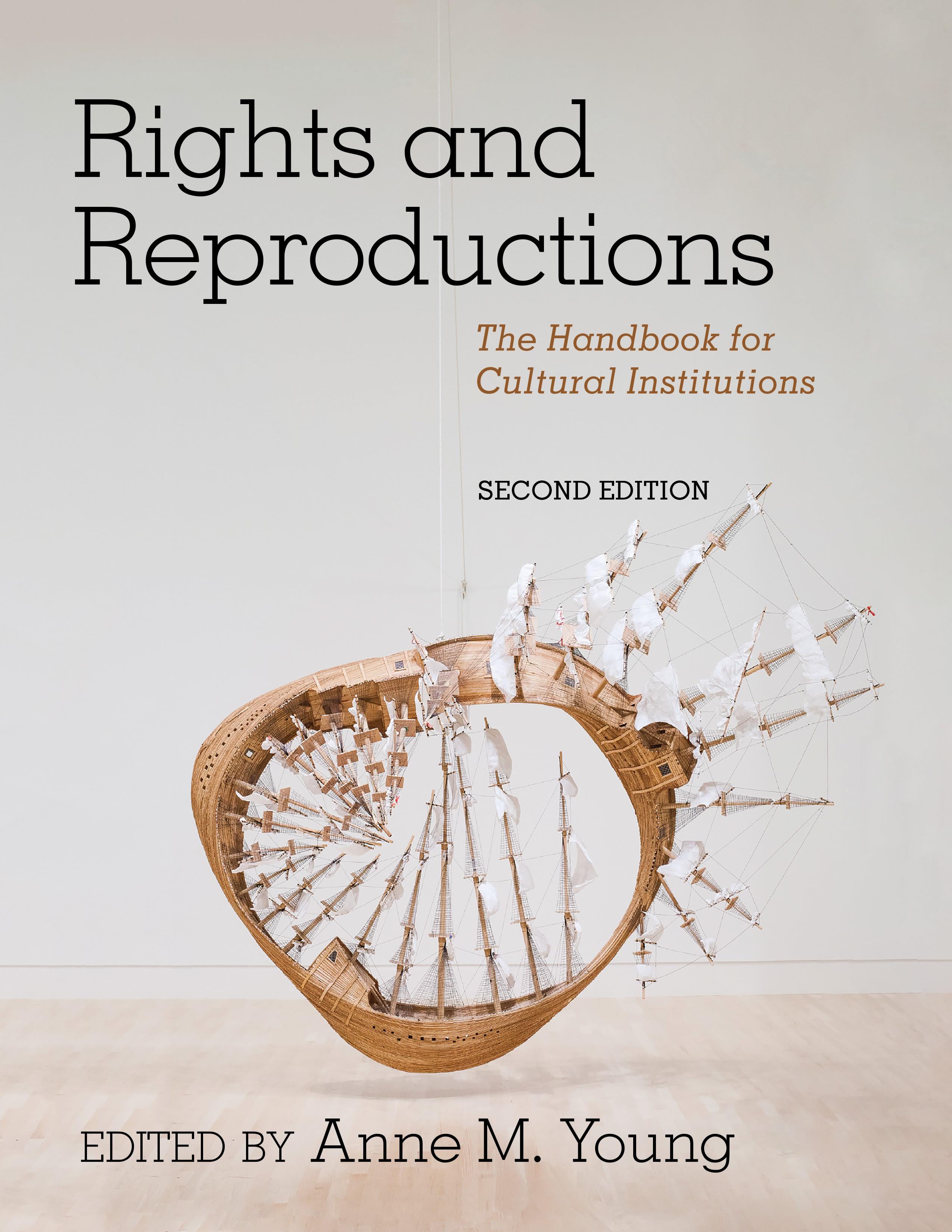
Management and dissemination of the Intellectual Property (IP) assets maintained by cultural institutions is a key responsibility of caring for collections. Rights and reproductions methodologies are seemingly ever-changing with new technologies, additional distribution avenues, evolving case law, applicable court decisions, and new legislation.
This new edition of Rights & Reproductions: The Handbook for Cultural Institutions marks the first time this valuable publication is available in print as well as digital. Building upon the guidelines, standards, and best practices outlined in the first edition, the Handbook further investigates current trends in rights and reproductions practices, notably expanding the discussion of fair use guidelines and codes, Creative Commons and RightsStatements.org, open access, social media applications, and the overall process of conducting rights clearances and obtaining permissions for the growing list of possible uses of a cultural institution’s Intellectual Property.
Highlights of the second edition include:
A new chapter devoted to fair use and open accessOverall updates to applicable case law, rights clearance practices, and distribution partnersOver 20 case studies outlining real-world examples from the authors’ experiences and practices at their institutionsExpanded glossary defining terms so they are easy to understandUpdated appendices with new references, resources, and court decisions Over 50 contract and document templates provided by the authors’ institutions
The Handbook is the must-have, comprehensive resource for cultural institution professionals handling rights-related work, including registrars, rights and reproductions managers, archivists, librarians, and lawyers.
This new edition of Rights & Reproductions: The Handbook for Cultural Institutions marks the first time this valuable publication is available in print as well as digital. Building upon the guidelines, standards, and best practices outlined in the first edition, the Handbook further investigates current trends in rights and reproductions practices, notably expanding the discussion of fair use guidelines and codes, Creative Commons and RightsStatements.org, open access, social media applications, and the overall process of conducting rights clearances and obtaining permissions for the growing list of possible uses of a cultural institution’s Intellectual Property.
Highlights of the second edition include:
A new chapter devoted to fair use and open accessOverall updates to applicable case law, rights clearance practices, and distribution partnersOver 20 case studies outlining real-world examples from the authors’ experiences and practices at their institutionsExpanded glossary defining terms so they are easy to understandUpdated appendices with new references, resources, and court decisions Over 50 contract and document templates provided by the authors’ institutions
The Handbook is the must-have, comprehensive resource for cultural institution professionals handling rights-related work, including registrars, rights and reproductions managers, archivists, librarians, and lawyers.
Pay easily by card, Klarna, Apple Pay or Google Pay. Not happy? You always have a 14-day money-back guarantee. Read more in our terms. If you have any questions, email us at hello@memmo.org.
Memmo makes studying easier – wherever you are in the world. We bring your course books and smart study tools together in one place: summaries, quizzes, podcasts and flashcards. Plus Ted, your study buddy who answers anything you wonder. Over 50,000 students already study here – built to help you learn faster and stress less.