
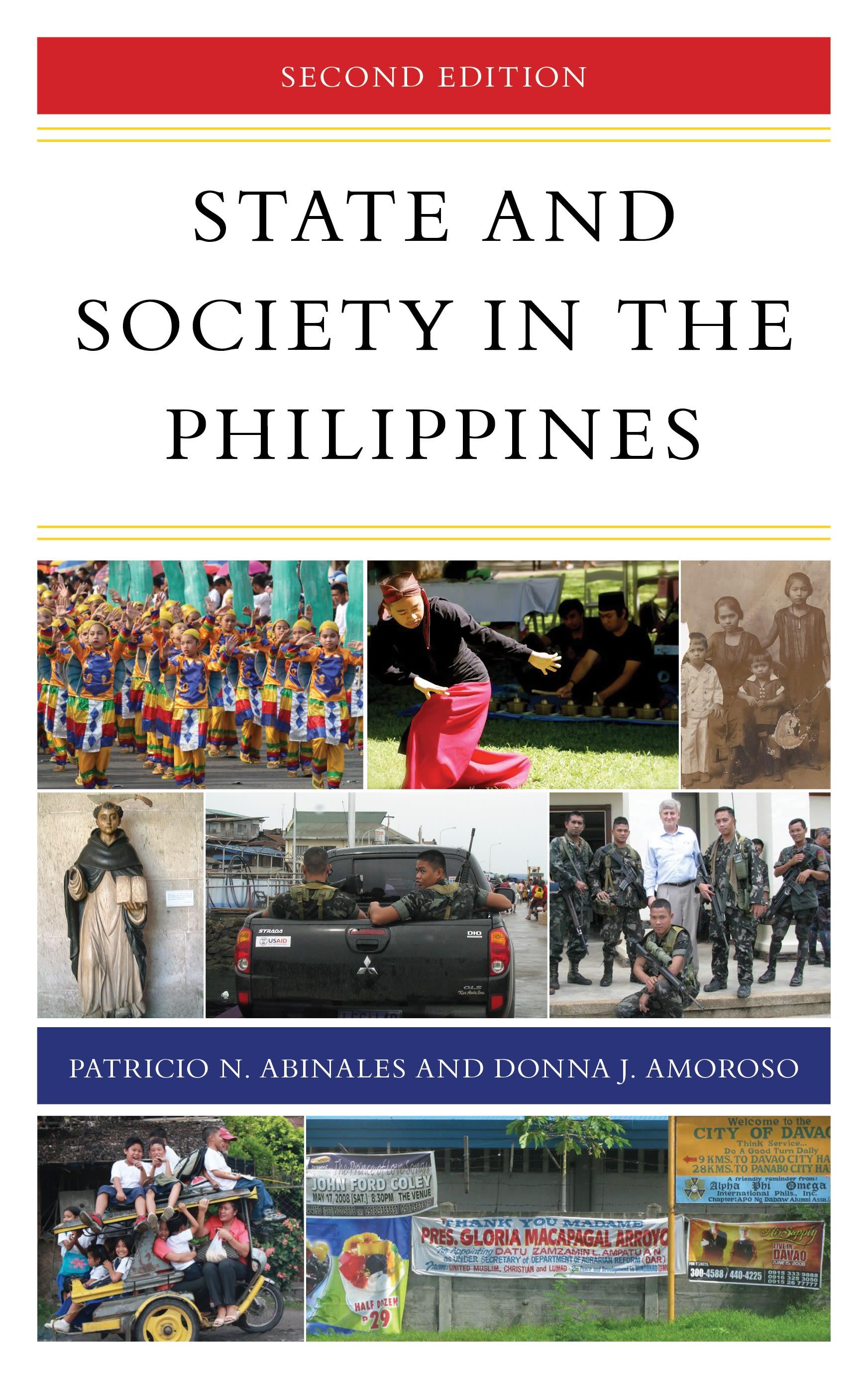
This clear and nuanced introduction explores the Philippines’ ongoing and deeply charged dilemma of state-society relations through a historical treatment of state formation and the corresponding conflicts and collaboration between government leaders and social forces. Patricio N. Abinales and Donna J. Amoroso examine the long history of institutional weakness in the Philippines and the varied strategies the state has employed to overcome its structural fragility and strengthen its bond with society. The authors argue that this process reflects the country’s recurring dilemma: on the one hand is the state’s persistent inability to provide essential services, guarantee peace and order, and foster economic development; on the other is the Filipinos’ equally enduring suspicions of a strong state. To many citizens, this powerfully evokes the repression of the 1970s and the 1980s that polarized society and cost thousands of lives in repression and resistance and billions of dollars in corruption, setting the nation back years in economic development and profoundly undermining trust in government. The book’s historical sweep starts with the polities of the pre-colonial era and continues through the first year of Rodrigo Duterte’s controversial presidency.
Pay easily by card, Klarna, Apple Pay or Google Pay. Not happy? You always have a 14-day money-back guarantee. Read more in our terms. If you have any questions, email us at hello@memmo.org.
Memmo makes studying easier – wherever you are in the world. We bring your course books and smart study tools together in one place: summaries, quizzes, podcasts and flashcards. Plus Ted, your study buddy who answers anything you wonder. Over 50,000 students already study here – built to help you learn faster and stress less.