
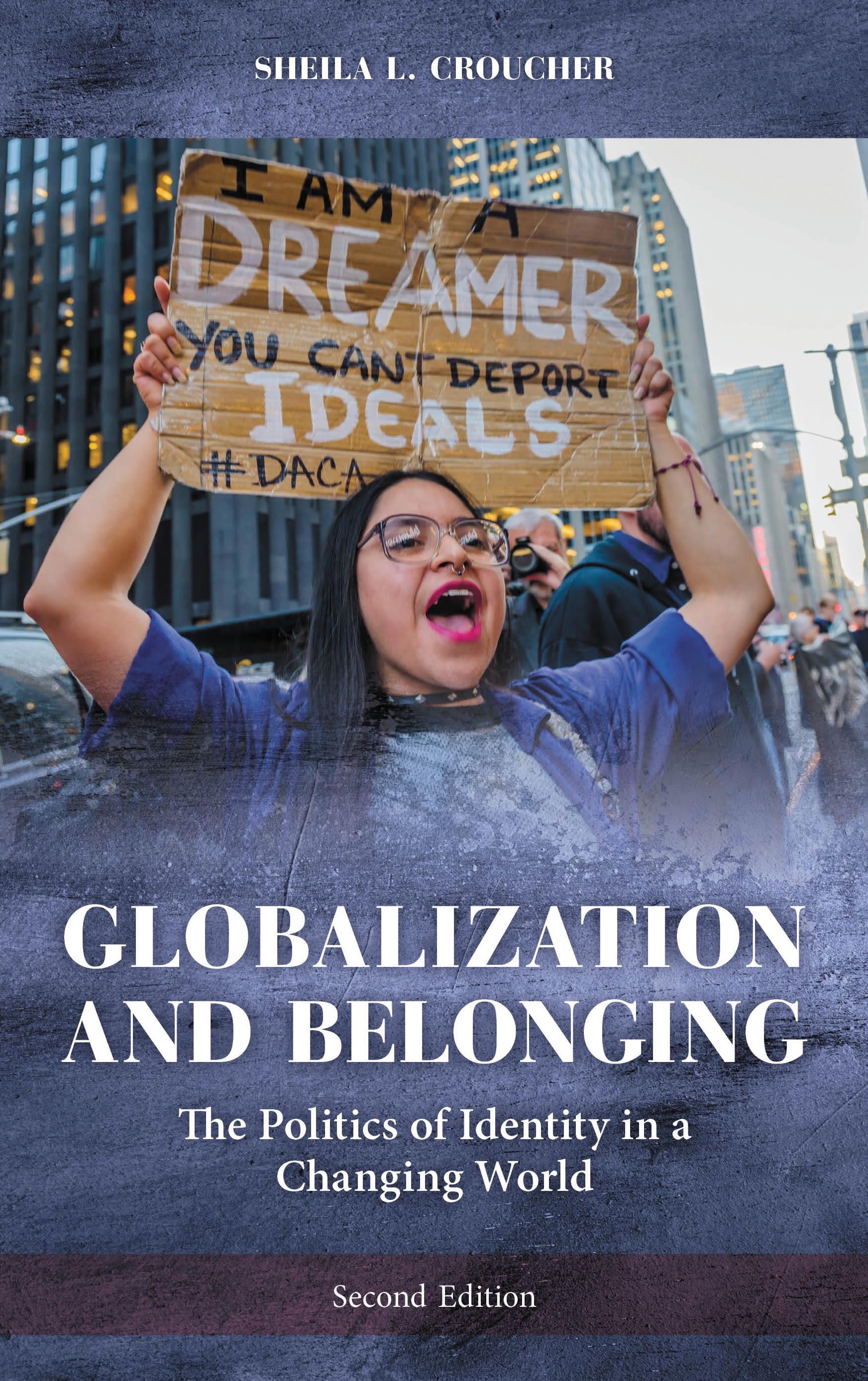
In the decades since the September 11, 2001, terrorist attacks on the United States forces of cultural, economic, and political integration appear locked in battle with equally powerful forces of fragmentation. Globalization is facilitating unprecedented movement of goods, services, people, and ideas, while calls for building walls, erecting fences, and strengthening borders intensify. Tensions flare around claims of deeply rooted ethnic and civilizational identities—identities that are shaped and mobilized via sophisticated advances in technology. Women worldwide are achieving remarkable economic and political gains while sexual violence and gender inequalities persist and are fueled by rapid global change.
This book explores the complex inter-relationship between globalization and belonging. In a hyper-modern, 21st-century world, questions and conflicts surrounding who ‘we’ are and who ‘we’ want to be predominate. This book links the politics of different forms of identification and attachment to the dynamics of an increasingly interconnected world.
This book explores the complex inter-relationship between globalization and belonging. In a hyper-modern, 21st-century world, questions and conflicts surrounding who ‘we’ are and who ‘we’ want to be predominate. This book links the politics of different forms of identification and attachment to the dynamics of an increasingly interconnected world.
Pay easily by card, Klarna, Apple Pay or Google Pay. Not happy? You always have a 14-day money-back guarantee. Read more in our terms. If you have any questions, email us at hello@memmo.org.
Memmo makes studying easier – wherever you are in the world. We bring your course books and smart study tools together in one place: summaries, quizzes, podcasts and flashcards. Plus Ted, your study buddy who answers anything you wonder. Over 50,000 students already study here – built to help you learn faster and stress less.