
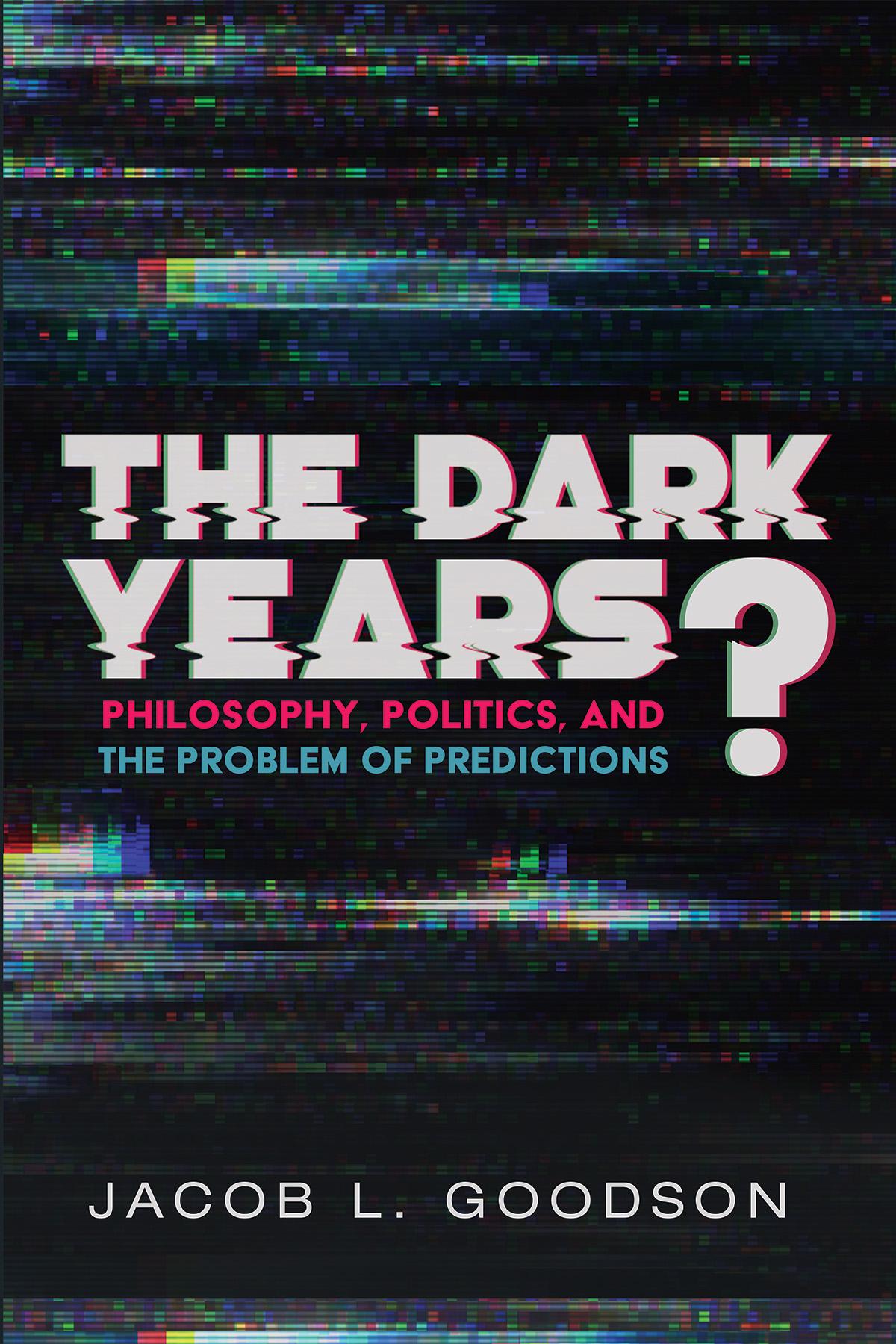
In 1997 and 1998, the American secular philosopher Richard Rorty published a set of predictions about the twenty-first century ranging from the years 2014-95. He predicted, for instance, the election of a "strong man" in the 2016 presidential race and the proliferation of gun violence starting in 2014. He labels the years from 2014-44 the darkest years of American history, politics, and society. From 2045-95, Rorty thinks his own vision for "social hope" will be implemented within American society--a vision that includes charity (in the Pauline sense), solidarity, and sympathy. Rorty considers himself a leftist, liberal, and a philosopher of hope. So why would a philosopher of hope predict such darkness and despair? In The Dark Years? Philosophy, Politics, and the Problem of Predictions philosopher and political theorist Jacob L. Goodson explains the fullness of Rorty's predictions, the problem of making predictions within the social sciences, and the reasons why even Rorty's vision for life after the "dark years" fails us on the standards of hope. Goodson argues that we ought to challenge the monopoly that American politics has as our object of hope. Goodson makes the case for a melancholic yet redemptive hope.
Pay easily by card, Klarna, Apple Pay or Google Pay. Not happy? You always have a 14-day money-back guarantee. Read more in our terms. If you have any questions, email us at hello@memmo.org.
Memmo makes studying easier – wherever you are in the world. We bring your course books and smart study tools together in one place: summaries, quizzes, podcasts and flashcards. Plus Ted, your study buddy who answers anything you wonder. Over 50,000 students already study here – built to help you learn faster and stress less.
You might also like
Buy the book0