
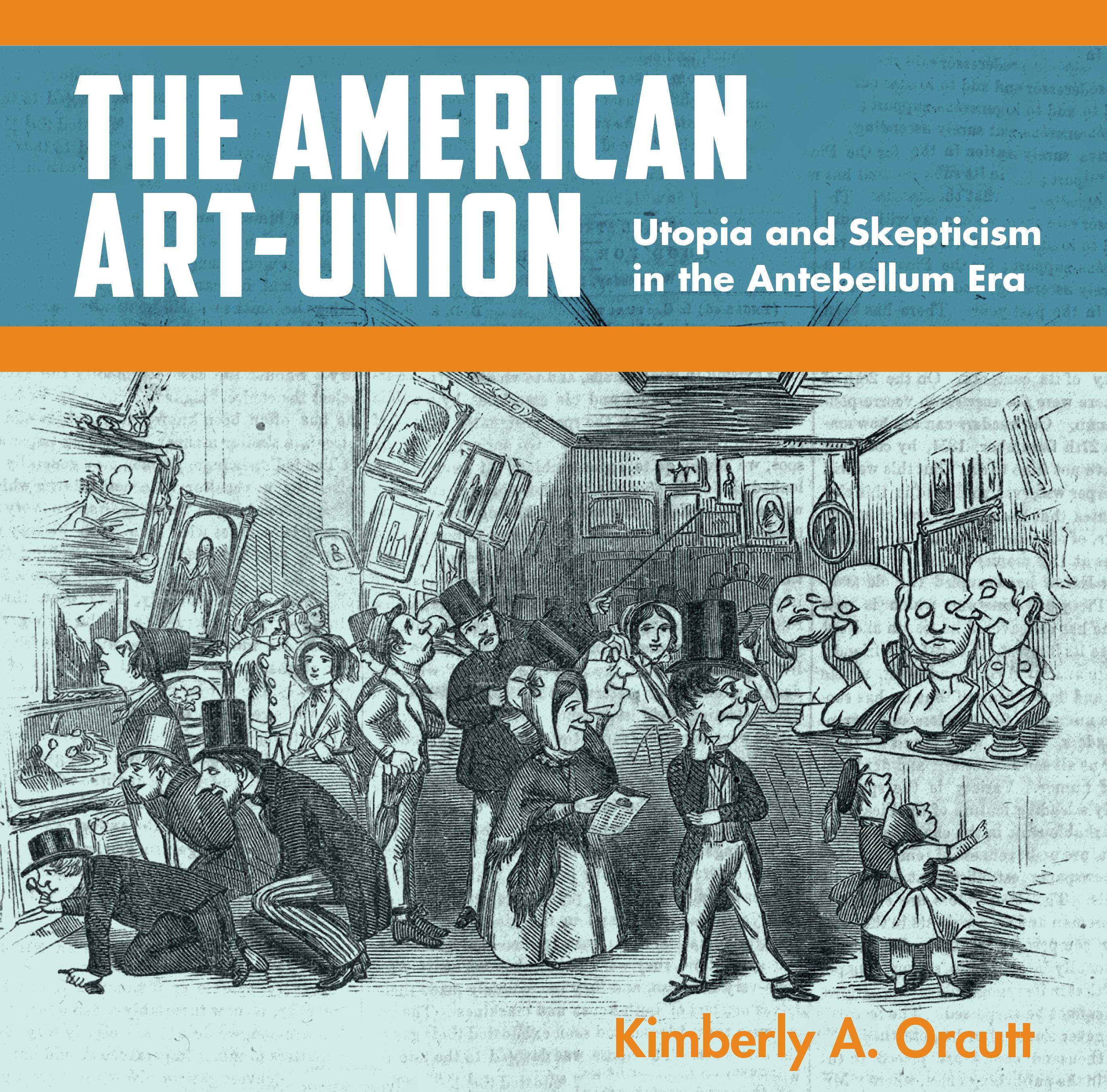
The first comprehensive treatment in seventy years of the American Art-Union’s remarkable rise and fall
For over a decade, the New York–based American Art-Union shaped art creation, display, and patronage nationwide. Boasting as many as 19,000 members from almost every state, its meteoric rise and its sudden and spectacular collapse still raise a crucial question: Why did such a successful and influential institution fail? The American Art-Union reveals a sprawling and fascinating account of the country’s first nationwide artistic phenomenon, creating a shared experience of visual culture, art news and criticism, and a direct experience with original works.
For an annual fee of five dollars, members of the American Art-Union received an engraving after a painting by a notable US artist and the annual publication Transactions (1839–49) and later the monthly Bulletin (1848–53). Most importantly, members’ names were entered in a drawing for hundreds of original paintings and sculptures by most of the era’s best-known artists. Those artworks were displayed in its immensely popular Free Gallery. Unfortunately, the experiment was short-lived. Opposition grew, and a cascade of events led to an 1852 court case that proved to be the Art-Union’s downfall. Illuminating the workings of the American art market, this study fills a gaping lacuna in the history of nineteenth-century US art. Kimberly A. Orcutt draws from the American Art-Union’s records as well as in-depth contextual research to track the organization’s decisive impact that set the direction of the country’s paintings, sculpture, and engravings for well over a decade.
Forged in cultural crosscurrents of utopianism and skepticism, the American Art-Union’s demise can be traced to its nature as an attempt to create and control the complex system that the early nineteenth-century art world represented. This study breaks the organization’s activities into their major components to offer a structural rather than chronological narrative that follows mounting tensions to their inevitable end. The institution was undone not by dramatic outward events or the character of its leadership but by the character of its utopianist plan.
Pay easily by card, Klarna, Apple Pay or Google Pay. Not happy? You always have a 14-day money-back guarantee. Read more in our terms. If you have any questions, email us at hello@memmo.org.
Memmo makes studying easier – wherever you are in the world. We bring your course books and smart study tools together in one place: summaries, quizzes, podcasts and flashcards. Plus Ted, your study buddy who answers anything you wonder. Over 50,000 students already study here – built to help you learn faster and stress less.