
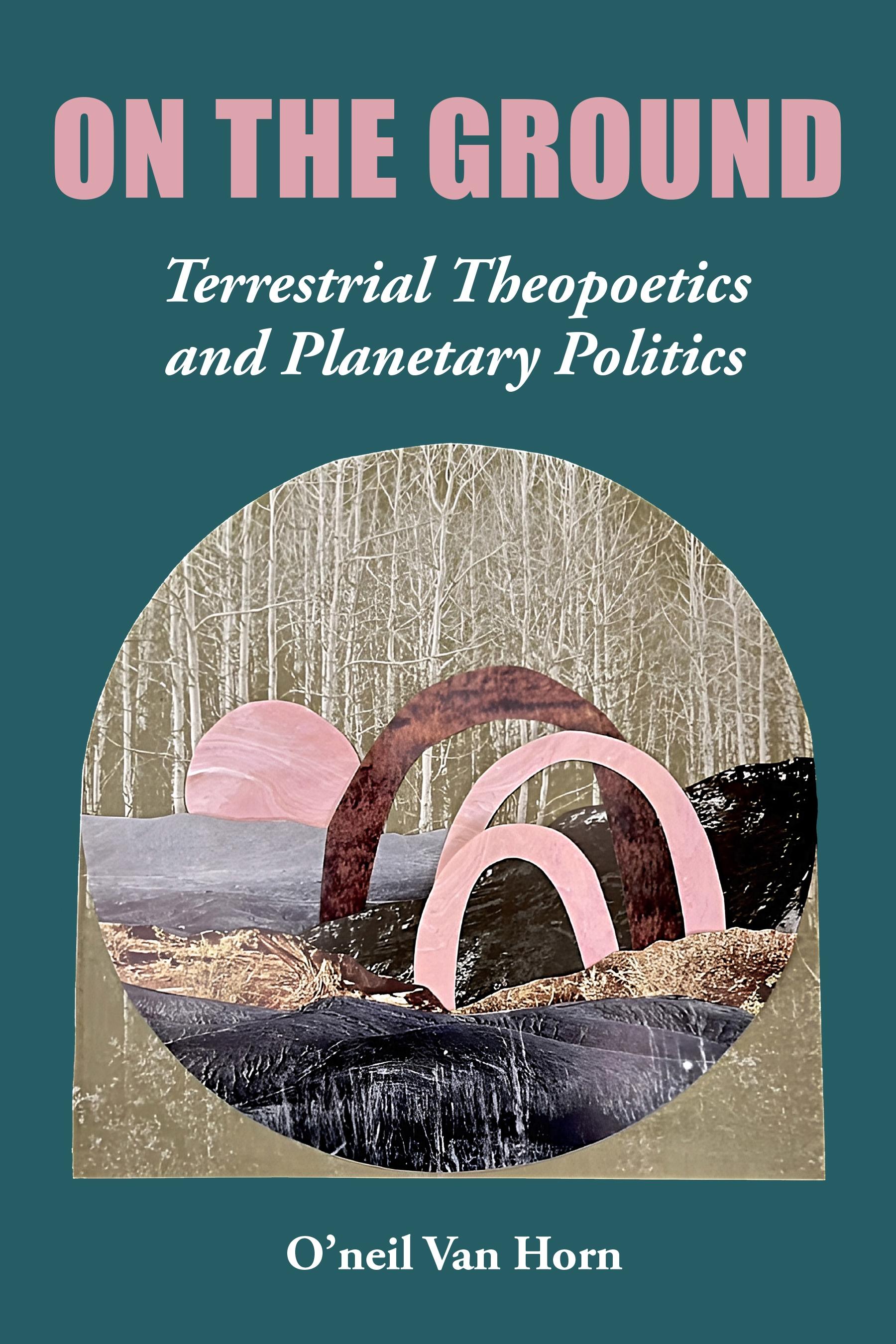
A bold, theoretical, and pragmatic book that looks to soil as a symbol for constructive possibilities for hope and planetary political action in the Anthropocene.
Climate change is here. Its ravaging effects will upend our interconnected ecosystems, and yet those effects will play out disproportionately among the planet’s nearly 8 billion human inhabitants. On the Ground explores how one might account for the many paradoxical tensions posed by the Anthropocene: tensions between planetarity and particularity, connectivity and contextuality, entanglement and exclusion. Using the philosophical and theological idea of “ground,” Van Horn argues that ground—when read as earth-ground, as soil—offers a symbol for conceiving of the effects of climate change as collective and yet located, as communal and yet differential. In so doing, he offers critical interventions on theorizations of hope and political action amid the crises of climate change.
Drawing on soil science, theopoetics, feminist ethics, poststructuralism, process philosophy, and more, On the Ground asks: In the face of global climate catastrophe, how might one theorize this calamitous experience as shared and yet particular, as interconnected and yet contextual? Might there be a way to conceptualize our interconnected experiences without erasing critical constitutive differences, particularly of social and ecological location? How might these conceptual interventions catalyze pluralistic, anti-racist planetary politics amid the Anthropocene? In short, the book addresses these queries: What philosophical and theological concepts can soil create? How might soil inspire and help re-imagine forms of planetary politics in the midst of climate change? On the Ground thus roots us in a robust theoretical symbol in the hopes of producing and proliferating intersectional responses to climate change.
Pay easily by card, Klarna, Apple Pay or Google Pay. Not happy? You always have a 14-day money-back guarantee. Read more in our terms. If you have any questions, email us at hello@memmo.org.
Memmo makes studying easier – wherever you are in the world. We bring your course books and smart study tools together in one place: summaries, quizzes, podcasts and flashcards. Plus Ted, your study buddy who answers anything you wonder. Over 50,000 students already study here – built to help you learn faster and stress less.